
Social Proof: How It Applies to Marketing
Learn how leveraging the actions and opinions of others can transform your website into a conversion machine that builds lasting customer trust.


- Credibility drives conversions — people won't buy from a source they don't trust.
- Feature customer logos, press mentions, and awards on your site to build instant credibility.
- Specific, verifiable testimonials with names and job titles are far more persuasive than generic praise.
- Scarcity messaging like 'only 2 left' triggers urgency and complements social proof strategies.
- Positive reviews on local search listings can directly influence prospects to choose you over competitors.
Social proof is the practice of leveraging the actions and opinions of existing customers to build trust and drive conversions. When prospects see that others have had positive experiences, they feel more confident making a purchase. This article covers why social proof works and how to apply it through website copy, testimonials, reviews, and scarcity tactics.
How to Use Social Proof to Increase Marketing Conversions
-
1
Understand what makes social proof work
Social proof is a psychological phenomenon where people emulate the actions of others to feel more confident in their decisions. It is powerful because it signals credibility, and credibility leads to conversions. People who trust a website are far more likely to become paying customers, making social proof one of the highest-impact tools in your marketing arsenal.
-
2
Strengthen your website copy with trust signals
Your website is the primary place to increase conversion rates using social proof. Showcase how many customers you have successfully served, and feature elements such as customer logos, industry partner listings, press mentions, and industry awards. These signals immediately communicate credibility to new visitors before they read a single word of your sales copy.
-
3
Collect and display authentic testimonials
According to Nielsen research, 88% of consumers trust recommendations from people they know above all other forms of advertising, making testimonials a direct driver of conversions. Always use real testimonials that include the respondent's full name, photo, and company name to maximize credibility. Place them strategically next to contact forms, near call-to-action buttons, and on sales pages right after your product benefits.
-
4
Leverage video testimonials for emotional impact
Video testimonials are more persuasive than text alone because they create an emotional bond between your company and prospects. According to Wyzowl's State of Video Marketing report, 89% of consumers say watching a video has convinced them to buy a product or service. Incorporate video testimonials alongside text versions in high-conversion areas of your website for maximum effect.
-
5
Display real-time user activity on your site
Showing live user activity — such as recent purchases, opt-ins, or the number of visitors currently on a page — builds instant trust by proving that others are actively engaging with your brand. Use pop-up widgets in the lower left corner of the screen to highlight recent purchases or conversions as visitors browse. A single real-time data point can be more convincing than an entire paragraph of sales copy.
-
6
Use star ratings to build instant credibility
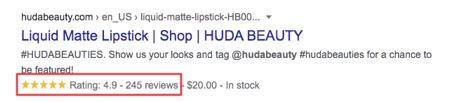
Star ratings are a widely recognized trust signal that prospects look for before making a decision. Adding star ratings to your web pages, product listings, and search snippets makes your offerings more attractive at a glance. Consistently earning and displaying high ratings reinforces your reputation and reduces hesitation among potential customers.
-
7
Grow and display your social media following
A large social media following acts as a vanity metric that nonetheless signals popularity and trustworthiness to new prospects. Display your follower or subscriber counts prominently on your website using social count widgets to show that a significant audience already endorses your brand. The more established your social presence appears, the more confident new visitors will feel about engaging with your business.
-
8
Create scarcity signals to drive urgency
Scarcity is a component of social proof that makes prospects act faster by signaling that a product or opportunity is rare and therefore valuable. Use messaging such as limited stock warnings or high-demand indicators — similar to how Airbnb notifies users when a property is usually booked — to trigger an immediate response. Combining scarcity with other social proof elements amplifies their individual impact on conversion rates.
Nowadays, bringing new users to your website isn’t enough. If they leave before performing some desired action, your efforts are wasted. If your website isn’t converting visitors into customers, it’s not doing its job. One of the ways to increase trust and conversions is social proof.
Social proof is when people emulate the actions of others to help arrive at a decision. If other people believe or trust something, they tend to treat those decisions as correct.
The first path companies should follow to increase their conversion rate is to be trustworthy. In today’s overcrowded online world, your prospects need confidence — in your company’s reputation and in the value you will deliver.
Your reputation plays a massive role in establishing trust online. People search for you on the web to learn about you, view your work, and much more. Learn more about the benefits of a good online reputation and why it matters for conversions.
Social proof is a powerful marketing strategy that lets you use your existing success to gain more conversions with no additional investment. The logic is simple: credibility leads to conversions. People who trust a website are more likely to become paying customers. Nobody buys from someone they don’t trust.
In this article, we dive into proven social proof techniques that build user trust and increase conversions.
What is social proof?
Social proof is a phenomenon where people behave in a certain way based on the actions of others. This concept is commonly used as a persuasion technique, in which individuals emulate others to feel more confident in their decisions.
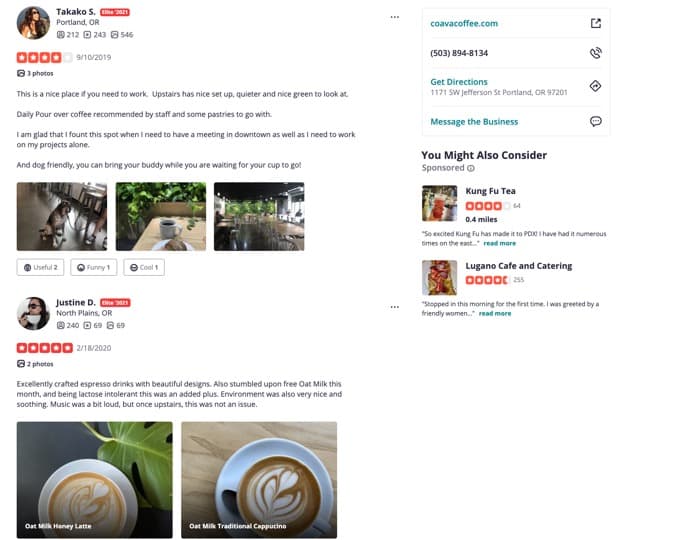
Many online marketing campaigns rely on social proof to succeed. This includes online reputation management and local SEO. When people see positive reviews and testimonials on a local business website, they are more likely to trust and do business with that company.
When positive reviews on a local search listing outshine a competitor’s, they convince prospects to choose that business. The same concept applies across all areas of marketing.
Get a Free Reputation Assessment
Find out what people see when they search for you online. No obligation — results in 24 hours.
Why is social proof so powerful?
People look for social proof on every website they visit. When unsure what to do, we look to others for guidance. Social proof motivates visitors to act by showing that others in the same situation have done so and gotten results.
If nobody says your product is excellent, its quality is almost useless in terms of marketing. But if your website features hundreds of testimonials and case studies, your product becomes far more attractive to prospects.
Social proof is also partly rooted in scarcity. Scarcity signals that the rarer a product is, the more valuable it becomes. Think about your reaction when you see “Only two items left at this price!” during a sale — the urge to act is immediate.
Airbnb uses this effectively by letting users know when a property is “usually booked,” creating a scarcity mindset that drives bookings.
Website copy: Build trust with the right words
Your website is the primary area for increasing conversion rates with social proof. Start by showing how many customers you have already successfully served. Here are a few ways to build trust while showing appreciation for your customers:
- Feature customer logos on your website
- List industry partners
- Feature press mentions
- List industry awards
Learn more about how strategic content choices build trust around your company and turn your website into a conversion machine.
Testimonials: Let customers speak for you
Nobody wants to be the first person to buy a product. But when prospects see existing, happy customers, they feel more confident about purchasing. According to Nielsen’s Trust in Advertising research, 88% of consumers trust recommendations from people they know above all other forms of advertising.
of consumers trust recommendations from people they know above all other forms of advertising
Nielsen Trust in Advertising
As a result, testimonials directly contribute to higher conversion rates. Resist the urge to use fake testimonials — prospects are savvy enough to spot them. Keep testimonials authentic and relevant, and always include the respondent’s full name, photo, and company name.
While text testimonials are effective, video testimonials are even more powerful. According to Wyzowl’s State of Video Marketing report, 89% of consumers say watching a video has convinced them to buy a product or service. Video creates an emotional bond between your company and prospects that text alone cannot replicate.
Place both video and text testimonials where they will have the greatest impact on conversions:
- Next to a contact form
- Near a call-to-action button
- On an order form
- On a sales page, right after the benefits of your product or service
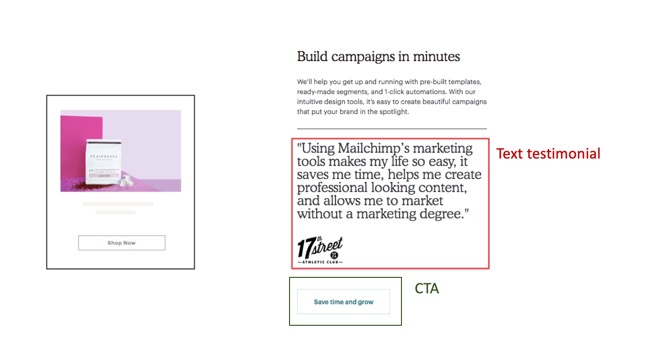
Here’s how Mailchimp places testimonials on its site:
Turn Your Reputation Into a Conversion Engine
Social proof starts with a strong online reputation. Our team can help you build, monitor, and protect the credibility that drives customers to say yes.
User activity: Show real-time engagement
A single number can be worth a dozen words. Featuring user activity in real-time builds trust and increases conversions by showing prospects that others are actively browsing and buying. Consider these approaches:
- Display recent conversions such as opt-ins or sales
- Show the number of real-time visitors on your website or specific pages
- Use pop-up widgets in the lower left corner of the screen to highlight recent purchases
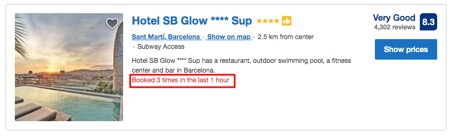
When a prospect lands on your website, social proof platforms identify them and display recent user activity to establish credibility and raise conversion rates. These notifications can be set up without coding and will pop up automatically.
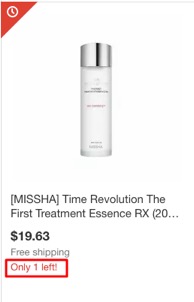
If a product is top-rated or nearly sold out, make that visible. Use phrases like “Only 2 left in stock” near your call-to-action button. Showing out-of-stock products also signals high buyer interest.
Star ratings and review schema
Another powerful social proof tactic is star ratings. They are the most easily recognizable expression of customer satisfaction, and we rely on them across nearly every purchase decision. Understanding how to analyze online reviews and feedback helps you make the most of the ratings you collect.
You can showcase star ratings as:
- A small graphic element on product pages
- A notification widget
- An on-page review badge
You can also show an aggregated review score on product pages or images, as large online retailers often do. This ensures good reviews influence users who don’t scroll to the bottom of the page.
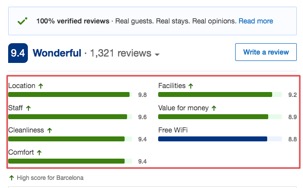
Remember that a perfect 5.0 rating can look suspicious. According to research from PowerReviews, ratings between 4.2 and 4.5 tend to drive the most purchases — high enough to signal quality, but realistic enough to be credible. Add context to your ratings by explaining what the stars mean, as Booking.com does:
Social count: Follower numbers as credibility signals
Social count widgets display the number of your followers across social networks. This type of social proof is effective because a higher follower count promotes credibility — prospects prefer to buy from companies with an established social presence.
Many platforms offer embeddable widgets or plugins that pull follower data directly from your social accounts. That said, verify current API availability for each platform before committing to a solution. Major networks including X (formerly Twitter) and Facebook have significantly restricted public data access in recent years, which may affect how some widgets function.
WordPress users can explore dedicated plugins that add social count displays with customization options for color, shape, animation style, and branding. Pre-defined templates are available for a faster launch.
Automating and implementing social proof
Gathering testimonials, star ratings, and user activity data can be time-consuming. Fortunately, dedicated social proof platforms simplify the process without requiring technical skills. The most comprehensive tools allow you to:
- Use existing videos from Facebook, YouTube, and other platforms as video testimonials
- E-sign agreements between you and your testimonial contributors
- Customize the look of reviews to match your website or use pre-defined templates
- Automatically send customers a link to leave a testimonial or star rating after they convert
For video testimonials specifically, platforms like Boast, Testimonial.to, and HippoVideo make it easy for customers to record short videos using their smartphone or webcam.
To get started, choose one type of social proof to test. Run one test at a time so you can clearly measure its impact on your conversion rate. If results are underwhelming, optimize before moving on — adjust placement, targeting, testimonial selection, or your call-to-action. Keep gathering testimonials that address common objections and highlight your product’s key benefits.
For a broader look at how reputation shapes buying decisions, see our guide on how positive and negative reviews affect business revenue. And explore effective strategies to improve your online reputation to strengthen every element of your digital presence.
Above all, follow through on your promises. Be accurate in your claims and never provide misleading information. Social proof is only as powerful as the trust it reflects.
Frequently Asked Questions








Protect Your Online Reputation
Every day you wait, negative content gets stronger. Talk to our experts about a custom strategy for your situation.
Get Your Free Analysis