
How to Improve Online Reviews
With 91% of consumers reading reviews before buying, mastering your online reputation is one of the highest-leverage moves your business can make.

- Set up automated alerts using tools like Google Alerts, Hootsuite, or Make.com to catch reviews in real time.
- Monitor each review platform separately since community guidelines and moderation rules differ across sites.
- Respond to both positive and negative reviews to demonstrate commitment to customer satisfaction.
- Use custom automation tools to streamline sentiment tracking, reporting, and social media monitoring.
- Treat negative reviews as opportunities to address concerns publicly and rebuild trust with potential customers.
Online reviews directly shape consumer decisions, with 91% of shoppers reading them before buying and 85% trusting them as much as personal recommendations. Businesses must take a proactive approach to review management by monitoring feedback across platforms, responding strategically, and leveraging tools to stay ahead of customer sentiment. A strong review management strategy protects brand perception and builds long-term customer trust.
How to Improve Online Reviews
-
1
Understand the impact of online reviews
Recognize that 91% of consumers read online reviews before making a purchase decision, and 85% trust them as much as personal recommendations. Negative reviews on platforms like Google, Yelp, or TripAdvisor can damage brand perception and deter potential customers. Each review platform has its own community guidelines that affect how reviews are displayed, so understanding these nuances is essential for effective management.
-
2
Set up review monitoring tools
Use a combination of tools such as Google Alerts, Hootsuite, Mention, or custom automation platforms like Make.com or n8n to track mentions of your brand across the web. Monitor not just major platforms like Google and Yelp, but also niche review sites, industry forums, and social media channels where feedback may surface. Custom automations can aggregate all of this into a single dashboard, saving significant time on manual checking.
-
3
Configure alerts for new reviews
Set up real-time notifications so you are immediately informed whenever new feedback is posted about your brand. The faster you respond to a review, the more likely you are to turn a potentially negative situation into a positive one. Timely alerts are essential for maintaining responsive and positive customer relationships.
-
4
Monitor review platforms regularly
Make it a consistent habit to scan review platforms and social media for new comments and reviews, ideally using automated tools to reduce manual effort. Regular monitoring allows you to respond promptly and appropriately to both praise and complaints. This proactive practice fosters a more responsive customer relationship culture within your business.
-
5
Analyze feedback for business insights
Go beyond simply collecting review data by regularly analyzing the feedback you receive for patterns in customer preferences, pain points, and areas for improvement. Use sentiment analysis tools to better understand the overall tone and themes emerging from customer comments. This information should directly inform improvements to your products, services, and overall customer experience.
-
6
Respond to negative reviews constructively
Approach negative reviews calmly and professionally, treating them as an opportunity to demonstrate your commitment to customer satisfaction rather than as personal attacks. Acknowledge the customer's concern, apologize where appropriate, and offer a concrete resolution. A well-handled negative review can actually improve brand perception in the eyes of potential customers who observe how you respond.
-
7
Actively encourage positive reviews
Implement strategies that make it easy and natural for satisfied customers to leave positive feedback on key platforms. This can include follow-up emails, in-store prompts, or direct requests made at the right moment in the customer journey. Increasing the volume of genuine positive reviews helps improve your overall rating and strengthens your brand's online reputation.
-
8
Leverage your reputation for business growth
Use a strong collection of positive reviews as a marketing asset by highlighting them on your website, in sales materials, and across social media. Research shows that businesses that actively respond to reviews see measurable improvements in their star ratings over time. Consistently managing your online reputation builds long-term trust and can directly influence revenue growth.
Online reviews are important – obviously. Their impact, good or bad, cannot be overstated. Research indicates that a staggering 91% of consumers read online reviews before making a purchase decision. This stat alone shows the role that reviews play in shaping consumer behavior – that is – becoming customers.
of consumers read online reviews before making a purchase decision
Local Reputation Marketing Research
1. The Importance of Online Reviews
Given the clearly significant impact of online reviews, businesses need to adopt a strategic approach to managing the review-related portion of their online reputation. This involves not only monitoring reviews but also actively engaging with customers, addressing concerns, and leveraging positive feedback to build a strong brand image.
Here are four reasons why online reviews are a big deal”
- Influence on Consumer Decisions: According to a survey, 85% of people trust online reviews as much as personal recommendations from friends or family. This level of trust highlights the power of reviews in guiding consumer choices and emphasizes the need for businesses to prioritize their online reputation.
- Brand Perception: A series of negative reviews on popular platforms like Google Reviews, Yelp, TripAdvisor, or social media can really damage a company’s image. These negative reviews can deter potential customers and erode trust in the brand, making it important for businesses to actively manage their online presence.
- Platform-Specific Considerations: Each review platform has its unique community guidelines and standards. These rules influence how reviews are displayed and moderated, directly impacting a business’s online reputation. Understanding these platform-specific nuances is essential for effective review management.
- Proactive Management: Regularly monitoring and engaging with customers can help maintain a positive brand image. This proactive approach includes setting up review monitoring tools and implementing strategies for responding to both positive and negative feedback. By staying on top of customer sentiment, businesses can address issues quickly and showcase their commitment to customer satisfaction. Learn more about the fundamentals in our guide to online reputation monitoring basics.
2. Monitoring Online Reviews and Comments
Effective review management begins with diligently monitoring the platforms where consumers leave feedback. Automation can help with this, but at some point a person needs to take the wheel. A combination of various tools and techniques will help you stay informed about what customers are saying about your brand online. At Reputation X we like to use Make.com or n8n to create custom tools for listening, sentiment, and reporting of social media comments. Let’s explore some key strategies for monitoring online reviews and comments:
- Leveraging Tracking Tools: There are numerous tools available to help businesses keep tabs on their online presence. Popular options include:
- Google Alerts: A free tool that notifies you when your brand is mentioned online.
- Hootsuite: A social media management platform that can track mentions across various social networks.
- Specialized software: Tools like Mention offer comprehensive reputation management features.
- Make.com: Make is our go-to solution when other tools are too expensive or not a perfect fit. We use a company called Fyn.ch to build them. With this solution you can get pretty much anything you want for managing, reporting, and researching reviews and social media.
Practices
This isn’t a deep dive, but these tools can significantly streamline the process of tracking mentions of your brand across different platforms, ensuring you never miss important feedback.
- Setting Up Alerts: Configuring alerts and notifications for new reviews is important for timely responses. Notifications can be set up to notify you immediately when new feedback is posted. This enables quick responses, which is essential for both resolving negative feedback and building positive customer relationships. Remember, the faster you respond, the more likely you are to turn a potentially negative situation into a positive one.
- Regular Monitoring: Make it a habit to scan review platforms and social media regularly for new comments and reviews. Again, Make.com is a good way to do this. This practice helps respond promptly and (hopefully) appropriately.
By implementing these monitoring practices, businesses can stay attuned to what their customers are saying, allowing them to engage effectively and address any issues swiftly. This proactive approach not only helps in resolving problems but also fosters a more positive and responsive customer relationship culture.
The goal of monitoring is not just to collect data, but to use that information to improve your products, services, and overall customer experience.
Regular analysis of the feedback you receive can provide valuable insights into customer preferences, pain points, and areas for improvement in your business. For a broader look at how sentiment data fits into this picture, see our overview of reputation and sentiment analysis.
Need Help Managing Your Online Reviews?
Our reputation specialists can audit your current review profile, set up monitoring systems, and build a strategy to improve your ratings across every major platform.
Get a Free Reputation Assessment
Find out what people see when they search for you online. No obligation — results in 24 hours.
3. Responding to Negative Reviews and Comments
Don’t be mad at the bad ones. Just… don’t.
Handling negative reviews and comments is a delicate aspect of online reputation management. When done right, it can turn a disgruntled customer into a loyal one and showcase your business’s commitment to customer satisfaction. Done badly it can really hurt you. Here’s how to craft empathetic and effective responses to negative feedback:
Best Practices for Responding
- Respond with empathy: Acknowledge the customer’s feelings and concerns. Show that you understand their frustration and are genuinely sorry for their negative experience.
- Avoid defensive language: Never argue or become defensive. Instead, focus on finding a solution to the problem.
- Personalize your response: Avoid generic replies. Address the specific issues mentioned in the review and tailor your response accordingly.
- Be prompt: Aim to respond within 24-48 hours. Quick responses show that you value customer feedback and are proactive in addressing issues.
A study by TripAdvisor found that businesses responding to reviews see a 0.12-star increase in their rating, while personalized responses can boost customer loyalty.
Conflict De-Escalation Techniques
- Address the issue calmly and professionally: Maintain a composed tone, even if the review is harsh or unfair.
- Offer solutions: Provide concrete steps to resolve the issue or suggest direct communication to handle the matter privately.
- Follow up: After resolving the issue, follow up with the customer to ensure their satisfaction.
88% of consumers are more likely to purchase if the business responds to reviews. Keeping a professional tone can prevent further escalation and show other potential customers your commitment to resolving issues.
How to acknowledge mistakes:
- Be transparent: If a mistake was made, admit it openly.
- Explain the steps taken: Outline the measures you’ve implemented to prevent similar issues in the future.
- Show appreciation for feedback: Thank the customer for bringing the issue to your attention.
How to demonstrate improvement:
- Share updates: If the feedback has led to changes in your business, share this information publicly.
- Invite the customer back: Offer the customer an opportunity to experience the improvements firsthand.
- Highlight positive changes: Use social media or your website to showcase how customer feedback has positively impacted your business.
By following these strategies, businesses can turn negative reviews into opportunities for growth and improvement. Remember, how you handle criticism can often say more about your business than the initial complaint itself. For a deeper dive into handling a broader reputational crisis, our ultimate guide to crisis management and reputation repair is a useful companion resource.
4. Encouraging Positive Reviews and Comments
While managing negative reviews is important, actively encouraging positive feedback is equally important for building and maintaining a strong online reputation.
Here are effective strategies to encourage and maintain a healthy balance of reviews:
How to Ask for Online Reviews:
- Ask satisfied customers directly: After a positive interaction or successful transaction, politely request that the customer leave a review.
- Follow-up emails: Send a friendly email a few days after purchase, thanking the customer and including a link to leave a review.
- In-store signage: For brick-and-mortar businesses, display signs or hand-out cards that encourage customers to share their experiences online.
- QR codes: Use QR codes that link directly to your review pages, making it easy for customers to leave feedback. Just put it right where customers can see them physically, or in an email or other communication.
The following practices increase review quantity and improve online reputation.
Incentivizing Feedback:
- Offer small incentives: Consider providing discounts, loyalty points, or entry into a prize draw in exchange for honest reviews.
- Be transparent: Clearly state that the incentive is for leaving a review, not necessarily a positive one. Of course, if you use a gated review system, you can focus your review requests on those most likely to give you a good one.
- Follow platform guidelines: Ensure your incentive program aligns with the policies of review platforms to maintain authenticity and avoid penalties.
Incentives can boost review volume without compromising credibility when done ethically.
Maintaining Balance:
- Encourage all feedback: Don’t shy away from potentially negative reviews. A mix of positive and negative reviews appears more authentic, just make sure you have a lot more positive ones.
- Respond to all reviews: Engage with both positive and negative feedback to show that you value all customer opinions. There are systems that can help you do this without having to hire a full-time review response engineer.
- Use negative feedback constructively: Demonstrate how you’ve used critical feedback to improve your products or services.
Ethical Considerations:
- Never create fake reviews: This practice is unethical and can severely damage your reputation if discovered. With AI, that discovery is becoming more common.
- Don’t offer incentives for positive reviews only: This can be seen as manipulative and may violate platform policies.
- Be transparent about your review collection process: If you’re using a third-party service to collect reviews, make this clear to customers.
The FTC warns that unethical practices may lead to long-term reputation damage and potential legal consequences.
By implementing these strategies, businesses can cultivate a trustworthy and appealing online presence that resonates with potential customers. Remember, the goal is not just to accumulate positive reviews, but to build a genuine representation of your customer experiences that can guide business improvements and attract new customers.
5. Leveraging Online Reputation for Business Growth
A strong online reputation, when managed effectively, can be a powerful catalyst for business growth. Here’s how businesses can leverage their online reputation to drive success:
Marketing and Branding:
- Showcase positive reviews: Feature glowing testimonials in marketing materials, on your website, and in promotional campaigns. Putting them “above the fold” where customers don’t have to scroll can improve their visibility.
- Boost search engine visibility: Reviews make up 15% of Google local ranking factors, making them valuable SEO assets.
- Create social proof: Use reviews to build credibility and trust with potential customers. Remember, 87% of consumers read online reviews for local businesses.
- Develop case studies: Transform detailed positive reviews into in-depth case studies to showcase your products or services in action.
Customer Satisfaction and Loyalty:
- Demonstrate commitment: Show your dedication to customer satisfaction through public responses to reviews and visible improvements based on feedback.
- Build engagement: Responding to reviews, both positive and negative, shows that you value customer input and are committed to continuous improvement.
- Create a feedback loop: Use reviews to identify areas for improvement and communicate changes back to customers.
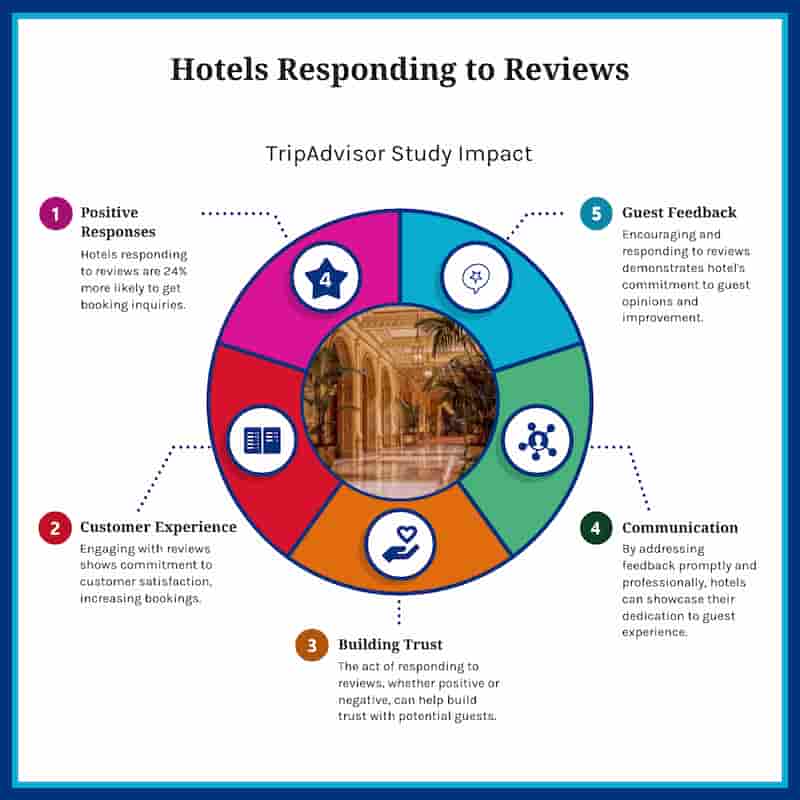
- Encourage repeat business: According to a TripAdvisor study, businesses that respond to reviews are 21% more likely to receive booking inquiries than those that don’t.
Ongoing Reputation Management
- Maintain consistency: Regularly monitor and respond to reviews to build a long-term positive reputation.
- Foster community: Engage with customers online to create a loyal community around your brand.
- Analyze trends: Use review data to identify patterns in customer feedback and make data-driven business decisions.
- Stay adaptable: Be prepared to adjust your strategies as review platforms evolve and customer expectations change.
By actively managing and leveraging your online reputation, you can create a virtuous cycle of positive customer experiences, improved brand perception, and business growth. To understand how all of these efforts fit into a broader framework, our complete guide to online reputation management covers the full picture.
Remember, your online reputation is an ongoing conversation with your customers – keep it active, authentic, and aligned with your brand values.
Conclusion
Efficiently handling online reviews and comments is not just a nice-to-have; it’s an essential component of maintaining a positive online reputation.
With up to 97% of consumers reading online reviews for local businesses, the impact of these testimonials on customer acquisition and retention cannot be overstated.
Businesses must adopt a proactive and customer-centric approach to online reputation management. This involves:
- Consistently monitoring review platforms and social media channels
- Responding promptly and professionally to both positive and negative feedback
- Encouraging satisfied customers to share their experiences
- Leveraging positive reviews in marketing efforts
- Using feedback constructively to drive continuous improvement
Investing in online reputation management is not just a defensive tactic; it’s a fundamental business strategy for long-term success. It builds trust, enhances credibility, and fosters customer loyalty. By addressing negative feedback head-on and demonstrating a genuine commitment to customer satisfaction, businesses can turn potential downsides into opportunities for growth and improvement.
Moreover, the landscape of online reputation management is ever-evolving. The rise of social media, voice search, and AI-driven review analysis tools continue to transform how customers interact with businesses and share feedback. Staying informed about these trends and remaining adaptable in your approach is important for maintaining a positive online reputation and enhancing the overall customer experience. Our guide on analyzing online reviews and feedback offers practical methods for turning raw review data into actionable business intelligence.
Remember, your online reputation reflects your brand’s values and commitment to customer satisfaction. By making review management an integral part of your business strategy, you’re not just protecting your brand—you’re actively shaping its future success in the marketplace.
How Can We Help You?
From negative content removal to suppression, correction, and ratings and review management, our experts can solve nearly any online brand issue.
What is review management?
Review management is the process of monitoring, analyzing, and responding to online reviews about your business. It’s an important practice for maintaining and improving your online reputation, which can significantly influence consumer decisions and drive sales. This involves using various tools to track reviews across different platforms, setting up alerts for new mentions, and engaging with customers through personalized responses. For example, you might use Google Alerts to notify you whenever a new review appears, giving you the chance to react promptly. It also includes implementing feedback to improve products and services, turning potentially negative experiences into opportunities for growth.
How do I manage reviews on my Google Business Profile?
Engage with each review individually. Thank customers for positive feedback and address any concerns mentioned in negative reviews professionally and empathetically. For instance, if a customer complains about slow service, acknowledge their experience, apologize, and explain what steps you’re taking to improve. This shows potential customers that you care about their experience and are committed to improvement.
How can I improve my online reputation through reviews?
Actively solicit reviews from satisfied customers and make it easy for them to leave feedback. For example, you could send a follow-up email after a purchase thanking the customer and including a direct link to your review page. Remember to follow ethical practices and platform guidelines when incentivizing reviews. Respond to negative reviews with the aim to resolve issues and address customer concerns constructively. Acknowledge their feedback and outline the steps you are taking to improve. Effective handling of negative reviews can convert an unhappy customer into a loyal one and demonstrate your commitment to quality and service.
Frequently Asked Questions








Protect Your Online Reputation
Every day you wait, negative content gets stronger. Talk to our experts about a custom strategy for your situation.
Get Your Free Analysis