
The Role of Reputation In the Customers Journey
Your online reputation can win or lose a sale before a prospect ever contacts you — here's how it shapes every step of the buyer's journey.

Your online reputation directly influences whether potential customers choose you over a competitor at every stage of their buying journey. From review scores to search result prominence, third-party signals shape purchasing decisions before a prospect ever contacts you. Actively managing your reputation is not optional — it is a core driver of customer acquisition and long-term business growth.
Imagine a prospect is making the tough decision between using your company or your competitor. At the last minute they discover something a bit “off” about your company’s online profile. Which company will get the sale?
It could be a review, a lack of publicity, a problem with your Wikipedia page, or many other things. How does reputation play into the buyers journey? Understanding what reputation really means is the first step toward protecting it at every stage of the customer journey.
There are a host of factors at play in the process of turning a potential customer into a person who is using your services or buying your product. This is the “customer journey,” and there are various hurdles for you to scale successfully to bring a new client to your business through this journey. Understanding how your reputation fits into the journey is an important part of facilitating a positive end result.
How Reputation Affects the Customer Journey
Consider the following two scenarios, each a different example of a customer journey.
Buyers journey scenario one
Eli is interested in buying a new refrigerator. He does some comparison shopping online, selecting two models that fit the style, availability, and price he’s looking for. He then turns to the reviews. Refrigerator A has four and a half stars and feedback from a hundred previous purchasers. Refrigerator B has five stars, but just one review. He purchases refrigerator A.
Buyers journey scenario two
Miranda is interested in buying a new refrigerator. She types “what is the best refrigerator” into a search engine box. Millions of results appear, but like most people she only looks at the first few listings, then she refines and searches again. After refining her search she notes a few brands seem to have good search results, so she focuses on those, ultimately purchasing a refrigerator from one of those manufacturer’s websites.
Although these scenarios are different, they share one thing in common. What ultimately determined which company won the sale was the reputation of the seller – in customer reviews in Eli’s case, and in generalized search results in Miranda’s case.
Get a Free Reputation Assessment
Find out what people see when they search for you online. No obligation — results in 24 hours.
Why Customer Experience Matters
No company is in the business of losing business. To grow is to convert potential customers into recurring customers. This is done by optimizing customer journeys to lead directly to a company’s product or service, and ensuring that when they get there, the company’s immaculate reputation seals the deal. Reputation is about trust bestowed on a company by third parties.
Positive customer experiences have a multiplying power, bringing in new business as well as keeping current customers onboard. However, it’s much harder to pull in a first-time customer than it is to keep existing customers. Existing customers can use their own experiences to make judgments. New customers must rely on what other people are saying about a business in order to make a buying decision.
This striking figure underscores just how essential it is for modern companies to actively monitor and manage their reputations online. The benefits of a strong online reputation extend well beyond a single sale — they compound over time into lasting competitive advantage.
The Stages of a Customer Journey
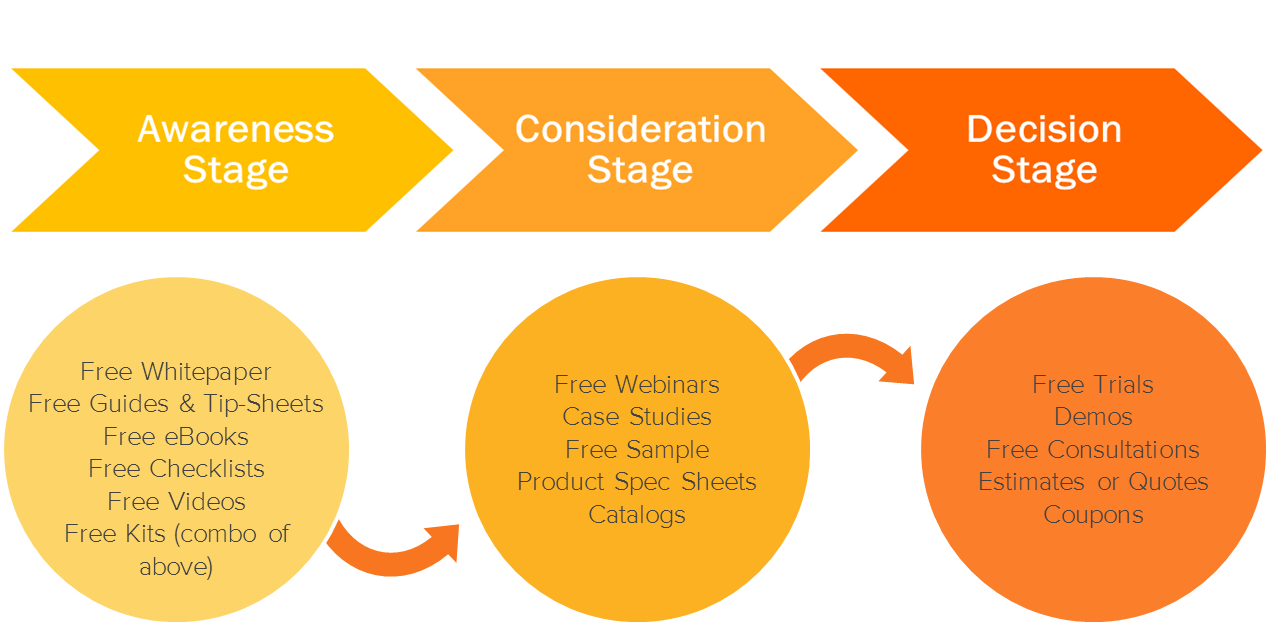
The graph above depicts the buyers journey and the content used to help people along the path to becoming a customer.
The customer journey can be broken down into three distinct parts: Awareness, Consideration, and Decision. From a reputation management perspective, we are concerned with the journey in a slightly more nuanced way. We know people comparison shop, so we want a brand to shine when compared to others.
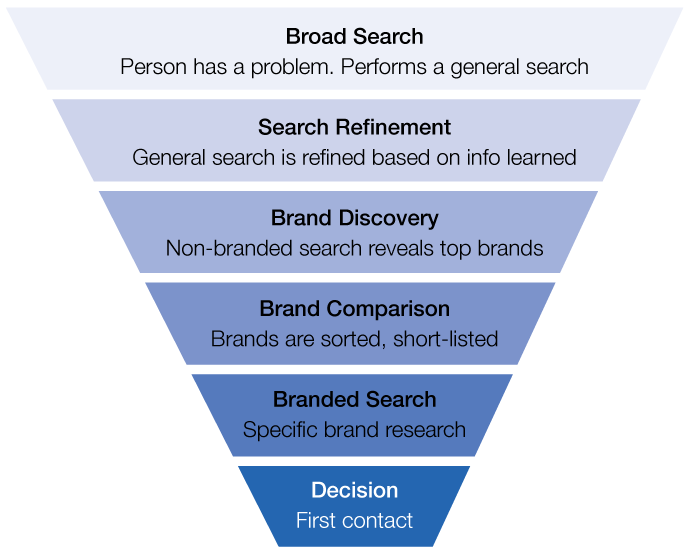
Customer journeys differ based on the product or service in question. A customer looking for a yoga studio may weigh location, price, and class schedule. A customer buying a guitar will focus on price, style, function, and availability.
Regardless of the product or service, at some point in the journey a customer is likely to interact with the opinions of others — whether it’s a neighbor, a store associate, or an anonymous commenter online. That last one can prevent a business from ever reaching a prospective customer if it isn’t better than the competition.
As a business, you have the power to tailor the details of your product or service to attract the customers you want. Once a potential customer’s last consideration is your reputation, it’s up to you to cultivate an environment where a new client feels comfortable taking the final step.
Is Your Reputation Winning or Losing Customers?
Find out how your online reputation looks to prospects at every stage of their journey — and what you can do to improve it.
Devising a Customer Experience Strategy
Your reputation is going to exist with or without your own efforts, so why leave it to chance? Do what you can within the confines of your time, energy, and budget to assure you have a positive reputation in the eyes of your customers. Here’s how you can enhance the brand comparison part of the journey.
Perform market analyses to understand how customers are searching for and buying your products and services. Are they going straight to your Yelp page or comparison shopping on another website? You can often find this information in your website analytics.
Are they primarily finding you through social media or by following backlinks from other sites (called a “referral”)? Take into consideration the purchasing behaviors typical of your industry, as well as the product influences and ad strategies that most commonly bring in new customers, then adapt your marketing strategies as needed.
Next, be a human. Really connect with your customers rather than seeing them as numbers on an analytics dashboard. This has to be done proactively and, in many cases, retroactively. Inspire good reviews by listening to your customers, knowing their preferences, and providing exceptional customer service.
Successful Businesses Focus on Customer Experience
Research consistently shows that customer service is the number one factor impacting trust in a vendor. According to Khoros, 83% of customers say they are more loyal to brands that respond to and resolve their complaints. That’s a powerful reminder that how you handle a misstep can matter just as much as getting things right the first time.
Negative experiences tend to travel faster and farther than positive ones, particularly across social media and review platforms. This makes every customer interaction an opportunity you can’t afford to squander.
It’s worth putting as much care into top-notch customer service as you do into other areas of innovation. Hire people who share your values, stay focused on your end goals, and always treat customers with respect. The ROI will follow.
The Importance of Consistency
A widely cited report from McKinsey found that satisfaction across the full customer journey is a 30% more predictive measure of overall customer satisfaction than happiness with any single interaction. When customers were satisfied with their journeys, the results were significant:
- Overall customer satisfaction increased by 20%
- Revenue lifted by 15%
- The cost of serving customers fell by as much as 20%
Consistency in the customer journey means taking care to maximize each step, from inquiry to post-purchase activity. It means being diligent in responding to potential clients as well as providing solutions to current customers when needed.
The customer’s journey lasts as long as they continue to use your product or service. Enhancing their experience from first inquiry to last use isn’t just necessary for growing and sustaining your business — it’s a crucial part of building a client base in today’s internet-centered marketplace. For businesses looking to take a more structured approach, exploring proven online reputation management strategies is an excellent next step.
Frequently Asked Questions








Protect Your Online Reputation
Every day you wait, negative content gets stronger. Talk to our experts about a custom strategy for your situation.
Get Your Free Analysis