
Building Web Authority to Improve Online Reputation
Discover how combining earned, owned, and paid media strategies can position your brand as a trusted authority and take control of your search results.


- Google your brand name to assess whether your search results are consistent, diverse, and authoritative.
- Search for your product or service generically — appearing without your brand name signals true authority.
- Earned media, like press coverage and reviews, is the most powerful signal of authority to both users and search engines.
- Start with accessible outlets like industry publications or local newspapers before targeting major media.
- Run an online reputation audit first so you can measure the real impact of your authority-building efforts.
Building web authority requires a strategic mix of earned, owned, and paid media to dominate search results for your brand. Authoritative sites rank higher, meaning more search visibility translates directly to greater credibility and revenue. By auditing your current search presence and pursuing earned media placements, you can systematically improve how search engines and customers perceive your brand.
Websites that are “authoritative” in their space rank much better. Google pays more attention to authoritative sites and pages. But how does a website become “authoritative”? Leverage different kinds of media to accomplish your goals.
Let’s face it, you’re far more likely to buy health food from a renowned dietitian than some hack off the street. Likewise, when your customers think of your business, do they also see you as an authority?
Is your brand an authority in search results?
You can find the answer by Googling your brand name. Are the results consistent, powerful, and diverse? Is there a good mix of articles, blogs, reviews, and multimedia — or is your brand faltering farther down the page? If you aren’t coming up number one in search results for your brand name, you might have an authority problem.
Now perform a search for your product or service generically, without your brand name in the search phrase. For example, instead of “Kleenex Tissues” search “facial tissues”. Does your brand show up? If it does, search engines consider you an authority.
The simple fact is, if your brand’s search results position you as an expert, you’ll make more money. But experts don’t become that way overnight. When it comes to your online reputation, you have to use a combination of earned, owned, and paid online media to rise in the ranks.
Get a Free Reputation Assessment
Find out what people see when they search for you online. No obligation — results in 24 hours.
The difference: authority vs. reputation
Not only your website should be an “authority” — your owned, earned, and paid properties should be too. Authority sites rank better, so to control search results you’ll want your brand to occupy as many search slots as possible. You do this through a combination of different kinds of media.
Earned media is great for authority
The media attention that you earn through your expertise is called “earned media.” If you’re invited to speak about your business on The Today Show, that’s an excellent example of earned media exposure. When potential customers search for your business on Google, your TV interview is likely to appear on the first page of results. Reviews are a type of earned media too.
Earned media is the pinnacle of success — proof that you know what you’re talking about. It’s also proof to search engines that your business is worthy of appearing to a larger audience.
Try the low-hanging fruit publications first
Earned media doesn’t have to be as extravagant as appearing on TV. It’s often easier to connect with a journalist who writes a profile on your business for an industry publication or a local newspaper. You may even write an article or book yourself and pitch it to a reputable publication — typically one with high visibility in related search results. If you’re pursuing media coverage to support a Wikipedia page, our guide on getting media coverage for Wikipedia references walks through what qualifies.
What does earned media look like?
If earned media lives on a website with high domain authority, it probably shows up on the first page of branded search results. Here’s an example from the branded search for Toyota:
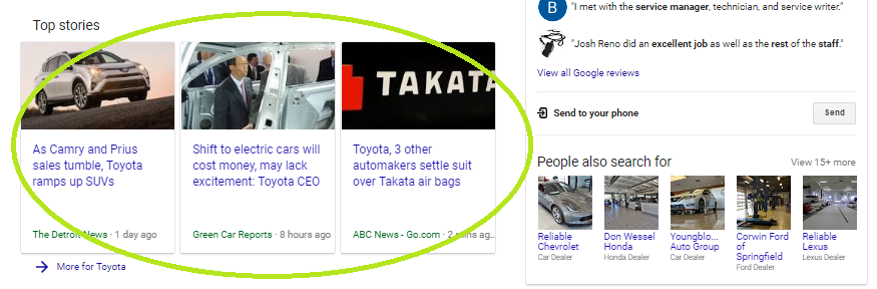
These news articles appear on third-party sites — Toyota didn’t pay for them or publish them on Toyota.com. Notice how each article comes from a reputable outlet: The Detroit News, Green Car Reports, and ABC News. The higher the quality of the outlet, the better your earned media will rank.
Want to Build Real Authority Online?
Our team helps brands earn the search visibility and credibility they deserve through proven reputation management strategies.
Owned media
We can’t all be renowned gurus with headlining interviews. If you’re a startup or don’t yet have the expertise to command much media attention, no worries. Plenty of businesses have enhanced their branded search results by creating original content on their own websites and social media pages. This is called “owned” media, and it’s the easiest type to control.
Keeping with the Toyota example, they own the media they post on their X (formerly Twitter) page:
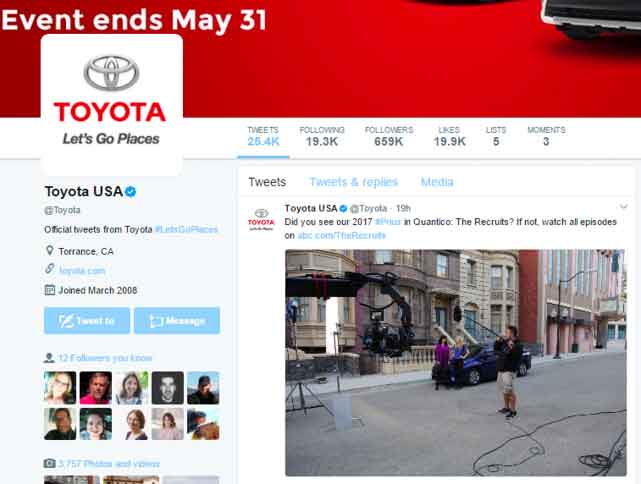
A blog hosted on Toyota’s own website would be another example of owned media. Understanding how SEO and reputation management work together can help you get the most out of the content you publish on your own properties.
Paid media
Paid media can look a lot like owned or earned media when it’s done well. This content is often labeled with the word “sponsored” or “advertisement.” In search results on Google and Bing, paid content appears at the very top with a bold “Sponsored” label:
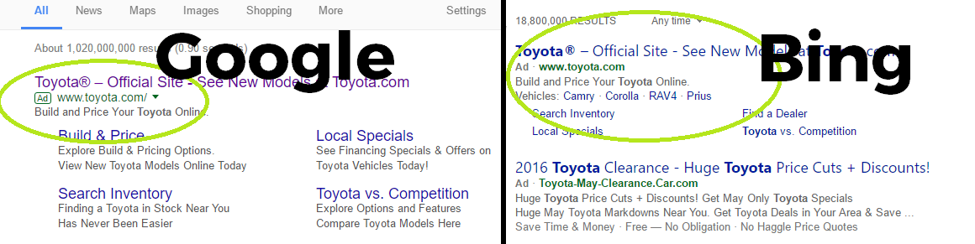
Other times, paid content blends in. This is called native advertising. A hypothetical example would be Toyota paying a media company to publish an article they wrote about cars. The key difference between paid and earned media is which way the money flows. With paid media, a brand pays a publication for a featured spot. With earned media, the outlet often pays the expert for the story.
Links and mentions
Earned and paid media should link not only to your main website, but also to other positive content you want to rank well — this is the reputation management dimension of link building. Your owned properties, like Facebook and a charity site, can also link to other branded content. For a deeper look at how link building fits into a broader reputation campaign, see our guide on link building for SEO reputation campaigns.
Sites don’t always have to link to you. Mentioning your brand name online also helps to some extent — it’s a measure of popularity. Beyond traditional advertising, brand mentions may also play a role in search rankings. This aligns with Google’s growing emphasis on entity-based search signals and the potential influence of unlinked brand mentions, sometimes called “implied links,” on how search engines assess brand prominence.
Wrapping up
Building web authority comes down to three core actions:
- Be the content authority in your space.
- Have the best, most up-to-date information compared to your peers.
- Get featured by other websites that are also authorities in your space.
Do that consistently, and over time you’ll attract followers, social shares, and — most importantly — inbound links. Links from topically similar, trusted, and authoritative sites remain one of the most critical ranking factors for search visibility, alongside content quality, topical authority, E-E-A-T signals, and user experience. To learn more about how these signals combine to shape your overall standing online, explore our complete guide to online reputation management.
We wish you rockin’ search results and a pristine online brand reputation.
Frequently Asked Questions








Protect Your Online Reputation
Every day you wait, negative content gets stronger. Talk to our experts about a custom strategy for your situation.
Get Your Free Analysis