
PR Crisis Management for Medium-Sized Businesses
From diagnosing root causes to rebuilding stakeholder trust, discover the step-by-step crisis management playbook built for medium-sized businesses.

When a PR crisis hits a medium-sized business, the aftermath can be a defining moment. Companies must navigate the complex process of rebuilding their reputation and restoring stakeholder trust. A well-executed post-crisis response is key to managing public perception, minimizing long-term damage, and ensuring future resilience.
This guide covers the essential steps, best practices, and real-world examples of effective post-crisis response for medium-sized businesses. Topics include how to diagnose the crisis, communicate effectively with stakeholders, and implement a robust recovery plan.
Diagnosing the PR Crisis: Understanding Root Causes and Impact
The first step in an effective post-crisis response is to thoroughly diagnose the situation. This process involves:
- Identifying the source and nature of the crisis: Whether it’s a product defect, data breach, or public relations mishap, understanding the cause is vital. Use both internal and external sources to gather information, ensuring a complete picture of the situation.
- Assessing the impact on the business, stakeholders, and reputation: Evaluate how the PR crisis affects your employees, customers, investors, and partners. Also, gauge the extent of reputational damage in the media to tailor your response effectively.
- Determining the appropriate response based on severity: Different crises require different strategies. A minor mishap may need a simple apology, while a major incident might require a complete overhaul of company policies.
The Top 10 Types of Business Crisis
1. Financial Crisis
A financial crisis occurs when a company faces major liquidity issues, cash flow problems, or even insolvency. This can result from poor financial management, declining sales, excessive debt, or unexpected economic downturns.
2. Operational Crisis
Operational crises stem from internal disruptions like equipment failures, supply chain breakdowns, or loss of key personnel. These events halt or significantly impair a company’s ability to produce goods or deliver services.
Get a Free Reputation Assessment
Find out what people see when they search for you online. No obligation — results in 24 hours.
3. Reputation Crisis
A reputation crisis can arise from negative public perception due to product recalls, customer service failures, scandals, or social media backlash. Damage to a company’s reputation can lead to loss of customers, revenue, and trust.
4. Leadership Crisis
Leadership crises occur when key leaders leave suddenly, face legal or ethical issues, or make poor strategic decisions. This can cause instability, erode stakeholder confidence, and undermine company morale.
5. Legal or Compliance Crisis
These crises involve violations of laws, regulations, or industry standards. They may include lawsuits, regulatory fines, or non-compliance with labor, environmental, or data protection laws. Elon Musk’s X (Twitter) faced this type of crisis in Brazil in September 2024.
6. Cybersecurity Crisis
Cybersecurity crises occur when a company’s data or systems are compromised by cyber-attacks, data breaches, ransomware, or hacking. These events can trigger significant financial losses, reputational damage, and legal consequences.
7. Product or Service Crisis
A product or service crisis involves flaws or defects that harm customers or fail to meet safety standards. This can lead to product recalls, negative publicity, and legal liability. The well-known Tylenol crisis is a notable example of one that was effectively managed.
8. Natural Disaster or Environmental Crisis
Natural disasters such as earthquakes, floods, or hurricanes can disrupt business operations, damage assets, and affect employees and supply chains. Environmental crises like pandemics or contamination events carry similar risks.
9. Human Resources Crisis
HR crises involve employee strikes, mass resignations, workplace violence, or allegations of harassment and discrimination. These events impact productivity, morale, and the public image of the company.
10. Competitive Crisis
Competitive crises arise when a company faces aggressive moves from rivals, such as price wars, disruptive product launches, dark PR, or market shifts that threaten profitability and market share.
When Equifax experienced a massive data breach in 2017, they had to quickly identify the source, assess its impact on millions of customers, and determine an appropriate response — including offering free credit monitoring and identity theft protection.

Communicating Effectively: Best Practices for Post-Crisis Media Relations
Once you’ve diagnosed the PR crisis, effective communication becomes the priority. Here’s how to approach it:
- Crafting clear, concise, and empathetic key messages: Your statements should be honest, straightforward, and reflect empathy towards those affected. Avoid jargon and assure stakeholders that corrective actions are underway. Ideally, these message templates should be created in advance of a crisis.
- Identifying the right channels and audiences for communication: Use appropriate platforms for different stakeholders. Social media, press releases, emails, and direct meetings can all play a role in spreading your message.
- Managing media inquiries and proactively addressing concerns: Be available to the media, provide accurate information, and address concerns head-on. Proactive communication can prevent misinformation from spreading and further damaging your reputation.
Is Your Business Ready for a Crisis?
Don't wait until a PR crisis strikes to build your response plan. RepX helps medium-sized businesses prepare, respond, and recover with proven reputation management strategies.
Social Media Channels by Age Group
- Largest Age Group: 25–34 years old, making up approximately 24% of users.
- Other Significant Age Groups:
- 18–24 years: approximately 18%
- 35–44 years: 19.1%
- 45–54 years: 11.4%
- 55–64 years: 7.2%
- 65+: 5.7% (source: Khoros)
- Largest Age Group: 25–34 years old, who represent the platform’s largest user segment alongside the 18–24 group (source: Sprout Social).
- Other Significant Age Groups:
- 18–24 years: 31%
- 35–44 years: 16%
- 45–54 years: 8%
- 55–64 years: 3%
- 65+: 1% (source: Hootsuite)
TikTok
- Popular Among: Primarily used by younger audiences, especially those aged 18–24. Note that TikTok has faced ongoing legal and regulatory scrutiny in the U.S., which may affect its reliability as a crisis communications channel (source: Pew Research).
- Other Age Groups:
- 25–34 years: 39%
- 35–44 years: 24%
- 45–54 years: 10%
Snapchat
- Dominant Age Group: 18–24 years old.
- Other Age Groups:
- 25–34 years: 30%
- 35–44 years: 13%
- 45–54 years: 4% (source: Pew Research)
- Largest Age Group: 25–34 years old, making up roughly 60% of the user base (source: Sprout Social).
- Other Age Groups:
- 18–24 years: 21%
- 35–54 years: 17%
- 55+ years: 2%
YouTube
- Wide Usage Across Ages:
- 18–29 years: 95%
- 30–49 years: 91%
- 50–64 years: 83%
- 65+ years: 67%
X (Twitter)
- Popular Among (source: Pew Research):
- 18–29 years: 42%
- 30–49 years: 27%
- 50–64 years: 17%
- 65+ years: 6%
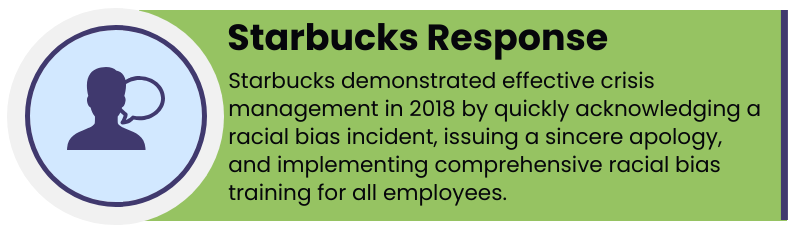
A classic example of effective PR crisis management communication is Starbucks’ response to a racial bias incident in 2018. They quickly acknowledged the issue, apologized sincerely, and announced comprehensive racial bias training for all employees — a textbook case of transparent, action-oriented crisis response that still holds lessons for businesses today.
Implementing a Recovery Plan: Restoring Trust and Rebuilding Reputation
After the initial response, focus shifts to recovery and rebuilding. A well-thought-out recovery plan involves:
- Addressing the root causes of the PR crisis and implementing corrective actions: Ensure that the underlying issues that led to the crisis are resolved and that appropriate measures are taken to prevent recurrence.
- Communicating progress and successes to stakeholders: Keep stakeholders updated on the recovery process, highlighting milestones achieved and actions taken.
- Rebuilding relationships with customers, partners, and investors: Engage with your audience through loyalty programs, strategic partnerships, and investor relations efforts. Demonstrating your commitment to regaining trust is key.
Toyota’s response to their accelerator pedal crisis in 2009–2010 remains an instructive case study. They recalled affected vehicles, fixed the issue, and implemented new quality control measures, while launching a comprehensive communication campaign to rebuild customer trust. For more examples, see our roundup of successful public relations crisis recoveries.
Monitoring and Adjusting: Continuously Assessing the Crisis Response
An effective crisis response is not static; it requires ongoing observation and refinement:
- Tracking media coverage, sentiment, and stakeholder feedback: Use media monitoring tools and analytics to understand how your crisis response is being perceived. Gather feedback from employees, customers, and other stakeholders.
- Adjusting the response plan based on new information: Be flexible and willing to modify your strategy as circumstances evolve. An adaptable approach addresses emerging challenges more effectively.
- Continuously improving crisis communication processes: After addressing the immediate crisis, review your response critically. Identify areas for improvement and refine your crisis management plan.
Johnson & Johnson’s handling of the Tylenol tampering crisis in 1982 is a foundational benchmark in crisis management. They continuously assessed public sentiment and adjusted their strategy accordingly, ultimately achieving a successful product relaunch and a full restoration of consumer trust — a standard that crisis communicators still reference today.
Future-Proofing: Building Long-Term Resilience Against Future Crises
The final component is preparing for potential future crises — ideally before one occurs:
- Developing a crisis communication plan and training team members: Create a comprehensive plan detailing roles, responsibilities, and procedures. Conduct regular drills to ensure everyone is prepared.
- Establishing a culture of transparency and accountability: Foster an organizational culture that values open communication. Encourage continuous learning and improvement in dealing with crises.
- Anticipating and preparing for potential future crises: Identify possible future crises specific to your industry and business. Develop risk management strategies and response plans for these scenarios.
Companies like Amazon and Microsoft maintain dedicated crisis management teams and regularly conduct simulations to prepare for potential issues, demonstrating their commitment to long-term resilience.
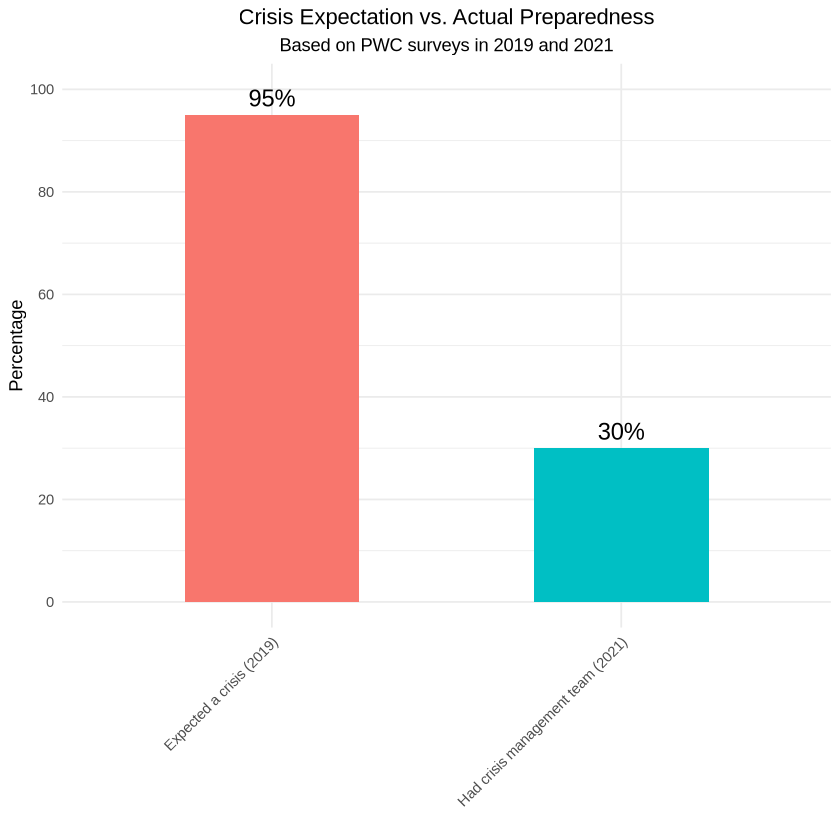
According to PwC’s Global Crisis and Resilience Survey, 96% of business leaders reported experiencing a significant disruption in recent years, yet only 23% felt their resilience plans were sufficiently mature. This gap was thrown into sharp relief in 2020 when the COVID-19 pandemic exposed how many organizations lacked a formal crisis management team or response plan.
of business leaders felt their resilience plans were sufficiently mature, despite 96% having experienced a significant disruption
PwC Global Crisis and Resilience Survey
Conclusion
A well-rounded post-crisis response for medium-sized businesses involves five key areas: diagnosing the crisis, communicating effectively, implementing a recovery plan, monitoring and adjusting the response, and planning for long-term resilience.
By adopting a proactive, data-driven approach, businesses can navigate a crisis more smoothly and emerge stronger. Understanding the steps to rebuild your reputation after a crisis before one occurs is one of the most valuable investments a medium-sized business can make.
Start building your post-crisis response plan today. Preparing in advance equips your team to handle any challenge that arises, safeguarding your business and stakeholders from unforeseen events.
Frequently Asked Questions








Protect Your Online Reputation
Every day you wait, negative content gets stronger. Talk to our experts about a custom strategy for your situation.
Get Your Free Analysis