
Mastering Wikipedia Editing: What is Original Research
Understanding Wikipedia's no original research rule is the key to making edits that survive review and protect your brand's online presence.
Wikipedia's 'no original research' rule prohibits any analysis, interpretation, or conclusion not already published in a reliable secondary source. Editors must act as curators of verified information, not creators of new ideas. Understanding this rule is essential for making edits that survive review, especially when representing a brand or organization.
Wikipedia’s “no original research” rule exists to protect the platform’s integrity, not to create obstacles for editors. It prevents Wikipedia from becoming a venue for personal viewpoints or unverified claims. Anyone managing their brand’s online visibility or contributing to Wikipedia for professional reasons must understand what counts as original research to ensure their edits stick.
This article explains Wikipedia’s definition of original research and presents practical examples to help you avoid common mistakes. It builds on the previous “The Big Fat Guide to Mastering Wikipedia’s Editing Rules” to sharpen your ability to make edits that genuinely benefit the platform.
Key Takeaways
- Wikipedia’s “no original research” rule maintains content quality by preventing the spread of inaccurate or unverified information.
- Any new interpretation or unverified analysis not published in reliable secondary sources qualifies as original research, regardless of its intellectual merit.
- Every source must meet Wikipedia’s credibility standards. Personal opinions, niche blog posts, and anecdotal accounts are rejected — only verifiable information from reputable publications qualifies.
- Drawing new conclusions by combining facts from multiple sources crosses into original research. Use sources as they present themselves rather than constructing your own interpretive narrative.
- Include inline citations. They maintain transparency and accountability while protecting your edits from removal or flagging.
- Avoiding original research is especially important when representing your brand or company on Wikipedia — it keeps your edits credible and durable.
What is Original Research on Wikipedia?
The “no original research” guideline supports Wikipedia’s mission to maintain neutrality while ensuring reliable information. Applying it in practice requires a clear understanding of where the boundaries lie.
Understanding Original Research
Wikipedia defines original research as any new ideas, analyses, or conclusions not published in credible secondary sources. Personal theories, unpublished findings, and novel interpretations drawn from existing sources are all unwelcome. The platform exists as a repository of authenticated, documented knowledge — not a venue for new ideas, however well-reasoned.
Does Your Company Qualify for a Wikipedia Page?
Run a free notability check. Our analysis engine reviews real press coverage against Wikipedia's actual notability standards and emails you a detailed report — no sales call required.
Your notability check is running
We're analyzing coverage of right now — it usually takes 10–15 minutes. Your report link will arrive from noreply@reputationx.com; check spam if you don't see it. Keep reading — nothing else to do here.

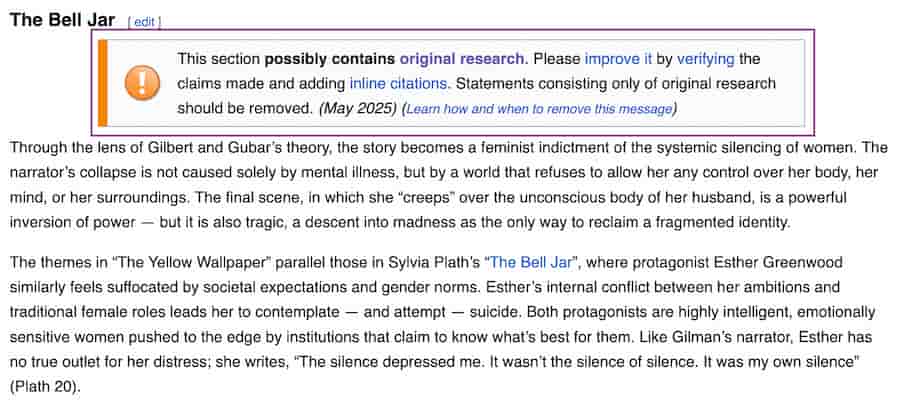
When writing about new technologies, for example, editors may incorporate direct quotes from peer-reviewed scientific papers. What they cannot do is offer speculative thoughts about where an industry is heading — even if the argument seems reasonable. Editors function as curators: their job is to verify statements with published evidence, not to analyze content or steer its direction.
Three Common Examples of Original Research
- Publishing experimental results or internal company data that has not been independently verified and released by a third party.
- Combining multiple sources to develop new interpretations or narratives that don’t exist in any single published source.
- Making speculative statements without support from reliable secondary sources.
Keeping these examples in mind will help you stay on the right side of Wikipedia’s guidelines with every edit. This is especially relevant if you’re also navigating Wikipedia’s conflict of interest rules, which often intersect with original research violations when editors write about their own organizations.
Need Help With Your Wikipedia Presence?
Our team understands Wikipedia’s complex editing policies — including the no original research rule — and can help ensure your page stays compliant and credible.
Why Wikipedia Prohibits Original Research
The reason Wikipedia does not allow original research is to ensure that its content remains neutral and trustworthy.
When Wikipedia pages include personal opinions or unpublished materials, they stop functioning as reliable fact-based references. They begin to resemble opinion platforms — and create potential conflict of interest issues.
For instance, weaving together accounts from multiple credible sources to form your own interpretation of a historical event still constitutes a violation of Wikipedia’s neutral point of view. Your perspective, however reasonable, becomes the lens through which the content is filtered — and that is not permitted.
Edits like these frequently trigger editorial disputes, which are typically resolved by reverting to a previous version of the page. Understanding how Wikipedia resolves editing disputes can help you navigate these situations if your contributions are challenged.
unique devices access Wikipedia each month, making editorial accuracy a matter of global impact
Wikipedia
By complying with the “no original research” policy, you are not just following the rules — you are actively supporting Wikipedia’s mission. The policy also helps protect your brand’s credibility when you represent your company on the platform. Every edit should be professional, responsible, and grounded in factual, published material.
Conclusion
The “no original research” policy exists to preserve the accuracy of Wikipedia’s information and sustain reader trust. Committing to published, reliable sources improves the durability of your edits and helps protect Wikipedia’s standing as a trusted global reference.
In an online landscape saturated with subjective content, Wikipedia holds a distinct position as a source of verified, accurate, and neutral information. Editors carry a real responsibility: demonstrating expertise means selecting trustworthy sources and presenting information with precision and restraint.
The editorial choices you make on Wikipedia — particularly around citations — have downstream effects on research, business decisions, and everyday readers seeking reliable information. Holding yourself to a high standard strengthens your reputation across content marketing, reputation management, and industry thought leadership alike.
Responsible editing goes beyond rule compliance — it means upholding truth and transparency in service of a shared goal: delivering reliable, meaningful information to the approximately 1.5 billion unique devices that access Wikipedia each month (Wikipedia).
Frequently Asked Questions







Protect Your Online Reputation
Every day you wait, negative content gets stronger. Talk to our experts about a custom strategy for your situation.
Get Your Free Analysis