
What Are Wikipedia’s Article Deletion Policies?
Understanding Wikipedia's deletion framework is the first step to keeping your article live, credible, and protected from community removal.

Wikipedia uses three formal deletion processes — Speedy Deletion, Proposed Deletion, and Articles for Deletion — to enforce standards around notability, neutrality, and verifiable sourcing. Understanding these processes is essential for anyone creating or managing Wikipedia content. Articles lacking strong third-party references are vulnerable to removal regardless of writing quality.
Wikipedia’s deletion rules often create confusion because they appear both strict and unpredictable. Wikipedia maintains its credibility through these policies while avoiding biased and promotional content and maintaining a clear organizational structure.
The English Wikipedia receives an average of over 2 edits and more than 4,000 page views every second. As of publication, the English Wikipedia includes over 7 million articles and averages around 500 new articles per day. Around 11 MB of encyclopedic text is added daily, totaling roughly 4 GB per year.
With this much editing activity, strict article deletion policies are essential to control the massive content flow.
This article explains Wikipedia deletion rules in plain language — what they mean, why they exist, and how to navigate them effectively. A firm grasp of these rules will help you protect your Wikipedia content.
Key Takeaways
- Wikipedia deletion processes follow established community standards requiring content to be neutral, reliable, and notable.
- Three independent procedures govern deletion: Speedy Deletion for immediate removal, Proposed Deletion (PROD) for a seven-day review window, and Articles for Deletion (AfD) for community consensus.
- Articles must demonstrate notability and verifiable sources to remain on the platform.
- Without robust third-party references, an article is ineligible to stay.
- Promotional language triggers quick removal — content resembling a press release or brochure is flagged immediately.
- The most common deletion triggers are insufficient citations, obscure topics, and copyright violations.
- Content merger or redirection often preserves more value than outright deletion.
- Building content around neutrality, strong sourcing, and genuine collaboration reduces deletion risk significantly.
The following sections examine the deletion policy framework and practical tools for managing it.
What is Wikipedia’s Article Deletion Policy?
Wikipedia’s deletion policy is the community-established method for deciding which content stays and which is removed. All articles must satisfy four key criteria: quality standards, notability, neutrality, and verifiability. These policies derive from Wikipedia’s core founding principles.
Content that fails to meet these standards will be flagged or removed.
Overview of Wikipedia’s Deletion Framework
Wikipedia uses three primary procedures to handle content deletion.
- Speedy Deletion: Quickly removes entries that are clearly inappropriate — spam, vandalized pages, or overtly promotional content.
- Proposed Deletion (PROD): A less severe process for uncertain content. Editors have seven days to defend, support, or improve pages marked for removal.
- Articles for Deletion (AfD): The most detailed evaluation process, using open debate and community consensus for content with uncertain significance or neutrality.
For example, a software startup founder’s article that promotes a product without third-party references will likely qualify for speedy deletion. An article about a startup with minimal independent media coverage would go through AfD, where editors carefully assess its merits.
Does Your Company Qualify for a Wikipedia Page?
Run a free notability check. Our analysis engine reviews real press coverage against Wikipedia's actual notability standards and emails you a detailed report — no sales call required.
Your notability check is running
We're analyzing coverage of right now — it usually takes 10–15 minutes. Your report link will arrive from noreply@reputationx.com; check spam if you don't see it. Keep reading — nothing else to do here.
Why Deletion Policies Support Content Integrity
Deletion policies protect Wikipedia from advertisements, misinformation, weakly sourced content, and spam. Without them, dubious and biased content would go unchecked.
Every article on Wikipedia needs reliable third-party evidence to maintain credibility. Deletion policies enforce that standard by preventing low-quality or biased content from entering the system.
The community holds decision-making power through the AfD debate process. Editors use specific guidelines, policies, and independent coverage to argue for or against retention — ensuring fairness and neutrality. Understanding Wikipedia’s verifiability rules is essential before submitting or defending any article.
Deletion as a Maintenance Tool
Content removal is a fundamental maintenance requirement.
of AfD nominations between 2005–2020 did not close as 'keep' — only 16% of nominated articles survived the process
Wikipedia Deletion Records
According to Wikipedia’s deletion records, an average of 79 nominations for deletion were made per day between 2005 and 2020, totaling 449,950 nominations — and only 16% closed as keep. This dataset underscores how consistently and rigorously the community applies its deletion standards.
By removing substandard content, Wikipedia’s editing community prevents the platform from expanding uncontrollably and becoming difficult to navigate. This practice keeps the platform fresh, credible, and useful.
Types of Deletion on Wikipedia
Understanding the multiple deletion processes is essential for anyone managing Wikipedia content. Each approach applies to different situations, and knowing which is which prevents unexpected outcomes.
Speedy Deletion
Speedy deletion eliminates content that is clearly inappropriate — spam articles, vandalism, pasted brochures, or irrelevant single-sentence entries. This removal happens rapidly and requires no extended discussion.
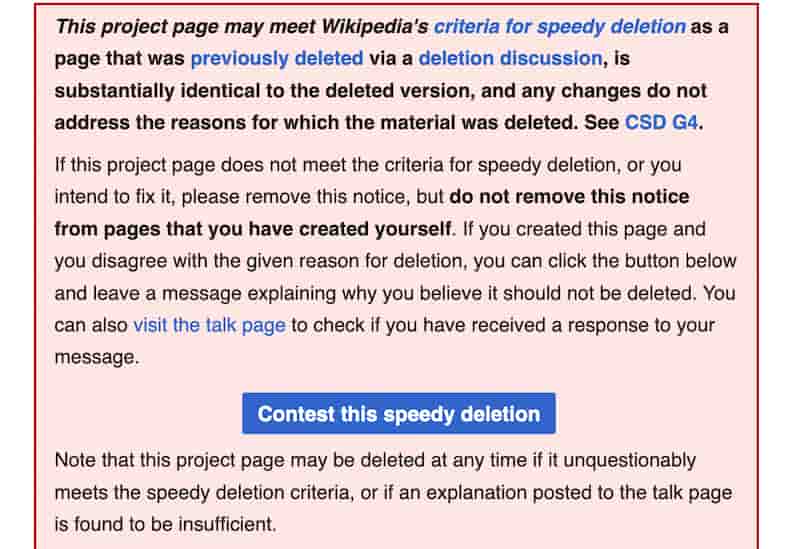
An article about a new product line using promotional language such as “revolutionary market leader” and lacking independent references will face quick deletion. Reversing the decision typically requires solid evidence that the guidelines were misapplied — which generally means presenting independent third-party references.
Is Your Wikipedia Page at Risk?
Our team helps brands and executives build, protect, and defend Wikipedia content that meets community standards — before a deletion notice appears.
Proposed Deletion (PROD)
PROD is better suited for uncertain cases. An article about an award ceremony with minimal third-party coverage, for example, might receive a PROD tag. This activates a seven-day review period during which anyone can contest the tag or strengthen the article with credible references.
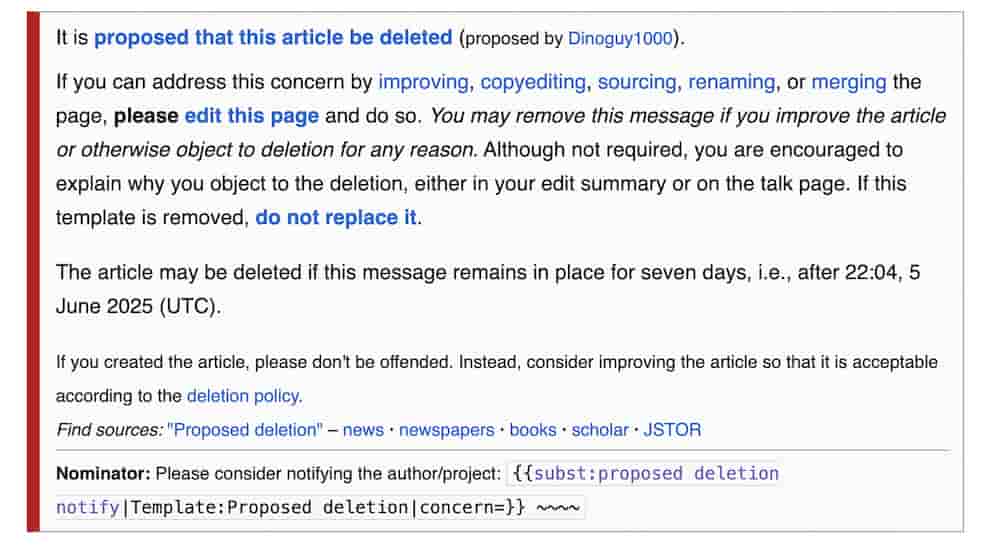
This procedure gives editors a genuine opportunity to save articles rather than face immediate removal.
Articles for Deletion (AfD)
AfD handles difficult or disputed deletion cases. A seven-day open discussion allows editors to debate whether an article should stay, based on Wikipedia policies. The transparent process leads to fair, consensus-driven decisions. For a deeper look at how this unfolds, see our guide to the Wikipedia Articles for Deletion (AfD) process.

Other Deletion Alternatives
Articles are sometimes handled through merging into related entries, redirecting to broader topics, or temporary removal pending fixes. Merging combines two articles that duplicate content into one unified entry, improving both clarity and depth.

Common Reasons for Article Deletion
The most frequent causes of Wikipedia article deletion fall into four categories.
Notability Issues
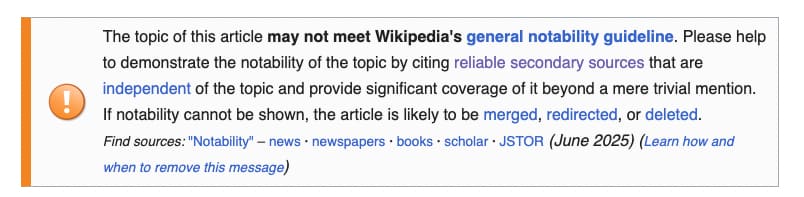
Wikipedia guidelines require that independent sources have provided substantial coverage of a subject. Without verified independent media coverage, a subject does not qualify for inclusion. Learn more about how influence and authority affect Wikipedia eligibility before submitting a new article.
Weak or Insufficient Sources
Content requires full documentation through reliable third-party references. Articles that rely solely on sources directly connected to the subject — such as the subject’s own website or press releases — will not survive scrutiny.

Promotional Tone
Superlatives and marketing language trigger immediate deletion flags. Any entry that reads like an advertisement rather than an encyclopedia article is at risk.

Policy Violations (Copyright and Vandalism)
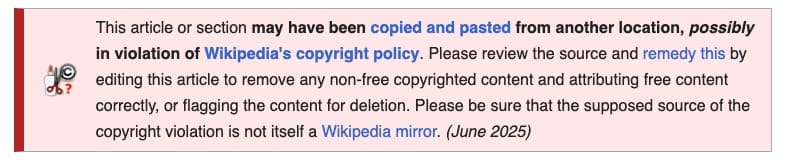
The community acts quickly against serious violations including copyright breaches, defamatory content, attack pages, and marketing disguised as neutral information.
Participating in the Deletion Process
Wikipedia’s deletion policies can seem complicated at first, but they are manageable once you understand the process.
Nominating Articles
- Identify which deletion criteria the content fails to meet.
- Use proper templates ({{db-advert}}, {{subst:prod}}) and cite Wikipedia rules explicitly.
- Notify the original article’s authors politely.
Defending Articles
- Add independent references quickly to establish notability.
- Rewrite promotional language as factual, neutral statements.
- Present policy-backed arguments respectfully on AfD discussion pages.
Engaging Constructively
Knowing how to defend your edits is critical, especially when dealing with veteran editors. Although over 160,000 users have participated in AfD discussions, more than half of all debate comments were contributed by just 1,218 users — a small core group that shapes most deletion outcomes.
- Keep discussions focused on policy rather than personal opinion.
- Propose alternatives such as mergers or redirects when deletion seems disproportionate.
- Rely on community-backed decisions rather than personal assumptions.
If you are new to Wikipedia’s editing environment, our guide on resolving disputes and conflicts on Wikipedia offers practical strategies for navigating these conversations.
Deletion and Wikipedia’s Broader Maintenance Practices
Deletion is one part of Wikipedia’s larger maintenance ecosystem. Several other practices keep the platform healthy:
- Regular editors improve entries by adding reliable sources, ensuring neutrality, and cleaning up formatting.
- New editors whose articles are flagged typically receive an opportunity to fix problems before facing removal.
Conclusion
Success on Wikipedia depends on aligning with its core values: neutral information, credible sourcing, and genuine collaboration. Well-balanced articles with thorough documentation are far more likely to survive than content that tries to work around the system. When done correctly, Wikipedia contributions protect your subject’s presence while adding real value to the world’s largest collaborative encyclopedia.
Frequently Asked Questions







Protect Your Online Reputation
Every day you wait, negative content gets stronger. Talk to our experts about a custom strategy for your situation.
Get Your Free Analysis