
How to Stop Your Wikipedia Page from Removal
Your Wikipedia page faces its greatest risks in the first few months — here is how to protect it before editors make the decision for you.

New Wikipedia articles face heavy scrutiny and are vulnerable to deletion, especially when they fail to meet notability guidelines or the neutral point of view policy. Protecting your page requires more than good writing — it demands credible sourcing, ongoing monitoring, and active participation in the Wikipedia editor community. Addressing weaknesses before editors do and staying engaged with page activity are the most effective ways to ensure long-term survival of your article.
How to Stop Your Wikipedia Page from Removal
-
1
Monitor your Wikipedia page consistently
Neglecting your Wikipedia page allows its quality to decline and increases the risk of deletion. Because Wikipedia is collaborative, other editors can introduce mistakes or remove important content without your knowledge. Consistent monitoring helps you catch problems early and maintain accurate, community-compliant content.
-
2
Use the watchlist to track page changes
Wikipedia's built-in watchlist sends you notifications whenever edits are made to pages you are tracking. This allows you to quickly identify and respond to harmful alterations or false information before they escalate. For example, a communications director at a medical devices firm used watchlist alerts to catch unsourced safety claims and address them constructively on the Talk page.
-
3
Review your page's revision history regularly
Wikipedia maintains complete revision logs for every article, giving you a clear record of all changes over time. Reviewing this history weekly or biweekly helps you detect recurring problematic edits, identify contributors adding inaccurate information, and spot emerging patterns. This oversight is especially important if your organization frequently attracts public attention.
-
4
Update your page with credible new developments
Keeping your entry current with verified information signals active stewardship and helps prevent deletion. Add updates such as leadership changes, funding milestones, or notable achievements, and always reference neutral third-party sources like established news outlets rather than internal blog posts or press releases. Independent sources strengthen both neutrality and overall content credibility.
-
5
Check citations regularly for validity and accuracy
Website links expire over time, creating broken citations that can trigger 'citation needed' warnings and draw negative editor attention. Regularly verify that all your sources remain accessible and still support the claims they are cited for. Tools like Checklinks can help you scan for dead URLs, while organizations with many references may benefit from more robust link-monitoring software.
-
6
Address community flags and warnings promptly
When Wikipedia editors flag your page with warnings such as 'neutrality disputed' or 'advertisement-like tone,' respond quickly and respectfully. Engage on the Talk page with a constructive tone and make concrete, neutral edits backed by third-party sources to resolve the identified issues. Rapid, good-faith responses typically lead to warning removal before problems escalate to deletion proceedings.
New Wikipedia articles are fragile. They’re usually under a lot of scrutiny and because they are new are not usually robust. The first few months are a dangerous time for a new Wikipedia article, but doing it right the first time pays big dividends. Here is what happens in each of those first months.
To preserve your Wikipedia article, it must meet the community expectations beyond writing quality because the guidelines are strict – especially notability and NPOV. If your page is in danger of deletion, it is quite often due to one of these two reasons. Whomever developed your page, or edited it, probably didn’t know what they were doing. In fact, you should probably overdo it a bit. If you see that someone added weak references to your page, you could go on the Talk page and offer stronger alternatives or even the removal of the offending reference. You might as well get ahead of things before editors do.
The checklist provides guidance to verify notability status, and it helps you actively address community feedback while maintaining your page. Your Wikipedia page will maintain longevity through fundamental principles that have no secret components. Let’s begin to protect the Wikipedia home you worked hard for.
Key Takeaways
- Notability is your baseline. Before publishing, confirm your topic clearly meets Wikipedia’s notability guidelines. Your topic requires independent coverage from reliable sources. Conduct this check before posting to prevent future problems. This post explains notability.
- Stay neutral, stay credible. The purpose of Wikipedia is to function as an encyclopedia, rather than a promotional tool. Your Wikipedia content must maintain unbiased factual information. The balance of your article depends on reputable third-party sources, which serve as support for each statement to remain stable.
- Keep constant watch over your page activity. Your page requires maintenance at the same level as gardening does for it to flourish. Pay attention to page edits and update your content with current facts and references, while addressing community alerts and warnings.
- Collaborate constructively. Wikipedia depends on a group of editors to operate. Your positive approach to handling professional disagreements and your thoughtful contributions to discussions build stronger credibility for your page and your role as a contributor.
- Sidestep rookie errors. The process of article deletion is triggered by three common mistakes, including the use of weak or biased sources, failure to meet notability requirements, and excessive self-promotion. Paying early attention to these mistakes will prevent future messy maintenance tasks.
Regularly Monitor and Update the Page
Know before someone stumbles up the issue. The maintenance of your Wikipedia page depends on consistent attention because neglect will cause its quality to decline and increase the risk of deletion. Other editors can easily make mistakes or forget important content that could compromise the value of your Wikipedia page because of the collaborative nature of Wikipedia. Continuous monitoring and proactive updates help maintain accurate content while following community standards.
Use the Watchlist to Track your Page for Changes
The built-in watchlist on Wikipedia notifies you about all edits made to the pages you have tracked. The watchlist feature allows you to instantly identify and fix dangerous alterations or false information on your page.
Does Your Company Qualify for a Wikipedia Page?
Run a free notability check. Our analysis engine reviews real press coverage against Wikipedia's actual notability standards and emails you a detailed report — no sales call required.
Your notability check is running
We're analyzing coverage of right now — it usually takes 10–15 minutes. Your report link will arrive from noreply@reputationx.com; check spam if you don't see it. Keep reading — nothing else to do here.
Real scenario: The communications director of a medical devices firm identified an unknown user who added safety concerns about products to the page through their watchlist notifications. These delivered instant alerts about the changes, allowing them to provide well-sourced facts on the Talk page that editors used to improve the page – averting deletion.
Regularly Review Revision History
Wikipedia provides complete revision logs for every article page. The log provides a means to detect recurring problematic edits and track contributors who consistently add wrong information as well as detect new patterns.
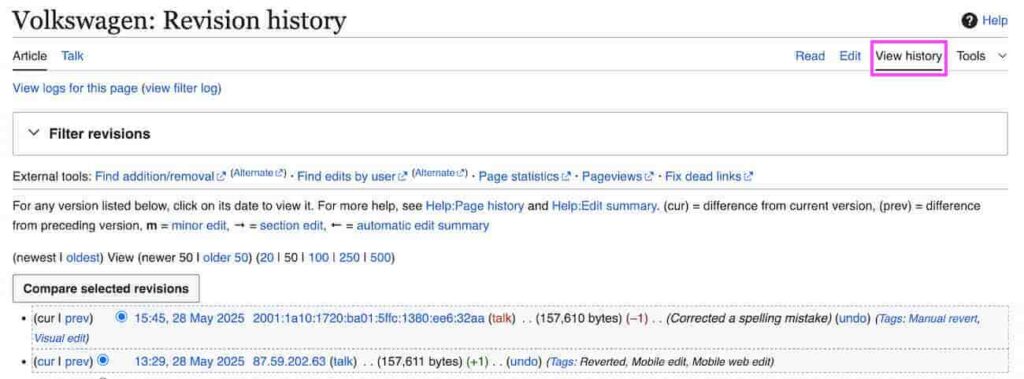
Weekly or biweekly review of your article history provides oversight, especially when your company faces frequent public attention, since it attracts more modifications from unverified editors.
Proactively Update the Page with Credible Developments
Your active involvement in keeping your entry current will maintain its relevance and prevent deletion from Wikipedia. You should incorporate updates such as organizational achievements, leadership appointments, and notable accomplishments, referencing them to dependable third-party news sources.
Example: Your startup’s recent venture funding achievement requires a reference to neutral, trustworthy sources like TechCrunch instead of internal blog posts or press releases. The use of third-party independent sources provides needed neutrality while enhancing the overall credibility of your content.
Check Citations Regularly for Validity and Accuracy
As website links expire, they can create missing citations, which might trigger “citation needed” warnings.

Maintaining your sources requires regular updates to verify their ongoing accessibility and validity.
Tip: Tools like Checklinks allow you to scan your entry for dead URLs, but organizations with numerous references should consider using more detailed software.
Quickly Address Community Flags or Warnings
The Wikipedia community actively monitors pages, and “neutrality disputed” and “advertisement-like tone” flags should receive immediate attention.

Your commitment will become evident through an immediate response to these issues by using respectful talk-page dialogue and making concrete, neutral modifications.
Rapid positive responses usually lead to warning removal without progressing to more serious issues.
Example: A well-known cosmetic brand handled the flagged promotional sections by adding neutral information from third-party sources. The community editors reviewed and eliminated the cautionary banner after just a few days, which prevented additional problems on the otherwise compliant page.
These practical steps can help you minimize Wikipedia page deletion by actively maintaining the quality and relevance of your page. For extensive strategic guidance about flag resolution and citation management, you should consult our foundation resource, The Guide to Wikipedia Article Deletion & Maintenance.
Conclusion
Protecting your Wikipedia page requires more than just rule compliance, as it safeguards your organization’s reputation while providing clear information to Wikipedia’s extensive readership. Wikipedia articles rank well in SEO, which influences decisions from stakeholders as well as customers and peers.
The fast-paced nature of business, alongside changing public perspectives, requires businesses to reassess what constitutes balanced or notable content from one day to the next. Your dedicated Wikipedia page maintenance provides an opportunity to build meaningful trust with your audience through responsible and transparent practices.
Your Wikipedia presence represents an ongoing exchange between you and the worldwide group of editors and readers who contribute to the platform. Will you view Wikipedia as a task or transform it into an adaptable component of your executive communication approach?
Assess the story you build through time, along with your displayed values and your desired level of online involvement. Wikipedia maintains strict standards, but it provides generous benefits to those who deliver high-quality content and consistently put in effort alongside genuine collaborative work. Protect your reputation proactively. The time and effort you dedicate, along with your authentic approach, will always bring valuable returns.
Frequently Asked Questions





Protect Your Online Reputation
Every day you wait, negative content gets stronger. Talk to our experts about a custom strategy for your situation.
Get Your Free Analysis