
How to Perform a Thorough Brand Analysis: SWOT Analysis for Brands Online
Discover how a structured SWOT-based brand analysis reveals what customers really think and where your online reputation is most vulnerable.

- Table of Contents:.
- Key Factors of Brand Reputation Analysis.
- The SWOT Framework for Reputation Analysis.
- Strengths.
- Weaknesses.
A brand reputation analysis explores the sentiment reflected by the online content associated with your brand. This process involves evaluating various aspects of a brand to gain insights into its performance, perception, and strategic positioning. Moreover, the analysis takes into account the relative visibility of search and social results that might influence the sentiment of people performing searches for your brand.
How to Perform a Thorough Brand SWOT Analysis Online
-
1
Identify your key brand reputation factors
Examine four core areas: positive brand indicators, negative brand indicators, online reviews, and online mentions across social media and authority sites. These factors reveal how your brand is perceived digitally and where sentiment is strongest or weakest. Also consider the visibility of search and social results that influence how people find and perceive your brand.
-
2
Assess your brand's strengths
Look for areas where your brand excels digitally, such as a high volume of positive reviews, strong social media presence, engaging web content, and solid SEO rankings. Documenting these strengths gives you a foundation to build on when shaping your reputation strategy. Leveraging what already works helps reinforce your competitive advantage online.
-
3
Uncover and address brand weaknesses
Pinpoint factors undermining your online reputation, including negative reviews, low social media engagement, a poorly optimized website, or negative press coverage. Keep in mind that 60% of consumers say negative reviews made them avoid a business, so early identification is critical. Addressing weaknesses before they escalate prevents lasting damage to your brand image.
-
4
Spot external opportunities to improve reputation
Scan the landscape for external factors your brand can capitalize on, such as emerging social platforms, influencer partnerships, gaps in competitors' digital strategies, or evolving SEO practices. Identifying these opportunities allows you to adapt your strategy proactively rather than reactively. Acting on the right opportunities can meaningfully enhance your brand's online sentiment.
-
5
Identify and plan for reputation threats
Recognize external risks that could harm your brand, including negative viral content, increased competition, algorithm changes, or adverse PR incidents. Building contingency plans for these threats enables a faster, more controlled response when issues arise. Proactive threat awareness limits the potential damage to your brand's online standing.
-
6
Set clear objectives before analyzing
Before diving into data collection, define what you want to achieve with the brand analysis, such as identifying SWOT factors, understanding target audiences, or evaluating competitive positioning. Clear objectives ensure every subsequent action aligns with your brand's strategic goals. This focus prevents scope creep and keeps the analysis relevant and actionable.
-
7
Collect and analyze data with the right tools
Use a combination of quantitative metrics like website traffic and social media engagement alongside qualitative insights from customer feedback and sentiment analysis. Brand analytics software can monitor these metrics and provide a comprehensive performance overview. Compare your results against industry benchmarks and competitors to understand how well your brand aligns with intended market perceptions.
-
8
Translate insights into actionable strategies
Once patterns and trends emerge from your data, convert them into concrete strategic actions such as refining your marketing approach, improving customer engagement, or redefining your value proposition. Ground each decision in the specific findings from your SWOT analysis rather than general assumptions. This data-driven approach drives sustainable brand growth and strengthens your competitive positioning over time.
A brand reputation analysis explores the sentiment reflected by the online content associated with your brand. By considering various factors, it provides a comprehensive overview of your brand’s online reputation. This article offers detailed insight into conducting a reputation analysis for your brand.
This process involves evaluating various aspects of a brand to gain insights into its performance, perception, and strategic positioning. By conducting a thorough brand perception analysis, companies can see how customers view and feel about their brand, which is crucial for maintaining a positive image and fostering customer loyalty. Consumers mention brands an average of 90 times per week, making consistent brand monitoring essential.
Key Factors of Brand Reputation Analysis
The analysis scrutinizes four main aspects:
- Positive Brand Indicators: These identify the strengths of a brand, such as consistently good content, which positively impacts its online portrayal.
- Negative Brand Indicators: The analysis reveals potential weaknesses, such as poor content, that might impede the maintenance of a positive reputation.
- Online Reviews: The sentiment of your brand can be gauged via online reviews, which serve as a critical indicator.
- Online Mentions: Sentiments regarding your brand reflected through mentions on social media, review sites, or other authority sites are evaluated.
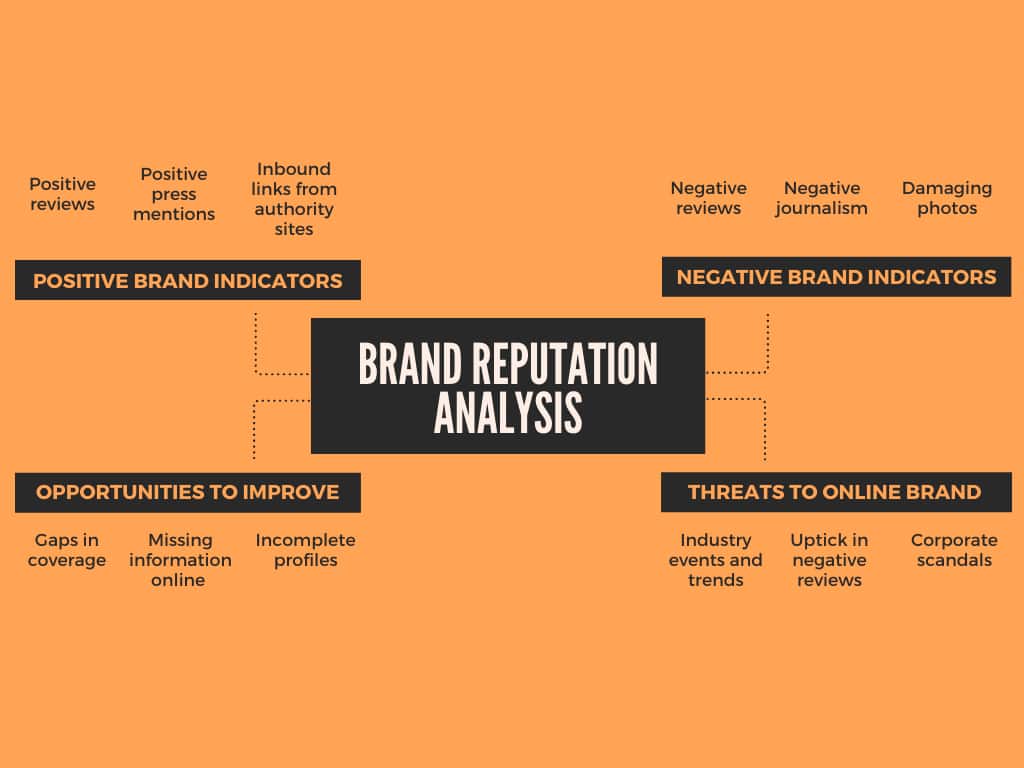
The analysis also accounts for the relative visibility of search and social results that may influence how people perceive your brand when searching online.
The SWOT Framework for Brand Reputation Analysis
The SWOT (Strengths, Weaknesses, Opportunities, Threats) Analysis serves as a valuable tool in assessing the online reputation landscape.
Get a Free Reputation Assessment
Find out what people see when they search for you online. No obligation — results in 24 hours.
Strengths
Strengths relate to areas where your brand excels digitally and stands apart from competitors. These might include a high volume of positive online reviews, a robust social media presence, engaging web content, and strong SEO rankings. Recognizing these strengths allows a brand to leverage them, enhancing its online reputation and visibility.
Weaknesses
Weaknesses are factors that prevent your brand from maintaining a positive online reputation. These could range from negative reviews and low social media engagement to a poorly optimized website or negative press coverage. Identifying weaknesses creates an opportunity to address issues before they cause lasting harm.
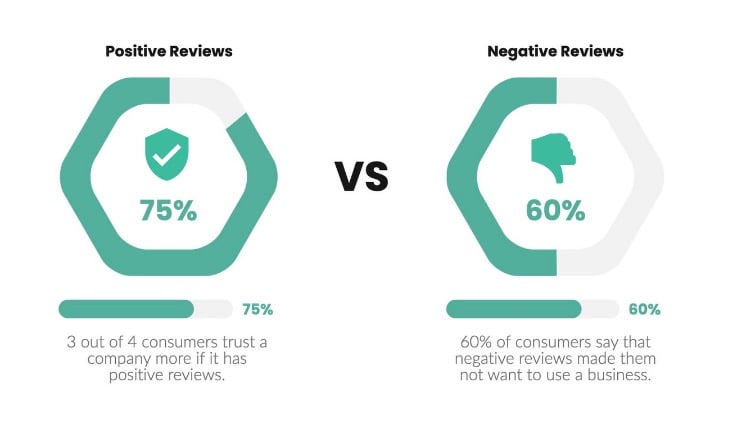
60% of consumers say that negative reviews made them not want to visit a business.
Opportunities
Opportunities involve external factors your brand can capitalize on to improve its online reputation. These might include emerging social media platforms, influencer partnerships, gaps in competitors’ digital strategies, or new SEO practices. Identifying these opportunities allows a brand to adapt its strategy and enhance its online sentiment.
Threats
Threats encompass external factors that could harm your online reputation. These include negative viral content, increased competition, changes in search engine algorithms, or adverse public relations incidents. Identifying potential threats enables proactive planning and response strategies that limit damage to your brand.
The Role of SWOT Analysis in Strategic Planning
A SWOT analysis gives brands a clear picture of their current online reputation landscape. This understanding is essential for developing an effective reputation management strategy.
Knowing your strengths lets you build on what works. Recognizing weaknesses helps you address problems before they escalate. Spotting opportunities keeps you ahead of industry trends. Understanding threats allows you to create contingency plans and respond proactively to potential crises.
When used correctly, a SWOT analysis helps your brand navigate the digital landscape with confidence. With thorough insight into your brand’s online sentiment, you can make informed strategic decisions, maintain a positive brand reputation, and foster long-term success.
Practical Steps for Brand Analysis
Setting Clear Objectives and Goals
Begin a thorough brand analysis by establishing clear objectives that guide the entire project. Objectives might include identifying SWOT factors, understanding target audiences, and evaluating competitive positioning. This initial step ensures all subsequent actions align with the brand’s strategic goals.
“Branding demands commitment; commitment to continual re-invention; striking chords with people to stir their emotions; and commitment to imagination. It is easy to be cynical about such things, much harder to be successful.”
Sir Richard Branson
Utilizing the Right Tools and Methods
Employ a mix of tools and methods to collect both quantitative and qualitative data. Quantitative data comes from metrics like website traffic and social media engagement, while qualitative insights come from customer feedback and sentiment analysis. Brand analytics software helps monitor these metrics and provides a comprehensive view of performance.
Analyzing and Interpreting Data
Once data is collected, analyze it to identify patterns, trends, and insights. Compare brand performance against industry benchmarks and competitors. This analysis reveals how well the brand aligns with intended market perceptions and how effective current marketing strategies are.
Actionable Insights and Strategic Planning
Translate data insights into actionable strategies. This could include adjustments to marketing approaches, improved customer engagement tactics, or a redefined value proposition. Strategic planning based on these insights drives brand growth and strengthens competitive positioning.
Leveraging Brand Analysis for Strategic Decision-Making
Enhancing Brand Strategy and Messaging
Brand insights allow businesses to refine their strategic messaging and align it with customer expectations. By understanding specific customer pain points and preferences, companies can tailor marketing campaigns and product offerings more effectively. This alignment strengthens brand identity and ensures consistent messaging across all platforms.
Improving Customer Experience and Loyalty
Analytics help shape customer experiences by identifying interaction patterns and predicting future behaviors. Insights from customer experience data enable businesses to streamline processes, enhance satisfaction, and boost loyalty. Personalization driven by accurate analytics fosters a deeper connection with customers and strengthens long-term brand loyalty.
Identifying and Seizing Market Opportunities
Brand analysis reveals market positioning gaps and competitive advantages that businesses can act on. By analyzing trends and customer feedback, companies can innovate and adapt their offerings to meet evolving consumer needs. Opportunities that might otherwise go unnoticed become visible through thorough brand analysis.
Proactive Reputation Management and Crisis Avoidance
Monitoring brand sentiment and customer feedback is essential for proactive reputation management. By understanding public perception and identifying potential issues early, businesses can implement strategies to manage and mitigate crises before they escalate. This keeps the brand’s reputation intact and its audience’s trust secure.
Case Study: Apple
One of the most compelling examples of successful brand analysis and revitalization is Apple Inc. In the late 1990s, Apple was struggling after losing its identity as a pioneering personal computer brand. Its products had grown stale, its brand identity was muddled, and it was rapidly losing market share.
When Steve Jobs returned as CEO in 1997, he initiated a comprehensive brand analysis that charted Apple’s path forward. Jobs and his team returned to Apple’s core identity: innovative design, simplicity, and a user-first experience. They applied these principles across product design, marketing, and retail.
Apple’s “Think Different” campaign in 1997 launched the brand revitalization by celebrating innovators who pushed the world forward. The iMac’s 1998 debut, with its translucent colored cases, signaled that Apple was once again leading on design. This focused brand strategy enabled Apple to introduce revolutionary products — the iPod, iPhone, and iPad — and become one of the most valuable and admired brands in the world.
Frequently Asked Questions







Protect Your Online Reputation
Every day you wait, negative content gets stronger. Talk to our experts about a custom strategy for your situation.
Get Your Free Analysis