
Online Scandals – What Not to Do When Reputational Crisis Happens
When a corporate scandal hits, the wrong response can be more damaging than the scandal itself — here's what history's biggest failures teach us.

High-profile CEO scandals at companies like Boeing, Vox Media, and Fox News show how quickly leadership misconduct can devastate an organization's reputation. These cases reveal that how a company responds in the immediate aftermath of a crisis matters as much as the scandal itself. By studying what went wrong, business leaders can build stronger reputation management strategies before a crisis hits.
Can you imagine how it felt to be the Chief Marketing Officer at Oxfam after their deputy CEO, Penny Lawrence, resigned because of a sex crimes scandal? If the first word that enters your mind is “stressed,” that’d be an understatement. A serious CEO scandal can ruin the reputation of an entire company, not just those at the top.
Unfortunately, situations like these are neither rare nor unheard of in the corporate realm.
Some of the world’s largest and most notable brands — powerhouses many believed to be indestructible — have collapsed under the scrutiny brought on by business scandals.
It’s not far-fetched to say that business reputation damage of this magnitude, if improperly managed, can be irreversible. Yet, on a regular basis, we hear stories similar to those of Harvey Weinstein and Bill O’Reilly, whose careers and companies are now plagued by controversy.
It’s easy to become distracted by the disgrace associated with these stories, but why not learn from the misfortunes of these once-successful leaders? As the old saying goes: “Those who do not learn history are doomed to repeat it.” These cases lay the groundwork for what not to do as the authority figure of a well-known business — and underscore the importance of a solid reputation management strategy. Understanding what constitutes reputational harm — and how quickly it can escalate — is the first step toward protecting any organization.
With that in mind, here’s a rundown of some of the worst CEO scandals in recent history and what they reveal about crisis response.
Harry Stonecipher and Boeing’s Repeated Leadership Failures
Few business scandals are as perplexing as that of Harry Stonecipher, the former CEO of one of the world’s largest aircraft manufacturers.
Stonecipher emerged from retirement to take over in 2003, after the previous CEO, Paul Condit, was forced out for illegally possessing a competitor’s classified documents. You would think Stonecipher would have taken a more cautious approach — but he did not.
Get a Free Reputation Assessment
Find out what people see when they search for you online. No obligation — results in 24 hours.
In 2005, information about an affair with a Boeing employee began to circulate. The board determined his actions violated their code of conduct, and Stonecipher had no option but to resign. This is a clear example of why it pays to learn from the mistakes of your predecessor.
Lockhart Steele and Vox Media’s Harassment Reckoning
Steele is a classic case of a media executive meeting their demise due to a sexual harassment case. After an employee made claims against him in a blog post, Vox Media investigated and permanently dismissed him.
Multiple women were found to have witnessed and experienced inappropriate conduct, which sealed his departure. Vox Media moved quickly on damage control, banning alcohol from its holiday parties and hiring a new female CEO. Vox Media’s investment in reputation management and brand monitoring continued for years after — until 2026, when the company itself was broken up and sold: Lupa Systems (James Murdoch) acquired roughly half of Vox Media’s properties in May 2026, and Penske Media Corporation completed acquisition of the remainder that June, ending Vox Media’s run as an independent company.
Roger Ailes and the Fox News Fallout
The former Chairman and CEO of Fox News faced a media firestorm on July 6, 2016, when anchor Gretchen Carlson filed a sexual harassment lawsuit against him. Carlson claimed she was dismissed after refusing his advances. Fox News star Megyn Kelly also spoke out, confirming she had experienced harassment by Ailes.
Ailes resigned with a $40 million payout. He passed away in May 2017, but the fallout reshaped Fox News for years. Rupert Murdoch initially stepped in to oversee recovery, and Lachlan Murdoch has served as Executive Chairman and CEO of Fox Corporation since 2019, following Rupert Murdoch’s formal retirement in November 2023.
Roy Price and the Amazon Studios Scandal
The head of Amazon Studios was suspended — and eventually resigned — after an online story accused him of sexual harassment. The accuser, producer Isa Hackett, worked on one of Amazon’s television shows. The fallout extended beyond his career: his fiancée called off their wedding shortly after the story broke in October 2017.
Amazon Studios moved decisively by hiring NBC’s Jennifer Salke as his replacement. A senior vice president stated that “Amazon does not tolerate harassment or abuse of our employees or our business partners.” The studio has worked hard to rebuild its reputation since — earning significant industry recognition, including a Best Picture win at the Academy Awards for CODA in 2022.
Is Your Executive Reputation at Risk?
A single scandal can unravel years of brand-building. Our team helps organizations assess vulnerabilities and build proactive reputation strategies before a crisis strikes.
Larry Nassar and the U.S. Olympic Committee’s Systemic Failures
The world of sports was rocked between 2016 and 2017 when widespread accusations against Larry Nassar, doctor for the U.S. Olympic gymnastics team, became public — though internal reports had surfaced as early as 2015. Two young women initially came forward, but many more athletes followed.
The FBI found 37,000 files of child pornography on a computer belonging to Nassar. He was convicted on a federal pornography charge, required to register as a child sex offender, and formally sentenced in January 2018.
The U.S. Olympic and Paralympic Committee (USOPC), which rebranded from the USOC in 2019, publicly denounced Nassar’s misconduct and forced the resignation of the entire USA Gymnastics board. However, their reputation repair efforts have faced continued scrutiny — a 2021 Senate report found that the FBI mishandled the investigation, underscoring how difficult the road to rebuilding institutional trust can be.
Jack Welch and the Limits of a Legacy
Jack Welch’s story teaches us that even the most celebrated executives aren’t immune to scandal. After 30 years at the helm of General Electric, Welch’s affair with Suzy Wetlaufer became public news. He had retired the year before, so the affair did not directly impact GE.
However, combined with past business practices and Wetlaufer’s high-profile role as editor of Harvard Business Review, the story generated significant attention. Welch’s personal brand took a lasting hit. Although he later married Wetlaufer, his professional profile never fully recovered. Welch passed away on March 1, 2020, leaving behind a complicated legacy — a reminder that personal conduct can overshadow even the most celebrated business careers.
Wayne Pacelle, Mike Cagney, and Travis Kalanick
Wayne Pacelle, The Humane Society
Pacelle’s case stands apart from others on this list: despite accusations of sexual misconduct from multiple women, he initially retained his CEO role after a formal board vote. Many were surprised — but the tides quickly changed when several of the organization’s major donors threatened to pull their contributions.
Pacelle resigned in February 2018. The Humane Society replaced him with a female CEO, a pattern seen across several organizations on this list.
Mike Cagney, SoFi
Multiple reports alleged a culture of sexual harassment at SoFi headquarters. When executive assistant Laura Munoz came forward with text messages as evidence, she hoped to spark change among leadership. Instead, she was offered $75,000 to leave her position.
Within months, 30 SoFi employees had come forward to validate her testimony. The New York Times and others ran exposés, and Cagney stepped down. Since then, he co-founded Figure Technologies, a blockchain-based financial services company. SoFi went public in 2021 and has worked to reestablish itself as a mainstream financial brand.
Travis Kalanick, Uber
Travis Kalanick, formerly Uber’s CEO, was accused of sexual harassment by a former employee. The story spread after a blog post by a former female engineer described her treatment at the company. That post set off a chain of damaging revelations.
It emerged that several Uber employees visited a brothel during a South Korea business trip. More than 20 employees were dismissed, and a senior executive in Asia was released. A self-driving Uber test car also fatally struck an Arizona pedestrian in March 2018 — a tragedy that led Uber to shut down its autonomous vehicle program and sell it to Aurora Innovation in 2020.
Kalanick has since founded CloudKitchens, a ghost kitchen startup (rebranded and restructured as Atoms in March 2026, expanding into robotics, mining, and transport). Uber went public in May 2019 and has substantially rebuilt its public image under CEO Dara Khosrowshahi, who replaced Kalanick in 2017.
Steve Wynn and the Wynn Resorts Misconduct Investigation
Everyone in the American travel industry knows the name Steve Wynn. His resorts have generated billions in annual revenue, and the release of “Paul Blart: Mall Cop 2” — filmed at Wynn Las Vegas — extended his brand’s reach to a younger generation. But Wynn’s resort empire is no longer his only claim to fame.
Allegations came from a former massage therapist and multiple other employees who felt pressured to perform sexual acts or accept sexual advances. Wynn resigned and sold his remaining shares in Wynn Resorts in March 2018.
Wynn has maintained the allegations are false and that the scandal was orchestrated by his ex-wife, who has vehemently denied any involvement. The legal fallout continued: in 2019, the Nevada Gaming Control Board filed a complaint against Wynn, resulting in a settlement in which he agreed to pay $10 million and never work in Nevada’s gaming industry again. Wynn Resorts itself paid $20 million to settle with the board that same year.
Wynn Resorts’ best path forward is to double down on the values the name implies — luxury and once-in-a-lifetime experiences — and distance themselves from Wynn, the person.
Reeling from — and Dealing with — Executive Scandal
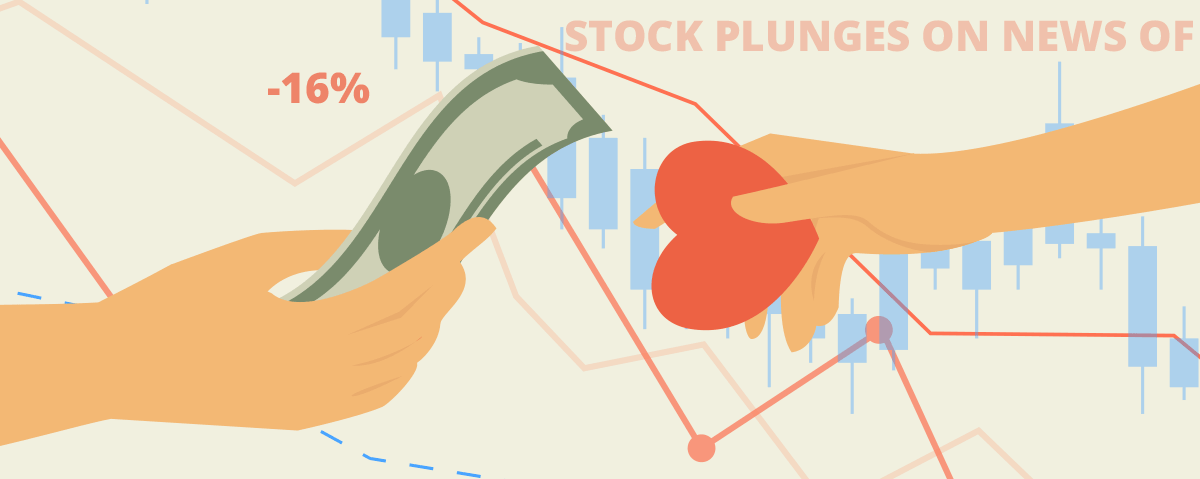
Every business is susceptible to CEO scandals. For public relations and marketing officers employed by the companies above, the stakes were — and remain — high.
As scandals unfold and continue through the aftermath, damage control must be a priority. When reputation damage occurs at catastrophic levels, even seasoned professionals benefit from additional support. Understanding the full scope of crisis management and reputation repair — from the first public disclosure through the long road of rebuilding trust — is essential for any organization navigating executive misconduct.
Online business reputation management tools have proven to be essential assets, helping teams minimize online retaliation against the brand while rebuilding credibility. For organizations looking to get ahead of potential vulnerabilities, a proactive online reputation audit can reveal exposure points before they become headlines.
Frequently Asked Questions







Protect Your Online Reputation
Every day you wait, negative content gets stronger. Talk to our experts about a custom strategy for your situation.
Get Your Free Analysis