
Tactics Used By Unethical Reputation Companies
Some reputation firms cut corners with deception instead of results—here's how to recognize the warning signs before they damage your brand.


- Undisclosed influencer partnerships and astroturfing can trigger FTC penalties up to $50,120 per violation per day
- Greenwashing faces increasing legal risk under the FTC Green Guides and the EU's 2024 Green Claims Directive
- Sock puppetry involves fake accounts to manipulate reviews or votes and is unambiguously unethical
- Meat puppetry — using real people to post fake reviews — is just as deceptive as automated fake review schemes
- Always verify that a reputation firm uses transparent, disclosure-compliant methods before signing a contract
Some reputation management companies use deceptive tactics that can expose businesses to serious legal and ethical risk. This article identifies the most common unethical practices — including astroturfing, greenwashing, sock puppetry, and fake reviews — and explains how each works. Understanding these tactics helps businesses avoid bad actors and make informed decisions when selecting a reputation management partner.
Highlights
- Most reputation management tactics are ethical because they seek to manage the available information about a company without deception.
- There are several ways that an organization can engage in unethical reputation management, including astroturfing, greenwashing, fake reviews, negative reputation website ownership, DDoS attacks, and generating false news about competitors.
Real reputation management involves understanding, correcting, and balancing information about a person or company online. Unfortunately, some tactics used by questionable reputation management companies prioritize fast results or outright deception over honest practice.
Below are the most common unethical reputation management practices to watch out for.
Astroturfing and Fake Grassroots Campaigns
Astroturf is fake grass. Astroturfing is a fake grassroots movement.
When a movement appears to be organic but is secretly funded by a person or organization to spread a self-serving message, it is called astroturfing. The goal is to manufacture a sense of community and broad public support that does not actually exist.
Corporate Social Responsibility (CSR) campaigns can sometimes resemble astroturfing. A 2021 Bloomberg report found that companies making the biggest pledges to Black Lives Matter often had among the fewest Black employees — a striking example of public commitments diverging from internal reality.
Are influencers astroturfing?
Paid influencer campaigns can share characteristics with astroturfing. A company pays an influencer hoping their followers will develop positive sentiment toward the brand, without those followers knowing a financial relationship exists.
The FTC’s updated 2023 Endorsement Guides significantly expanded disclosure requirements for influencer partnerships, including social media and word-of-mouth advertising. Undisclosed astroturfing campaigns can carry civil penalties of up to $50,120 per violation per day.
Get a Free Reputation Assessment
Find out what people see when they search for you online. No obligation — results in 24 hours.
Greenwashing
Greenwashing is a deceptive marketing strategy used to create the illusion that a company’s products or policies are environmentally friendly. It relies on green PR and green marketing to persuade the public of an environmental commitment that does not exist.
Regulatory scrutiny has intensified in recent years. The FTC has been reviewing and updating its Green Guides, and the EU passed the Green Claims Directive in 2024, establishing strict standards for environmental marketing claims across member states.
Sock Puppetry and Fake Identities
Sock puppetry is a tactic often associated with social media deception. Wikipedia defines a sock puppet as any “online identity used for purposes of deception.”
It typically involves creating multiple accounts on a platform to engage deceptively or to vote on something more than once. A company might, for example, create multiple accounts to generate fake positive reviews and make a product appear more popular than it is. Amazon has become a high-profile battleground for this behavior, filing multiple lawsuits against fake review brokers in 2022, 2023, and 2024.
Because sock puppetry involves outright deception, it is clearly an unethical reputation management strategy. Learn more about how these tactics play out in our guide to Wikipedia sock puppets and meat puppets.
Meat puppetry
Meat puppetry is similar to sock puppetry, except that real people write the reviews. Asking a friend to post a positive Amazon review for your book, for instance, is a form of meat puppetry.
Fake Reviews and Ratings
Authentic customer reviews are a legitimate and effective way to showcase a company’s value. Requesting reviews from real customers is not unethical. The problem arises when companies solicit reviews from non-customers or use deceptive tactics to manufacture positive ratings.
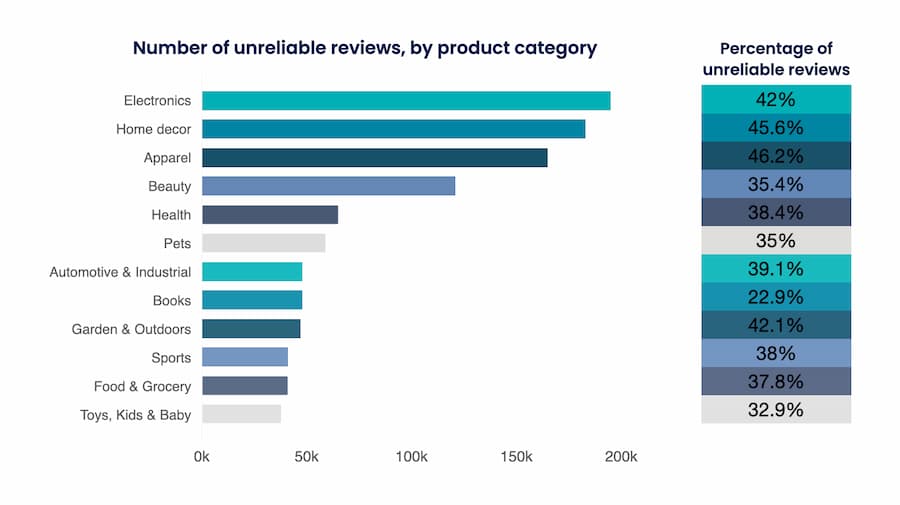
Research from The Transparency Company suggests that 30 to 40 percent of all online reviews may be fake — a figure that underscores how pervasive the problem has become. In August 2024, the FTC issued a final rule explicitly banning fake reviews and testimonials, giving regulators new enforcement tools to combat the practice.
of all online reviews may be fake, according to research from The Transparency Company
The Transparency Company
Some unethical reputation management agencies promise many positive reviews “fast.” These are not reviews from real customers — they are often completely fabricated. When a company faces a reputation crisis and needs quick results, these services can appear attractive despite their deceptive nature.
Asking employees to write positive reviews as if they were customers is also unethical. Under the FTC’s August 2024 final rule, even genuine employee reviews can violate the rules if they do not clearly disclose the reviewer’s connection to the company.
Is Your Reputation at Risk?
Unethical tactics from bad actors — or bad reputation firms — can cause lasting damage. Our team uses only transparent, proven methods to protect and improve your online presence.
Secret Ownership of Attack Sites
Mugshot publishing and ripoff-type websites are sometimes secretly owned by reputation management companies. A company’s damaging details are sold to tabloids and other online sites. The reputation management firm then contacts the affected individual and offers — for a fee — to have the information removed.
The deceptive part is that the reputation management company also owns the mugshot site. They can remove the information because they put it there themselves. Multiple states, including California, Georgia, and Oregon, have passed laws requiring mugshot sites to remove photos upon request without charging fees, reflecting growing recognition of how exploitative these schemes are.
Requesting that websites remove unfavorable or untrue information is not unethical. It becomes unethical when a company creates the problem and then charges to solve it without disclosing their stake. If you suspect you have been targeted, our guide on how to identify someone attacking you online can help you take the right steps.
DDoS Attacks and Fabricating Company Information
A distributed denial of service (DDoS) attack damages a company’s reputation by taking its website offline. A DDoS attack begins when a hacker infects a network of devices with malware, then directs all of them to flood a single IP address — such as a company’s website — until it becomes unreachable.
When real customers try to visit the site and receive a denial-of-service notice, trust erodes quickly. Prolonged downtime can also hurt the company’s search rankings. These attacks have grown more sophisticated over time: Cloudflare reported a record-breaking attack exceeding 5.6 Tbps in 2024, leveraging IoT botnets and AI-assisted methods to maximize damage.
DDoS attacks are the opposite of reputation management — they are a malicious tactic for destroying a company rather than protecting one.
Fabricating Company Information
Publishing intentionally false sales figures or company data in news releases or annual reports is highly unethical. High-profile SEC enforcement actions related to ESG disclosure fraud and financial misrepresentation have shown how quickly fabricated numbers can unravel a company’s credibility.
While accurate reporting can do wonders for corporate reputation, all published figures must be carefully vetted. Discovered inaccuracies cause far more reputational damage than honest, unflattering numbers ever would.
Generating False Information About Competitors
Highlighting genuine differences between your offerings and a competitor’s is an ethical marketing practice. Releasing fabricated negative information designed to harm a competitor is not. This activity falls squarely into the category of dark PR — tactics designed to manipulate public perception through deception.
Fake negative reviews targeting competitors are equally unethical. A study by Mayzlin, Dover, and Chevalier, published in the American Economic Review in 2014, found that large hotels near boutique competitors tended to receive lower ratings than those without nearby competition — evidence that rivals were posting fake negative reviews to steer customers away. The behavior that study documented remains widespread across industries today.
Bad news about a company does not need to circulate for long to cause damage. A fabricated story that goes even briefly viral can move stock prices and destroy customer trust — making fake negative campaigns one of the most destructive tools in the unethical reputation playbook.
Frequently Asked Questions









Protect Your Online Reputation
Every day you wait, negative content gets stronger. Talk to our experts about a custom strategy for your situation.
Get Your Free Analysis