
Bias on Wikipedia and How It Affects the Content of Wikipedia Articles
Wikipedia promises a neutral encyclopedia, but human editors bring confirmation bias, cultural blind spots, and demographic gaps that quietly shape what you read.

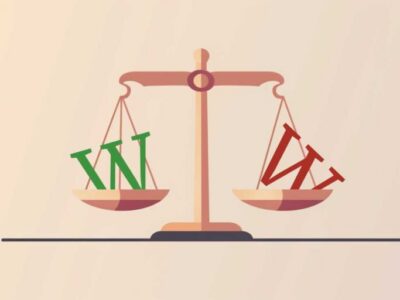
Wikipedia is vulnerable to multiple forms of bias because its editors are human and not as demographically diverse as commonly assumed. Confirmation, selection, cultural, and negativity biases all shape what gets written, emphasized, or omitted in articles. Understanding these biases helps readers and editors critically evaluate the reliability and completeness of Wikipedia content.
Wikipedia is the most-read encyclopedia in history, with over 7 million English-language articles viewed billions of times each month. But the information it contains is shaped by who writes it — and according to the Wikimedia Foundation’s 2022 Community Insights Survey, roughly 80% of Wikipedia’s active contributors are male, with racial and geographic diversity lagging far behind global population norms. That imbalance creates systemic bias in what gets covered, how it’s framed, and whose perspectives are represented. Below, we examine eight types of bias that affect Wikipedia articles, explain how to spot bias in any article you read, and review what Wikipedia is doing to address the problem. For those looking to contribute, our guide to editing Wikipedia is a good starting point.
Bias on Wikipedia
Who writes it shapes what gets written
Wikipedia’s rules are neutral. Its contributor base is not representative, and the gap shows up in the encyclopedia itself — in whose biographies exist, and in how quickly they are challenged.
What Types of Bias Exist on Wikipedia?
Wikipedia, as a crowd-sourced encyclopedia that anyone can edit, is susceptible to bias due to the diverse backgrounds, beliefs, and limitations of its editors. While the editors themselves are not as diverse as one might think, their views often are. Understanding these biases can help readers and other editors better assess the reliability and comprehensiveness of the information presented.
Confirmation Bias: How Editors Favor Their Own Views
Confirmation bias occurs when editors favor information that confirms their preexisting beliefs, giving undue weight to supportive sources while neglecting or minimizing conflicting evidence. This bias can lead to one-sided articles that may omit essential counterarguments or opposing viewpoints. Wikipedia is a community-based effort and that tends to keep popular articles from being too one-sided, but less popular articles with fewer editors reflect the problem more often.
Selection Bias: Why Some Topics Get More Coverage
Selection bias arises when editors preferentially choose topics or sources that align with their interests or expertise. This can result in uneven representation, where popular or familiar subjects receive disproportionately extensive coverage, and less familiar but significant topics may be neglected. With approximately 291,000 registered editors active in any given month on English Wikipedia alone (according to Wikipedia’s Special:Statistics page as of 2026), the sheer scale of the project means that editorial attention is unevenly distributed — popular culture articles may have hundreds of watchers while important historical or scientific topics languish with few.
Does Your Company Qualify for a Wikipedia Page?
Run a free notability check. Our analysis engine reviews real press coverage against Wikipedia's actual notability standards and emails you a detailed report — no sales call required.
Your notability check is running
We're analyzing coverage of right now — it usually takes 10–15 minutes. Your report link will arrive from noreply@reputationx.com; check spam if you don't see it. Keep reading — nothing else to do here.
Cultural and Demographic Bias on Wikipedia
Editors from different cultural backgrounds bring varied perspectives on importance, relevance, and notability. Cultural bias may lead to the uneven representation of cultures, traditions, and histories, with certain regions and cultural narratives dominating over others, creating a distorted global view.
The Wikipedia editor community has historically been predominantly male and from Western countries. According to the Wikimedia Foundation’s 2022 Community Insights Survey (the most recent available as of this writing), approximately 80% of active Wikipedia contributors identify as male, 13% as women, and 4% as gender diverse. Racial demographics among U.S. editors, first collected in the 2021 Community Insights Report, revealed that 89% identified as white, 8.8% as Asian or Asian American, 5.2% as Hispanic or Latino/a/x, and only 0.5% as Black or African American. (Note: these racial demographics are from 2021, the most recent year this data was collected for U.S.-based editors.) The Wikimedia Foundation has acknowledged that Black and Hispanic contributors are “severely underrepresented” compared to the U.S. population.
This lack of diversity has led to content biases and underrepresentation of certain perspectives on the platform. To learn more about how editor demographics intersect with propaganda on Wikipedia, see our related analysis. Efforts are underway to address these disparities by encouraging contributions from a more diverse range of people — notably, the 2024 Community Insights Survey found that newcomers are significantly more diverse than veteran editors, with 24% of new editors identifying as women compared to 13% among seasoned contributors.
How Negativity Bias Shapes Wikipedia Articles
Negativity bias describes the human tendency to prioritize negative information or experiences over positive ones. Because Wikipedia relies heavily on news media — which, as we all know, has increasingly emphasized negative reporting — Wikipedia articles may inadvertently emphasize negative content, controversies, or criticisms. And when a negative section is added to a Wikipedia article, it is challenging to remove. To understand why news coverage tends to be so negative, it helps to look at the data.
According to a study by Rozado, Hughes, and Halberstadt published in PLOS ONE in 2022 (DOI: 10.1371/journal.pone.0276367), negative content in news headlines rose substantially between 2000 and 2019. The researchers used Transformer language models to analyze 23 million headlines from 47 major U.S. news outlets and found significant increases in the use of negative emotions in headlines: sadness-related headlines increased by 54%, anger-related headlines increased by 104%, fear-related headlines rose by 150%, and disgust-related headlines grew by 29%. Because Wikipedia editors cite news coverage as a primary source, this negativity seeps into encyclopedia articles and potentially influences their tone. No comparable follow-up study extending the data beyond 2019 has been published as of this writing.
Gender Bias: Why Only 20% of Wikipedia Biographies Are About Women
Gender bias in Wikipedia reflects a significant imbalance among editors, who are, as mentioned above, mostly male. This has led to the underrepresentation of women and women’s issues. According to WikiProject Women in Red and the Humaniki tracking tool, approximately 20% of English Wikipedia’s biographies feature women — a milestone reached in December 2024 when the count hit 408,183 women out of 2,040,570 total biographies. As of February 2026, the percentage has inched up to about 20.3% (429,522 of 2,115,639 biographies). While this represents progress from just 15% in 2014, the gap remains large.
This imbalance partly stems from societal biases, including media coverage that disproportionately highlights men’s achievements, thus limiting the available reliable sources necessary for inclusion of women’s biographies on Wikipedia. A 2024 study by Huq and Ciampaglia found that deletion nominations happen 34% faster after the creation of women’s biographies than after the creation of men’s biographies, suggesting structural challenges beyond simple content gaps.
Political Bias and Wikipedia’s Editing Restrictions
Political bias manifests when editors’ political preferences influence article content. Editors with strong political views might highlight supporting information or downplay opposing views, resulting in skewed coverage of political topics or figures. Wikipedia attempts to address this by implementing editing restrictions on highly contentious pages. For instance, the Wikipedia page of Donald Trump is “protected,” restricting edits to highly experienced editors to reduce vandalism and biased editing. Articles that are not protected need ongoing Wikipedia monitoring instead. In January 2025, Wikipedia’s Arbitration Committee introduced a “balanced editing restriction” for articles related to the Israeli–Palestinian conflict, requiring sanctioned users to devote only a third of their edits to related articles.
Availability and Recency Bias in Wikipedia Sources
Availability bias occurs when editors predominantly include information readily accessible online or from easily available sources, thus neglecting valuable offline or out-of-print material. For example, when Reputation X is researching references for a campaign, we look into out-of-print content, the Wayback Machine, and more. If we didn’t, only content surfaced by search engines on the first few pages would be used, and that’s just lazy.
Closely related is recency bias — the tendency to prioritize recent events or information over historical or older content. Recent events tend to have abundant online coverage, while historical events — though equally or more significant — may be inadequately covered due to fewer accessible online resources. This bias impacts historical comprehensiveness, giving readers a distorted perception of the relative importance of recent versus past events. It means our researchers need to dig deep and consciously avoid both availability and recency bias.
Language Bias: The English-Speaking Editor Problem
Language bias on Wikipedia occurs due to the predominance of English-speaking editors — who make up an estimated 76% of the editor base according to Wikimedia survey data — resulting in an over-reliance on English-language sources. Consequently, non-English perspectives and sources are underrepresented, limiting the global accuracy and diversity of Wikipedia’s content despite its availability in 344 active language editions as of February 2026 (source: Wikipedia “List of Wikipedias”). English Wikipedia alone accounts for roughly 49% of all pageviews across every language edition, according to Pew Research Center’s January 2026 analysis.
The challenge extends beyond language to geography. According to the Wikimedia Foundation, almost half of all contributors live in Europe and one-fifth in Northern America — far exceeding their share of the global population. Only 1.5% of editors are based in Africa, despite the continent comprising 17% of the world’s population (Community Insights Report, 2020).
How to Identify Bias in a Wikipedia Article
Not every Wikipedia article is created equal. Whether you’re a researcher, journalist, or just a curious reader, there are practical signals you can look for to evaluate whether an article may be affected by bias.
Check the sources. Open the references section and look at who is being cited. If all sources lean in one direction — for instance, only industry publications or only activist organizations — the article may present a one-sided view. Articles that cite a diverse range of reliable sources (academic journals, major news outlets, government reports) are generally more balanced. For more on what Wikipedia considers acceptable evidence, see our overview of Wikipedia’s verifiability rules.
Read the Talk page. Every Wikipedia article has an associated Talk page (click the “Talk” tab at the top). This is where editors discuss disputes, flag concerns, and debate content decisions. If the Talk page shows active disagreement about neutrality or sourcing, it’s a sign the article’s objectivity may be contested. A Talk page with little or no discussion on a controversial topic can also be a red flag — it may mean the article hasn’t received enough editorial scrutiny.
Review the revision history. Click “View history” to see how many editors have contributed and how recently. Articles with hundreds of revisions from dozens of editors tend to be more balanced than those written or maintained by just one or two people. A small number of editors controlling a page increases the risk of a single perspective dominating.
Look for recently created articles with few revisions. Brand-new articles that haven’t been reviewed by the broader community are more susceptible to bias — and increasingly, to AI-generated content. In August 2025, Wikipedia adopted a speedy deletion policy for AI-generated articles after a 2024 study (Greathouse et al., arXiv:2410.08044) estimated that over 5% of newly created English Wikipedia articles contained significant AI-generated content. Articles flagged with warnings like “This article may incorporate text from a large language model” deserve extra scrutiny.
How Does Wikipedia Try to Prevent Bias?
Wikipedia recognizes these biases and actively employs several strategies to mitigate them.
Wikipedia’s Neutral Point of View (NPOV) policy is the foundation of the encyclopedia’s approach to fairness. It requires that articles present all significant viewpoints proportionally, including conflicting perspectives, without the article itself taking a position.
Wikipedia also mandates the use of reliable, verifiable sources to support article content. This requirement is designed to ground articles in evidence rather than opinion, though as discussed above, the sources themselves can carry their own biases.
Editing restrictions limit who can edit highly controversial topics. Pages on politically sensitive subjects, living public figures, and other contentious areas may be “semi-protected” (blocking anonymous and very new editors) or “extended-confirmed protected” (limiting edits to editors with at least 500 edits and 30 days of account age).
Community engagement initiatives encourage diverse participation and contributions from editors globally to ensure broader representation. Programs like WikiProject Women in Red (which has added over 200,000 biographies of women since 2015), Art+Feminism edit-a-thons, and the Wikimedia Foundation’s partnerships with organizations like Wiki Education all aim to close demographic and content gaps. According to the Wikimedia Foundation, the percentage of Wikipedia editors who identify as women has grown from about 10% in 2010 to roughly 20% in 2024 — meaningful progress, though still far from parity.
Sources
- Wikimedia Foundation Community Insights Survey (2022). Published as the 2023 Community Insights Report. Demographic data on gender, age, and geographic distribution of active editors. Available at: meta.wikimedia.org/wiki/Community_Insights/Community_Insights_2024_Report
- Wikimedia Foundation Community Insights Report (2021). First year racial/ethnic demographics were collected for U.S.-based editors. Available at: meta.wikimedia.org/wiki/Community_Insights/Community_Insights_2021_Report
- Rozado, D., Hughes, R., & Halberstadt, J. (2022). “Longitudinal analysis of sentiment and emotion in news media headlines using automated labelling with Transformer language models.” PLOS ONE, 17(10): e0276367. DOI: 10.1371/journal.pone.0276367
- WikiProject Women in Red / Humaniki. Ongoing tracking of gender representation in English Wikipedia biographies. Available at: en.wikipedia.org/wiki/Wikipedia:WikiProject_Women_in_Red
- Greathouse, L., et al. (2024). “The Rise of AI-Generated Content in Wikipedia.” arXiv:2410.08044. Available at: arxiv.org/abs/2410.08044
- Pew Research Center (2026). “Wikipedia at 25: What the data tells us.” Published January 13, 2026. Available at: pewresearch.org/short-reads/2026/01/13/wikipedia-at-25-what-the-data-tells-us/
- Huq, K.T. & Ciampaglia, G.L. (2024). Study on deletion nomination speed for women’s vs. men’s biographies on English Wikipedia.
- Wikimedia Foundation (2025). “Change the Stats” page and 2024 Community Insights Survey data on newcomer diversity. Available at: wikimediafoundation.org/what-we-do/open-the-knowledge/otk-change-the-stats/
Frequently Asked Questions


Protect Your Online Reputation
Every day you wait, negative content gets stronger. Talk to our experts about a custom strategy for your situation.
Get Your Free Analysis