
Why Is The News So Negative? Negativity Biases, Media Bias, and More.
From evolutionary psychology to media algorithms, here is why negativity rules the news and what that means for you.

- More than half of all news stories contain more negative assertions than positive ones.
- Negativity bias is an evolutionary trait that makes humans react more strongly to bad news.
- Negative headlines with words like 'bad' or 'worst' consistently generate higher click-through rates.
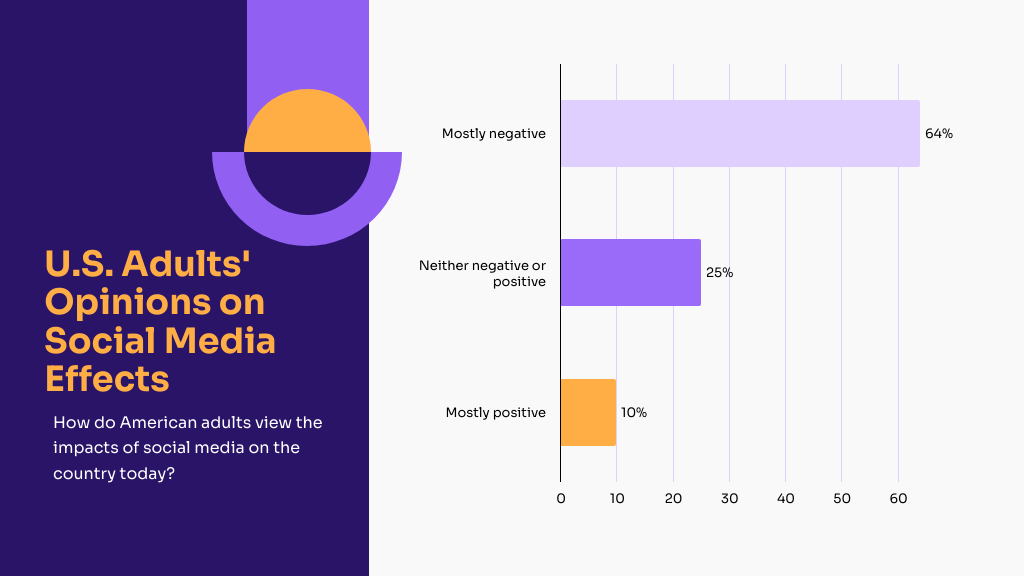
- 64% of U.S. adults believe social media has had a mostly negative effect on society.
- Recognizing negativity bias is a critical first step in managing your online reputation effectively.
Negative news dominates media because of a deeply rooted human trait called negativity bias, which makes people more attentive to threats and bad news than positive information. Media outlets exploit this tendency to drive clicks and engagement, resulting in a news landscape that skews heavily negative across digital, print, and broadcast platforms. Understanding this dynamic is essential for anyone looking to manage their online reputation or counter the outsized impact of negative content.
Imagine that you saw two news articles. The first headline said “The weather is beautiful today!” while the second proclaimed that a dark storm was headed your way. Which would you click on?
Most likely the second one, because you want to know how the storm may affect your day. Have you ever noticed why there is so much negativity in the news? Leveraging negative content has been used by the media for years, urging viewers to stay tuned to hear how certain things might be dangerous or cause turmoil in their life. Negativity draws eyeballs, which in turn causes negative news to rank higher than positive news.
The Prevalence of Negative News
Studies reveal that more than half of all news stories contain a significantly higher number of negative assertions compared to positive ones. This trend spans digital platforms, print, and broadcast alike. According to the Reuters Institute Digital News Report, negativity remains a defining characteristic of online news consumption, with digital-first outlets consistently skewing more negative in tone than their print counterparts.
This prevalence is further amplified by the human attraction to negative information — a phenomenon known as the “negativity bias.” Our cognitive wiring predisposes us to pay more attention to negative news, which historically helped us recognize and avoid dangers. This bias appears across various demographics and is not confined by age, gender, or political ideology.
The phrase “if it bleeds, it leads” encapsulates the media’s long-standing intuition that stories involving crime, tragedy, or scandal attract more viewers and readers. Research in media psychology consistently finds that negative headlines — those containing words like “bad,” “worst,” or “never” — generate significantly higher engagement and click-through rates than positive ones. This dynamic often applies to negative reviews as well, which tend to be difficult for business owners to remove.
Understanding these dynamics is crucial for developing strategies to manage and counteract the overwhelming presence of negative news, and for advocating a more balanced approach to news consumption and reporting.
Get a Free Reputation Assessment
Find out what people see when they search for you online. No obligation — results in 24 hours.
of U.S. adults say social media has had a mostly negative effect on the way things are going in the country
Pew Research Center
Understanding Negativity Bias
Negativity bias is an inherent human inclination that intensifies our reactions to negative stimuli compared to positive ones. It is not merely a psychological curiosity but a deeply ingrained evolutionary trait that helped humans survive by quickly identifying and reacting to potential threats.
Studies reveal that negative events provoke stronger and quicker emotional responses than positive or neutral events. Understanding how negativity bias affects reputation can be a powerful tool when managing reputation online.
Origins and Evolution
Historically, negativity bias allowed our ancestors to stay alert to environmental dangers, ensuring their survival. This predisposition to prioritize negative information over positive is evident not just in humans but across various species, suggesting a fundamental evolutionary advantage.
Psychological Studies
Research indicates that this bias influences various psychological domains, from early development in infants to complex decision-making in adults. Developmental studies show that infants demonstrate sensitivity to negative information from a very early age. Adults, similarly, are more attuned to negative news, which often has a greater impact on their psychological state and decision-making processes.
Negativity Bias in Media
When it comes to news and media, negativity bias explains why bad news often dominates. This predilection is not just a media creation — it reflects what genuinely captivates human attention. Media outlets, driven by the need to attract viewers or readers, emphasize negative stories, which can further exacerbate the perception of negativity in news consumption.
By understanding these mechanisms, we can better navigate our responses and mitigate some of the bias’s less desirable effects on personal and societal well-being.
Impact of Negative News on Consumers
Negative news impacts consumers profoundly, influencing both their emotional state and behavior. Constant exposure to distressing content can lead to distrust toward media outlets. Studies show that sensational stories and perceived media bias foster skepticism among viewers, compounded by the prevalence of fake news.
Emotional and Physical Effects
The barrage of negative news triggers stress responses that are both psychological and physical. Symptoms such as increased anxiety, fear, and a general sense of unease can manifest. Research linking chronic stress to serious health conditions — including heart disease and diabetes — suggests that sustained exposure to distressing news content may carry real long-term health consequences.
Behavioral Changes
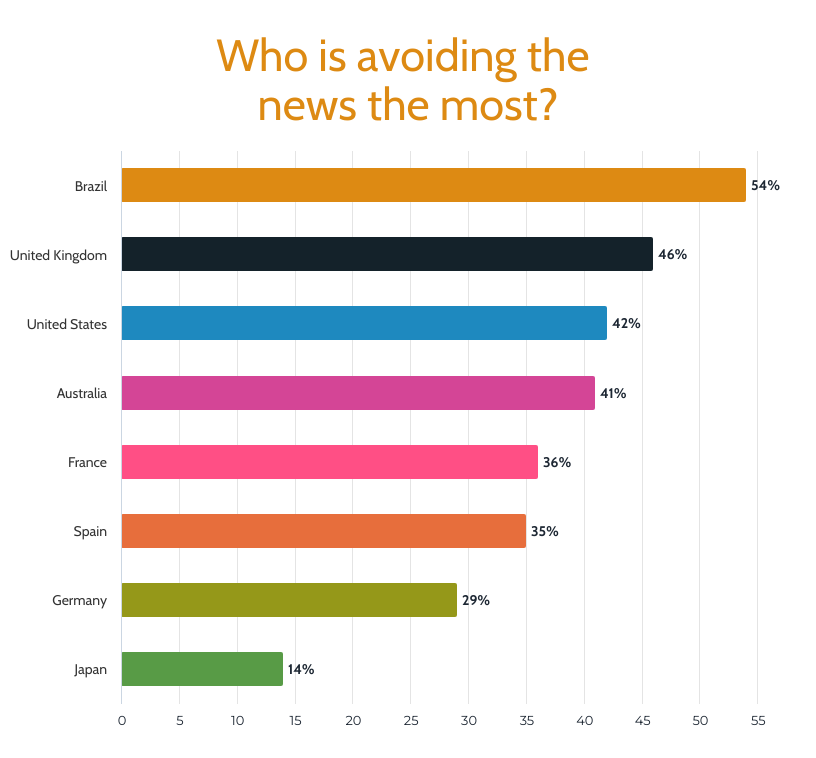
Exposure to negative news can alter consumer behavior significantly. People may become more cynical, less likely to engage with news, or shift their media consumption habits entirely. Even so, negative headlines continue to drive clicks — driven by deep-seated negativity bias — even as consumers express distrust. As the Reuters Institute Digital News Report has documented, some countries have nearly half of their populations actively avoiding the news, reflecting just how significant this burden has become.
Trust in Media
The credibility of news organizations suffers when consumers are repeatedly exposed to negative and sensational content. This distrust is exacerbated by the spread of misinformation and fake news, which directly challenges the integrity of established news sources. As trust declines, media organizations must prove not just their reporting but their veracity and impartiality to an increasingly skeptical public. For businesses, this erosion of trust has direct consequences — learn more about how reputation affects business success.
Is Negative Coverage Hurting Your Brand?
Negative news and online content can damage your reputation fast. RepX helps you take control of your search results and build a stronger online presence.
The Role of Media in Amplifying Negativity
Social media algorithms significantly amplify negativity in news content by prioritizing user engagement over accuracy. This approach promotes content that triggers emotional reactions rather than content that informs.
Researchers William Brady and colleagues, writing in Nature Human Behaviour, identified a category of content they describe as PRIME information — prestigious, ingroup, moral, and emotional — that spreads disproportionately on social platforms, often misrepresenting the actual range of public opinion. Highlighting extreme political content or controversial topics can mislead users and skew their perception of majority viewpoints.
Clickbait and Sensationalism
Clickbait techniques exacerbate this issue by using sensational headlines to attract clicks, often at the expense of truth and depth. This strategy contributes to a cycle of misinformation and superficial reading, where users rarely engage deeply with the content they consume.
Economic Incentives and Algorithms
The drive for higher engagement is closely tied to advertising revenue. This dependency compels platforms to prioritize sensational content that is more likely to be shared and discussed, regardless of factual accuracy. Efforts to mitigate these effects include educating users about how their feeds are curated and adjusting algorithms to limit the spread of PRIME information.
According to Pew Research Center data from October 2024, approximately 64% of U.S. adults say social media has had a mostly negative effect on the way things are going in the country — a figure that has remained stubbornly consistent in recent years.
Paying attention to social media trends is also a useful way to measure corporate reputation. Promoting a more diverse array of content requires a concerted effort from both tech companies and users to prioritize accuracy and community over mere engagement.
Ways to Address Negativity in News Consumption
Seeking Balanced News Sources
To counteract the prevalence of negative news, consumers are encouraged to seek out balanced sources known for journalistic integrity, such as Reuters and The Associated Press. Engaging with a variety of news sources — including those with differing perspectives — helps individuals develop a more nuanced understanding of issues and reduces the impact of negativity bias.
Practicing Media Literacy
Consumers should learn to access, analyze, and evaluate the media they consume. This includes understanding the biases that may influence news stories and recognizing clickbait that skews facts. Media literacy empowers individuals to make informed decisions about the credibility of information, thereby mitigating the effects of negative news.
Promoting Positive News Initiatives
Supporting platforms that focus on constructive and solutions-based journalism — such as Positive News, the Solutions Journalism Network (solutionsjournalism.org), and Reasons to Be Cheerful (reasonstobecheerful.world) — can meaningfully offset the weight of negativity in everyday media consumption. By engaging with news that focuses on solutions and positive developments, consumers can foster a more optimistic outlook and reduce the psychological burden of relentless negative coverage. For those dealing with the downstream effects of negative coverage, understanding how to suppress negative news articles can be a practical next step.
Frequently Asked Questions







Protect Your Online Reputation
Every day you wait, negative content gets stronger. Talk to our experts about a custom strategy for your situation.
Get Your Free Analysis