
What Happens When AI Search Returns Negative Results About Your Brand?
AI search doesn't just rank your brand — it renders a verdict. Learn the four types of negative AI search exposure, how to audit your AI brand footprint, and what to do about it.

Traditional search provided links – you were the judge. Today, AI search is also the judge.
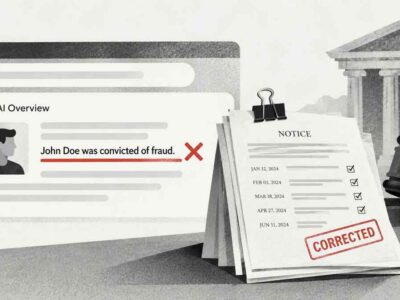
AI search doesn’t just rank your brand — it renders a verdict. When users ask AI tools which companies to avoid, where others have had bad experiences, or what problems exist in your industry, they get direct answers, not links. Those answers can name your brand, cite real or competitor-instigated complaints, and reach customers who never even typed your URL into a search bar. And if what AI states about you is not merely unflattering but factually wrong, that is a different problem with a different fix — see AI misinformation correction.
Key Takeaways
In Short: What Happens When AI Returns Negative Results About Your Brand?
- Your brand can be explicitly listed as something to avoid — even with a strong overall review profile
- You may disappear from positive recommendations entirely, losing ground to competitors with stronger AI signals
- AI may summarize outdated or partially accurate information as though it reflects your brand today
- Negative associations can appear even without direct criticism — through industry controversies, adjacent brands, or old news coverage
The Blind Spot in Traditional Reputation Management
For two decades, online reputation management has been primarily a search ranking problem. Which results appear on page one? Are they positive, neutral, or negative? The playbook was clear: push down unfavorable content, build authoritative positive pages, and monitor brand mentions.
AI search adds additional complexity to reputation management.
Online reputation management has always depended on understanding how information reaches your audience. But AI search introduces a different delivery mechanism — one that doesn’t return a list of blue links for users to evaluate. It returns a conclusion. Put another way – it judges. And when the search engine query is framed negatively, that conclusion can be pretty devastating for brands that aren’t watching.
According to data compiled in the ORM statistics report, 94% of consumers say a negative review has convinced them to avoid a business. Now imagine that negative review — or a synthesis of dozens of them — delivered as a direct AI answer to a prospective client’s question before they ever visit your website.
How AI Handles Negatively Framed Queries
Research into how AI search platforms respond to negatively framed queries reveals a consistent pattern across major AI platforms: when users ask what to avoid, AI answers directly, cites its sources, and flat out names names. It doesn’t equivocate the way a search engine result page does.
Why AI Trusts Negative User-Generated Content
When someone asks a search engine what to avoid, branded content is the least useful possible answer. AI systems are sophisticated enough to recognize this. They discount self-promotional material and weight independent user-generated content heavily — forum threads, review platform data, community discussions, video testimonials. These sources read as authentic to the model because they carry the markers of genuine experience.
The result: a single concentrated cluster of complaints on one platform can outweigh thousands of positive reviews distributed across others. AI doesn’t do weighted averages the way a star rating does. It finds what’s relevant to the query — and negative queries make negative content relevant.
Get a Free Reputation Assessment
Find out what people see when they search for you online. No obligation — results in 24 hours.
The Sources Driving Negative AI Results
Not all platforms contribute equally to negative AI signal. Getting accurate sources into the set that AI systems cite is what generative engine optimization does. Based on observed AI citation behavior, the highest-weight sources for negative query responses include:
- Consumer forums and Reddit — candid, high-volume, and heavily cited by AI search in particular
- Google Reviews and Maps data — integrated directly into Google’s information graph
- Video platforms — complaint walkthroughs and negative review videos carry strong authority signals
- Structured review aggregators (BBB, Trustpilot, Consumer Affairs) — AI can extract sentiment patterns at scale
- News archives — even resolved controversies remain indexed indefinitely
- Industry-specific forums — particularly influential in B2B, healthcare, legal, and financial services
The review that’s currently shaping what AI says about your brand may be three years old, on a platform you’ve never logged into, written by a customer whose issue was resolved the following week.
The Four Types of Negative AI Search Exposure
Not all negative AI exposure takes the same form. Understanding which type you’re dealing with determines the appropriate response.
Type 1: Direct Negative Naming
An AI system explicitly includes your brand in response to a “companies to avoid” or “worst [category]” query. This is the most visible form and often the easiest to detect. A professional services firm with a handful of unresolved complaints on a high-authority platform can find itself listed alongside companies with genuinely poor track records — simply because AI found the negative signal and the query demanded it.
Type 2: Positive Omission
Your brand doesn’t appear when users ask which companies are the best option. There’s no negative result — you simply don’t exist in the AI’s answer. For brands without sufficient positive authority signals distributed across the web, this invisible competitive disadvantage may be the more damaging problem. You can’t fix an absence you can’t see.
Type 3: Inaccurate Characterization
AI constructs its characterization of your brand from whatever content exists about you — regardless of age, context, or resolution. A company that weathered a difficult year, addressed its issues publicly, and rebuilt its reputation may still find AI summarizing the old narrative as though it reflects current operations. AI systems don’t contextualize chronology the way a human reader would. Your 2021 crisis can become your 2026 AI profile.
Type 4: Contextual Contamination
Your brand appears in negative AI responses without ever being directly criticized. Industry-wide regulatory problems, controversies involving competitors, or news coverage of sector-level issues can pull your brand into negative contexts by association. Understanding the full landscape of what appears about your brand online — not just direct mentions — is essential for detecting this type of exposure before it reaches your prospects.
Free Brand Analysis
What Is AI Search Saying About Your Brand Right Now?
We’ll run negative-framing queries across ChatGPT, Google AI Mode, Perplexity, and Copilot — and show you exactly where you stand.
How to Audit Your AI Search Footprint
Many organizations run quarterly or monthly audits of their Google search presence. Not nearly as many run equivalent audits for AI search. This is the gap that makes negative AI results so dangerous — they’re often discovered by accident, usually after a prospect mentions them or when sales have already started to slump.
Step 1: Run Negative Framing Queries Systematically
Open each major AI platform — Google AI Mode, ChatGPT with browsing enabled, Microsoft Copilot, Perplexity — and query your brand and category using negative framing. Use queries like:
- “What are common complaints about [your brand]?”
- “Which [your industry] companies should I avoid?”
- “What problems have people had with [your brand or category]?”
- “Why do people leave [your brand]?”
Document every response verbatim. Screenshot it. This is your baseline — you cannot measure improvement without one.
Step 2: Map the Cited Sources
AI search responses typically cite their sources. Those citations are not footnotes — they are your actual problem. Identify every source the AI is drawing on. A specific forum thread from three years ago, a cluster of reviews on an unmonitored platform, a trade article from a difficult quarter — these are addressable. An abstract “AI thinks badly of us” is not.
Step 3: Benchmark Against Competitors
Run the same negative queries for your top three to five competitors. Understanding whether they appear positively, negatively, or not at all provides competitive context a brand-only audit cannot offer. In many cases, the opportunity is as important as the threat.
Step 4: Monitor Monthly, Not Annually
AI search outputs shift as new content accumulates and as AI models update. A brand that runs a clean audit in January and doesn’t check again until December is flying blind for eleven months. Monthly monitoring — even a 30-minute systematic check — provides the feedback loop necessary to know whether remediation efforts are working.
How to Improve Your AI Search Reputation
Monitoring tells you where you stand. Improvement requires a different kind of thinking than traditional SEO — because you’re not optimizing for a ranking position. You’re optimizing for how an AI characterizes you when someone asks a question you’ll never see coming.
Address the Source, Not the Output
There is no direct mechanism to edit what an AI says about your brand. You can only change the inputs. If AI is citing a specific review thread or forum discussion, the path forward is to address that source — respond professionally, resolve the underlying issue visibly, and build sufficient positive content on that same platform to shift the overall signal. The AI will eventually reflect the changed source environment.
Build Distributed Authority, Not Just Owned Content
AI systems weight independent, third-party sources far more heavily than content on your own website. Positive coverage on high-authority publications, detailed case studies on industry platforms, earned press mentions, and reviews on structured aggregators all contribute to the signal picture AI uses to characterize your brand. A library of excellent content on your own domain — without distribution across independent sources — has limited impact on AI characterization.
Treat AI Citation as a Content Objective
Content that ranks in traditional search and content that gets cited by AI are not the same thing. AI-citeable content tends to be specific, factual, well-structured, and published on domains that other authoritative sources reference. Building with AI citation in mind — not just search ranking — is increasingly essential for brands that want to shape their AI-era narrative. This is the core of Generative Engine Optimization.
Audit Your Knowledge Graph and Wikipedia Presence
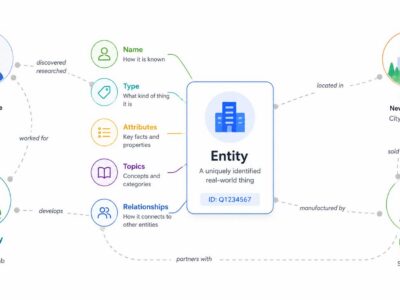
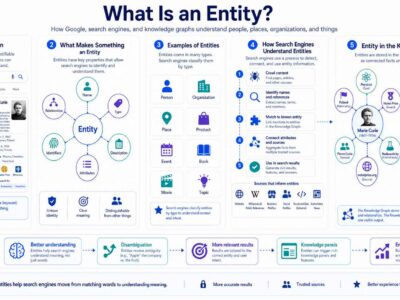
AI systems frequently reference Wikipedia, Wikidata, and Google’s Knowledge Graph when constructing responses about brands and organizations. An incomplete, outdated, or absent entry in these foundations leaves AI to characterize your brand based on whatever else it finds. For organizations in competitive categories, this is not optional maintenance — it is foundational reputation infrastructure.
Frequently Asked Questions
Take Control of Your AI Search Presence
Reputation X works with organizations that need to understand and manage how they appear across both traditional search and AI-powered platforms. If you’d like to know what AI search tools are currently saying about your brand — including in response to negatively framed queries — request a free analysis and we’ll show you exactly where you stand.
The question isn’t whether AI is forming an opinion about your brand. It already has one. The only question is whether you know what it is.




Protect Your Online Reputation
Every day you wait, negative content gets stronger. Talk to our experts about a custom strategy for your situation.
Get Your Free Analysis