
Overview – 6 Principles of Persuasion | Tactics and Techniques That Work
Discover how the six principles of persuasion shape decisions, strengthen your brand reputation, and give you a proven framework for ethical influence.

- Reciprocity works: small gifts or favors make people more likely to comply with larger requests
- Social proof is powerful—show that others approve to make your offer more convincing
- Authority and credibility signal trustworthiness and increase compliance
- Liking drives decisions—finding common ground with your audience builds rapport and influence
- Scarcity and commitment reinforce urgency and consistency in consumer behavior
Psychologist Robert Cialdini identified six principles of persuasion—reciprocity, commitment/consistency, social proof, authority, liking, and scarcity—that reliably influence human behavior and decision-making. These principles are backed by psychological research and apply across marketing, sales, negotiation, and reputation management. Used ethically and in combination, they help build trust, strengthen brand credibility, and inspire action.
- Psychologist Robert Cialdini developed the Six Principles of Persuasion, which are widely influential in marketing, sales, negotiation, and everyday relationships.
- The principles are reciprocity, commitment/consistency, social proof, liking, authority, and scarcity.
- Each principle has been demonstrated to influence human behavior and decision-making through psychological studies. For example, the reciprocity principle showed that giving someone a small gift makes them more likely to comply with a more significant request.
- The principles work best in combination and are not foolproof – human emotions and situational factors also come into play.
- Practitioners should use ethical discretion when leveraging these principles of influence.
It’s no secret that we all like to be liked. Whether in our personal or professional lives, we want to be thought of well by others.
Understanding the six principles of persuasion can give you the edge you need to influence others, whether that means persuading someone to go on a date with you or removing information online that is damaging your reputation.
Persuasion is vital when convincing someone to fall in love with your brand or get your boss to approve a project. But what are the best persuasion techniques and tactics to use?
Six principles of persuasion can make an impact, according to esteemed psychologist and academic Dr. Robert Cialdini. And if you want to be successful in establishing your online reputation or just convincing people of anything, you need to know them.
In this blog post, we’ll look at each of the six principles and give some examples of how they can be used:
- Persuasion is the power to influence someone to take action after the person has already decided not to.
- The six principles of persuasion are – reciprocity, commitment/consistency, social proof, authority, liking, and scarcity.
- Dedicating time to these principles can increase trust, a more positive online reputation, and brand advocates.
Sections
Persuasion as a Marketing Strategy
In marketing, persuasion is the power to influence someone to take action after the person has already decided not to.
Get a Free Reputation Assessment
Find out what people see when they search for you online. No obligation — results in 24 hours.
Let’s take a look at why persuasion is an effective marketing strategy. Your brand must position itself as more than just a product or service.
If your values align with your target market, it will be easier to convince people to buy your product.
Consider the following:
- One study in the Journal of Marketing Research found that consumers are willing to pay more for a product if they think it will make them feel good about themselves.
- In another study, researchers found that 88% of consumers would like brands to help them be more environmentally friendly and ethical in their daily lives.
- 63% of the public would give socially responsible businesses the benefit of the doubt during a crisis.
Suppose you’re a business looking to build a solid online reputation or an individual looking to get your message across. In that case, you need to know something about persuasion and understand what consumers are looking for when vetting companies to support.
Ready to Take the Next Step?
Get in touch with our team and we’ll take the first steps toward building a reputation repair campaign.
What are the Six Principles of Persuasion?
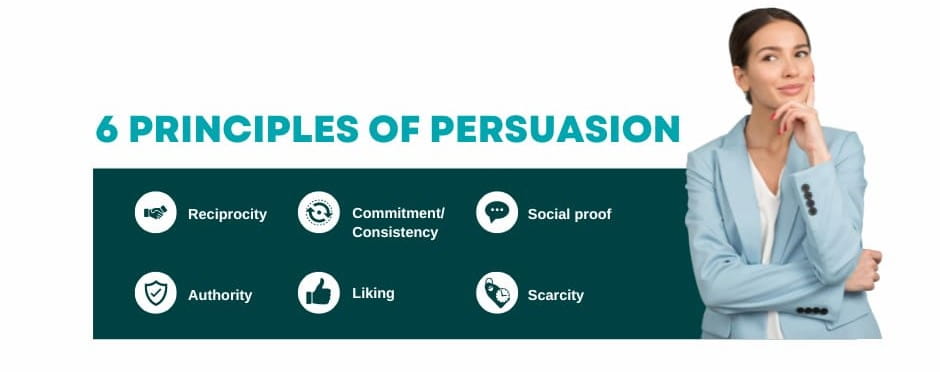
Persuasion is not just about convincing someone to do something. It’s about building a relationship of trust.
The best way to do that is by establishing common ground, showing credibility, and making it clear that you have the other person’s best interests at heart. The six principles of persuasion can help you do just that.
Here are Dr. Robert Cialdini’s six principles of persuasion:
- Reciprocity
- Commitment and Consistency
- Social proof
- Authority
- Liking
- Scarcity
Reciprocity
The reciprocity principle relies on the universal tendency to feel obligated to return favors, gifts and efforts. When someone does something nice for us, we intuitively want to reciprocate.
It’s a simple concept, but it can significantly impact your business. Reciprocity is all about giving first. When we receive something, we feel compelled to return the favor.
Studies back up the power of reciprocity. In one experiment, waiters increased tips by 21% simply by giving diners a mint at the end of their meal. The mint, although small, triggered the reciprocity response. Another study found shoppers were more likely to purchase when offered an unsolicited gift from the salesperson.
How Can Reciprocity Improve Your Reputation?
We most commonly see reciprocity at work with word of mouth. If you do something nice for someone, they’re more likely to return the favor.
- In the business world, this often manifests itself in the form of referrals. When you provide excellent service or products to your customers, they’ll be more likely to refer their friends and family to your business.
- Over time, this can significantly improve your reputation and help you attract new customers.
Of course, ensuring that you’re providing genuine value to your customers is essential; otherwise, they’ll quickly see through your ulterior motives. But when done correctly, reciprocity can be a powerful tool for boosting your business.
Blogging is a classic example of reciprocity in the online world. Let’s say you’re a marketer trying to get your website noticed by potential customers. One way to do this is to guest blog on other websites in your industry. By providing valuable content for free, you’re persuading people to visit your site and see what you have to offer.
Blogging can:
- Improve your reputation and make it more likely that people will do business with you.
- Establish a loyal customer base, many of whom will turn into brand advocates simply because of the valuable information you post for free on your blog.
- Increase awareness of your company and what it has to offer.
Reciprocity builds goodwill in relationships and makes people more willing to comply with larger requests. Of course, it’s important not to exploit reciprocity by making disproportionate demands.
So, next time you’re looking to boost your image, remember that reciprocity can be a powerful tool.
Commitment and Consistency
Commitment and consistency are important because they build trust and credibility.
People want to be consistent with commitments and promises they’ve already made. Once we take a stand or go on record about something, we are more likely to align with that stance in the future.
If you say you’re going to do something, do it. If you make a promise, keep it.
Researchers saw this in action when they had people sign small petitions supporting a particular issue. Those who signed were later willing to show much greater support for the same cause by volunteering time or donating money.
Our desire for consistency with our commitments can influence larger behaviors down the line.
How Can Commitment and Consistency Improve Your Reputation?
Making commitments and consistently following through with them isn’t just good for your personal relationships. It can also improve your reputation in your professional life.
Marketers leverage this principle by getting customers to make small initial commitments, like free trials or product samples, which turn into larger purchases. Consistency with existing commitments is a powerful driver, but marketers should avoid making misleading claims.
If you’re known for being reliable and trustworthy, people will be more likely to want to work with you and suppor
Frequently Asked Questions








Protect Your Online Reputation
Every day you wait, negative content gets stronger. Talk to our experts about a custom strategy for your situation.
Get Your Free Analysis