
Why Crypto and Blockchain Struggle on Wikipedia
From notability gaps to editor skepticism, here's what makes Wikipedia uniquely hostile to crypto projects—and how professionals can navigate it.

- Niche crypto sources like subreddits and crypto blogs do not meet Wikipedia's sourcing standards.
- High-profile scandals make editors skeptical of even legitimate blockchain projects.
- Mainstream media coverage alone is rarely sufficient — the right combination of sources matters.
- Wikipedia editors can have personal biases that lead to neutrality disputes or outright deletions.
- Knowing Wikipedia's notability rules lets crypto professionals build a stronger, more defensible case.
Crypto and blockchain projects face unique obstacles on Wikipedia due to the platform's reliance on traditional credibility markers like mainstream media and academic journals. Industry scandals such as Mt. Gox and ICO scams have made Wikipedia editors broadly skeptical of new blockchain entries. Understanding why these hurdles exist — from sourcing standards to editor bias — is the first step toward navigating them effectively.
Cryptocurrency and blockchain have a tough time on Wikipedia. Wikipedia isn’t just fussy—it operates based on policies rooted in traditional credibility. It favors established newspapers, academic journals, and recognized industry outlets to determine what’s notable. Unfortunately, crypto and blockchain projects typically don’t slot easily into these traditional categories. Adding to the challenge: crypto’s reputation issues and widespread skepticism among Wikipedia’s editing community. By better understanding how Wikipedia operates and why these hurdles exist, you can improve your chances of successfully navigating the system.
If you’ve checked out our other guide, you should already have the basics about Wikipedia’s core policies—things like verifiability, neutrality, and notability. Now let’s take a deeper look at why those are especially problematic for crypto, and how you can proactively handle them. Whether you manage brand strategy at a blockchain startup or advocate for better public perception, this guide offers insight into a process that is both challenging and necessary.
Key Takeaways
- Wikipedia and crypto: an uncomfortable fit. Think of Wikipedia as an experienced librarian—it trusts proven, authoritative volumes rather than glossy brochures about the latest hot trend. Crypto and blockchain thrive on innovation and niche interest, which makes establishing credibility challenging when the platform emphasizes reliability, neutrality, and established sources.
- Industry reputation: hard to shake. High-profile crypto controversies—Mt. Gox, ICO scams, extreme market volatility—have left lasting negative impressions. Wikipedia’s volunteer editors tend to view new blockchain projects through a skeptical lens, lumping legitimate newcomers alongside those with questionable credibility.
- Keeping pace is tough. Blockchain evolves incredibly fast, often moving quicker than mainstream media can document. Wikipedia struggles to maintain current entries about the latest advancements. A promising DeFi project gaining ground this month could pivot entirely by next quarter, leaving editors wary about longevity and relevance.
- Bias—a human trait, not just a crypto issue. Wikipedia editors have biases, especially when evaluating controversial topics. Crypto is frequently at the center of neutrality debates, often resulting in standoffs or outright deletion of entries.
- Proactively bridging the gap. Understanding Wikipedia’s guidelines allows crypto professionals to adapt their approach. Recognizing what qualifies as notable—and how to properly verify your points—can significantly improve how your project fares on the platform.
Struggles of Crypto and Blockchain on Wikipedia
Perception and Credibility Issues
The widespread association of crypto with incidents like the collapse of Mt. Gox in 2014 and various ICO scams in 2017 has created deep-rooted skepticism. Even if your project is entirely above board, it faces an uphill battle to shake off the industry’s overall image of risk and volatility.
Wikipedia’s notability standards require coverage by reputable, established sources. This places blockchain startups at a disadvantage from the outset, since high-quality coverage in mainstream media outlets or industry journals can be tough to secure. Even seemingly reputable crypto and blockchain sources are not acceptable to many editors.
Many legitimate crypto projects initially gain visibility within niche blogs, subreddits, or crypto-specific forums—sites that Wikipedia does not consider adequate sources. While these platforms may help spark enthusiasm, Wikipedia’s guidelines emphasize more conventional channels like the Wall Street Journal, New York Times, Reuters, or select industry-specific journals to validate claims and facts.
Does Your Company Qualify for a Wikipedia Page?
Run a free notability check. Our analysis engine reviews real press coverage against Wikipedia's actual notability standards and emails you a detailed report — no sales call required.
Your notability check is running
We're analyzing coverage of right now — it usually takes 10–15 minutes. Your report link will arrive from noreply@reputationx.com; check spam if you don't see it. Keep reading — nothing else to do here.
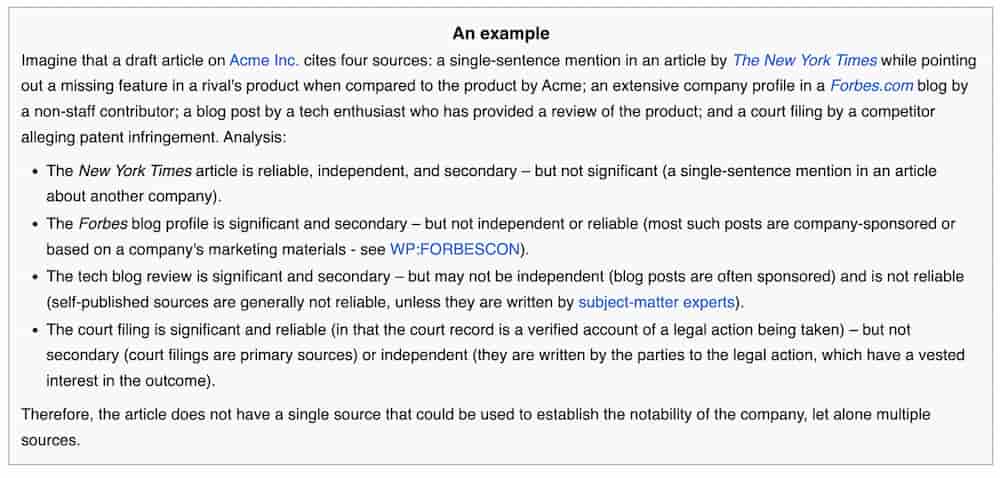
Having reputable industry journals alone is not usually enough to earn a Wikipedia article. For crypto and blockchain pages, there needs to be substantial mainstream coverage as well.
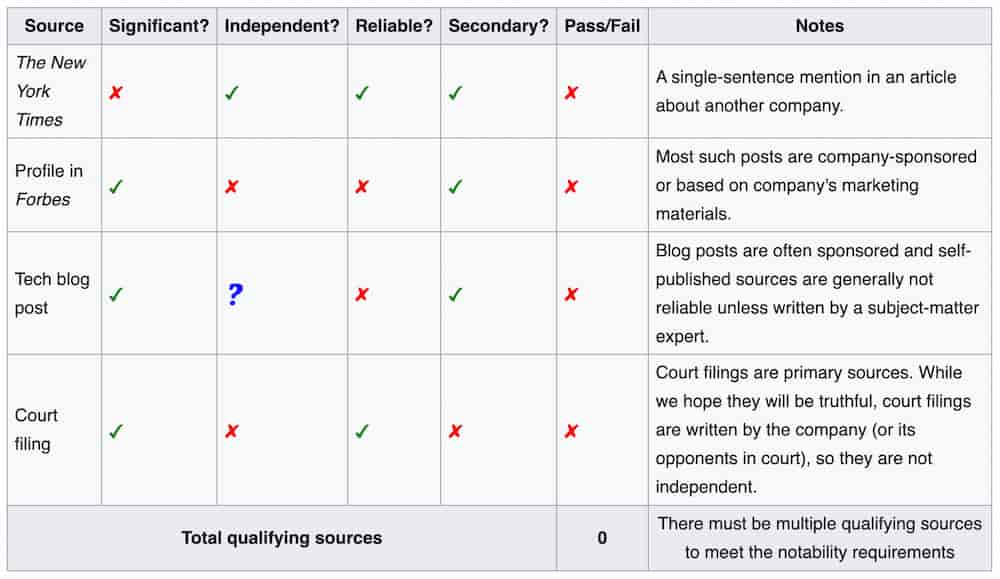
Many mainstream publications still hesitate to fully cover crypto due to industry volatility, complex technical details, or a lack of expert journalists on staff. This leaves even well-managed crypto projects locked out of Wikipedia’s notability requirements due to insufficient verifiable secondary sources.
The path to overcoming credibility hurdles isn’t just creating a solid Wikipedia page. It involves building credibility proactively—securing reliable media coverage before even attempting an entry.
Need Help Getting Your Blockchain Project on Wikipedia?
Our team understands Wikipedia’s strict standards for crypto and blockchain projects. We can help you build the credibility and media coverage you need to succeed.
The Gatekeepers: When Powerful Wikipedia Editors Oppose Crypto
One of the lesser-known challenges blockchain and crypto firms face on Wikipedia is not just policy, but people—specifically, powerful volunteer editors with strong anti-crypto biases. For whatever reason, these editors tend to apply an unusual level of scrutiny to Wikipedia articles about crypto and blockchain.
While Wikipedia strives for neutrality, it is an open platform governed by a self-regulating community. Some long-time editors with strong track records hold significant influence—so much so that arguing with them is often futile, even when policy is on your side. When those individuals are personally skeptical or hostile toward the crypto industry, their biases can shape editorial decisions in ways that seem less about policy and more about personal agenda.
These editors often argue that crypto-related topics fail to meet Wikipedia’s notability and verifiability guidelines. In practice, however, their standards are sometimes applied more strictly than they would be for other industries. Sources acceptable in other contexts get dismissed, and entire articles are nominated for deletion—often citing “promotion” or “lack of reliable secondary sources”—even when reputable media coverage exists.
Some editors monitor and revert every attempt to update or improve blockchain-related pages, regardless of neutrality or quality, effectively gatekeeping entire sectors from accurate representation.
Article Trajectory: Why Timing Matters for Crypto Wikipedia Pages
You’ll want a Wikipedia article before something goes wrong.
If a blockchain or cryptocurrency company does not have a Wikipedia article and something goes wrong, an article could be created by unfriendly editors. It is ironic that a company may not have had the notability needed to earn a Wikipedia page, but a misstep generates overwhelming bad press that then becomes the basis of an article.
When that happens, the article’s trajectory stems from the problem—not the facts about the company. Turning such an article around is difficult. Wikipedia editors tend to frown on positive additions to a negatively framed page, calling it whitewashing, even when other editors are simply trying to restore neutrality to what is effectively a hit piece.
It’s best to establish an article before any problems occur. If an article already exists when bad news breaks, that news becomes a subsection rather than the dominant frame. This is closely related to how Wikipedia affects brand reputation more broadly—the platform’s content can shape public perception long after a crisis has passed, making early, accurate representation essential.
Conclusion
Moving fast and breaking things can drive innovation, but the negativity that results is amplified by some editors on Wikipedia.
This challenge isn’t just about winning a slot on one platform—it’s about owning your industry’s narrative. Blockchain projects need to proactively build trust, credibility, and respect across broader media landscapes, not just crypto-specific forums. Blockchain and crypto pages can be developed on Wikipedia, but notability and references must usually be stronger than for other industries. Industry publications alone won’t work; they can serve as secondary sources, but mainstream coverage must anchor the article.
To succeed on Wikipedia, you’ll need powerful mainstream press that goes beyond a passing mention. If you’re starting from scratch, our guide on creating a Wikipedia article that won’t be deleted is a good place to begin building your strategy.
Frequently Asked Questions








Protect Your Online Reputation
Every day you wait, negative content gets stronger. Talk to our experts about a custom strategy for your situation.
Get Your Free Analysis