
How to Track Google Search Engine Result Changes Over Time
These nine free and paid tools let you monitor Google ranking volatility by industry, country, and device so you can react to algorithm changes faster.

This article reviews the top tools for tracking Google search engine results page (SERP) fluctuations over time. Each tool offers a different approach, from detailed algorithm update histories to real-time volatility scores by industry or country. Using these trackers helps SEO professionals and reputation managers understand when rankings shift and why.
How to Track Google Search Engine Result Changes Over Time
-
1
Review SEJ's algorithm update history
Visit the History of Google Algorithm Updates page on Search Engine Journal for a regularly updated list of confirmed algorithm changes. Each entry includes explanations of who was most likely affected and other key details. This resource is best used when you want to understand major updates in depth rather than visualize day-to-day fluctuations.
-
2
Consult Moz's algorithm update history
The Moz Google Algorithm Update History page provides rich detail on both confirmed and unconfirmed major updates over time. It is text-focused rather than chart-driven, making it a strong companion resource to visual trackers. Moz also offers MozCast for those who prefer a more graphical view of SERP changes.
-
3
Monitor daily fluctuations with MozCast
MozCast measures Google SERP fluctuation as a temperature reading, where higher temperatures indicate greater ranking changes. It tracks over ten thousand keywords across five major U.S. cities on a daily basis. It also monitors Exact Match Domains and Partial Match Domains, giving you additional signals about ranking shifts.
-
4
Use SEMRush Sensor for industry-level insights
SEMRush Sensor provides both an aggregate volatility score and industry-specific scores so you can see which sectors are most affected by algorithm changes. It also tracks SERP feature fluctuations such as snippets, Knowledge Panels, and shopping results. This granularity makes it useful for diagnosing whether changes you see are broad or niche-specific.
-
5
Check SERPmetrics for Google and Bing data
SERPMetrics tracks search engine results page fluctuation for both Google and Bing over a rolling thirty-day period. This makes it one of the few tools that lets you compare volatility across two major search engines simultaneously. Use it to determine whether ranking changes you experience are isolated to one search engine or happening broadly.
-
6
Identify winners and losers with Algoroo
Algoroo shows daily Google SERP fluctuation and highlights specific sites that are gaining or losing rankings as a result of algorithm changes. The sites featured serve as industry-leading bellwethers, giving you a real-world sense of who is being impacted. Tracking these patterns over time can help you spot trends relevant to your own site.
-
7
Track volatility history with Accuranker Google Grump
Accuranker's Google Grump rating measures unrest in Google's algorithm and allows you to drill down into fluctuations by country. The historical chart extends back to 2015, making it a valuable tool for long-term trend analysis. Use country-level data to determine whether algorithm volatility is affecting your target markets specifically.
-
8
Cross-reference data using Rank Ranger and Cognitive SEO
Rank Ranger categorizes Google ranking volatility as low, normal, high, or very high by monitoring around 10,000 domains daily. Cognitive SEO complements this by tracking more than 170,000 keywords across desktop, mobile, and local rankings. Together, these tools provide broad coverage and brief explanations of official Google changes to help you contextualize the data you collect.
There are many services that track changes in search engine algorithms. Most track Google, and some track Bing and Google or other search engines. Below are the top SERP fluctuation trackers.
History of Google Algorithm Updates by Search Engine Journal
This is an often updated list of Google algorithm updates with explanations about them, who was most likely affected, and other details. It’s not a detailed chart that shows SERP fluctuations, as you’ll see in other trackers below. If you are looking to understand the major algorithm updates in detail, then this is a good place to start.
Moz Google Algorithm Update History
The Moz algorithm update is similar to the SEJ page above. It’s not rich on charts, but it does provide rich detail as to which major confirmed and unconfirmed updates have happened in the past. Moz also has “MozCast” that is more chart-like for you visual learners.
MozCast
Get a Free Reputation Assessment
Find out what people see when they search for you online. No obligation — results in 24 hours.
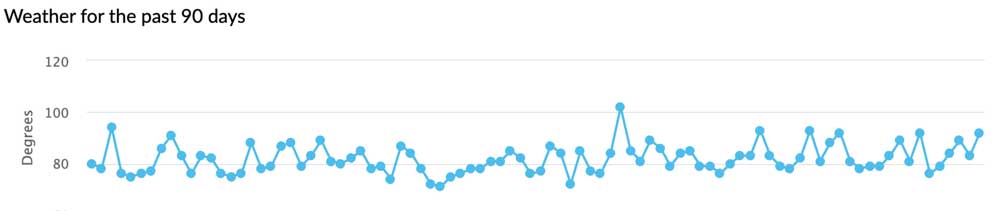
MozCast displays their measurement of Google SERP fluctuation as temperature. It also tracks EMD’s and PMD’s, Exact Match Domains, and Partial Match Domains. The temperature reflects the degree of change in the day-to-day rankings of over ten thousand different keywords in five major cities in the United States.
SEMRush Sensor
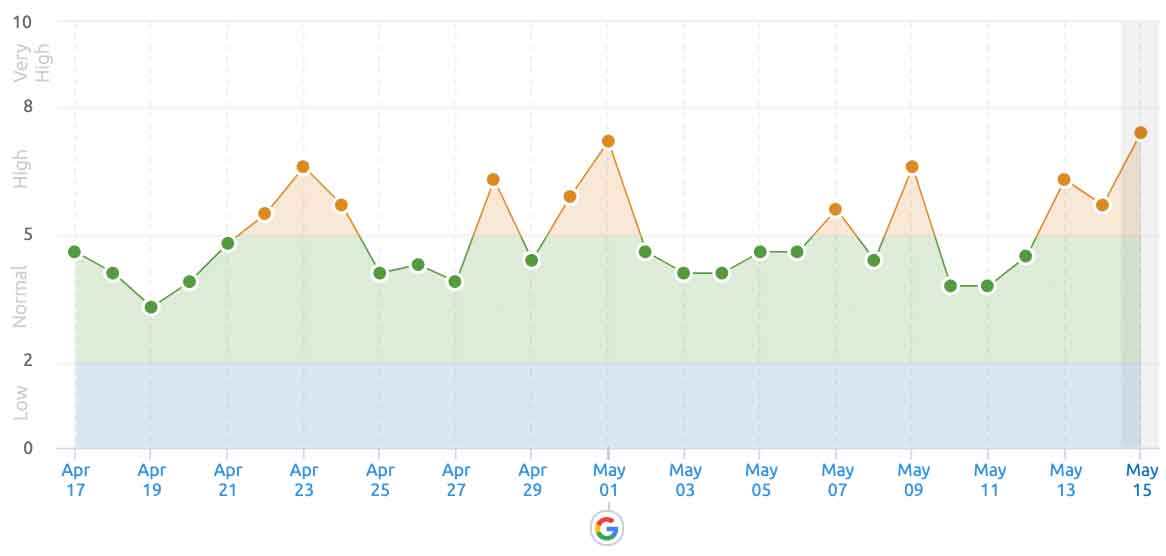
SEMRush Sensor shows an aggregate score, as well as scores for many different industries as well as SERP feature fluctuations. SERP features include things like snippets, Knowledge Panels, and shopping results. It’s a great place to get some industry granularity.
SERPmetrics SERP Fluctuation
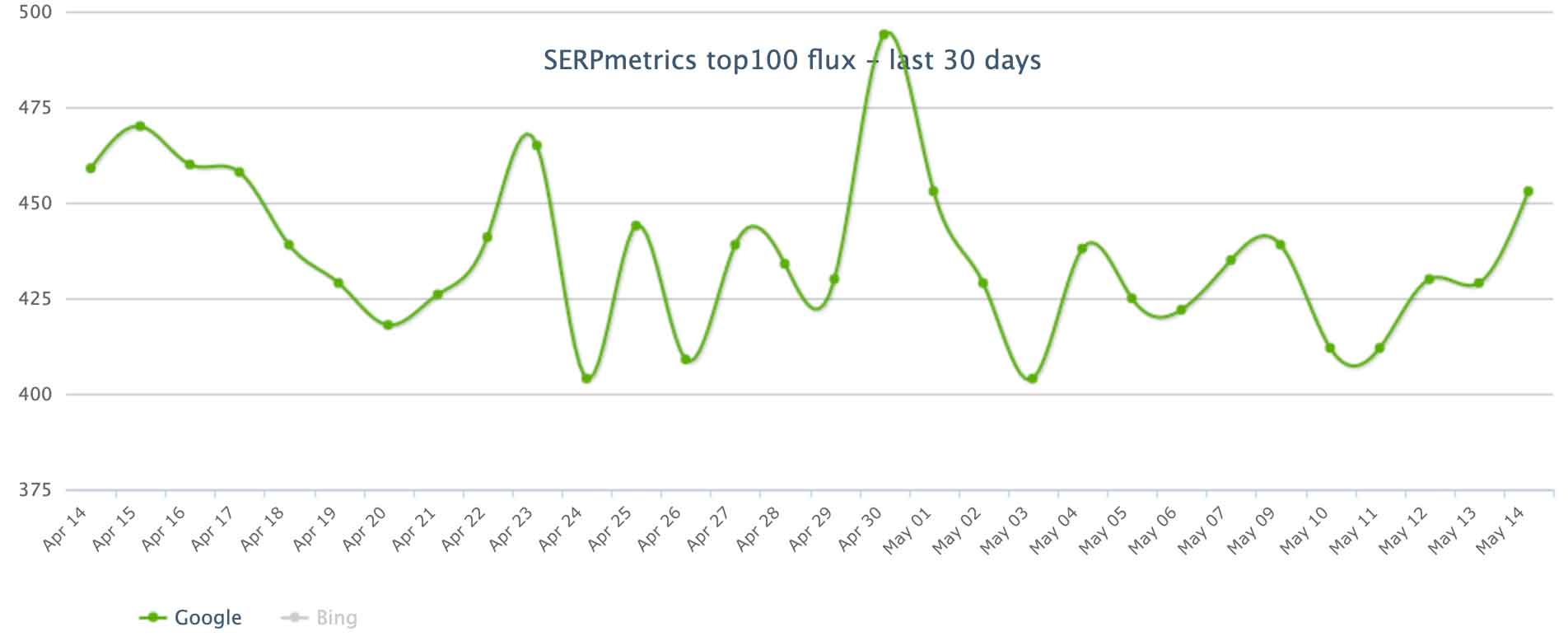
SERPMetrics shows search engine results page fluctuation for both Google and Bing over a thirty-day period.
Algoroo

Algaroo shows SERP fluctuation for Google on a daily basis and shows sites that are either “winners” or “losers”. The sites they use as examples are industry-leading bellwethers.
Accuranker Google Grump Rating
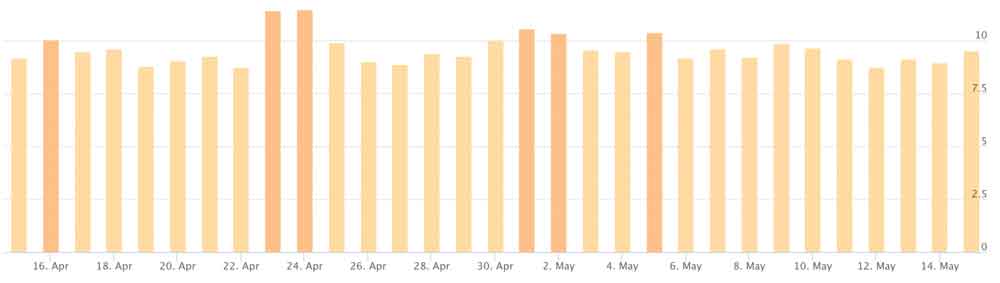
Accuranker has a bit of a sense of humor. The ‘Google Grump’ rating “highlights unrest in Google’s algorithm”. But you can also drill down to see algorithm fluctuations in various countries around the world. The fluctuation chart goes all the way back to 2015.
Advanced Web Ranking
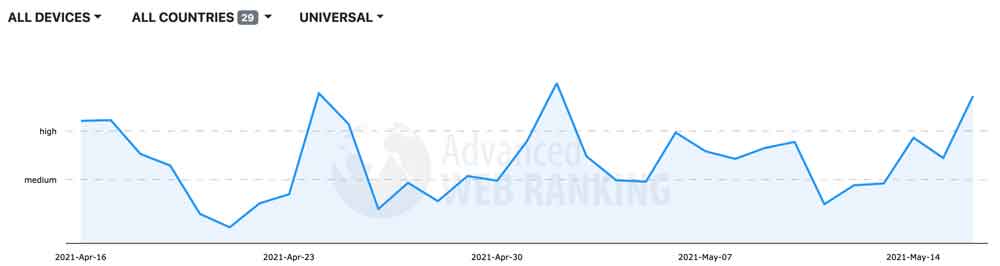
The tracker Advanced Web Ranking uses tracks different countries and devices. It tracks about 400,000 desktop and 200,000 mobile keywords every day.
Rank Ranger Rank Risk Index
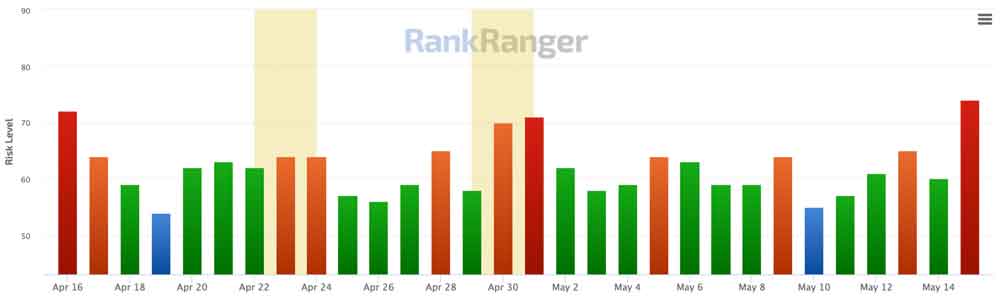
Rank Ranger measures changes in Google ranking volatility as low, normal, high, or very high. They track about 10,000 domains daily to come up with their measurement.
Cognitive SEO Google Algorithm Changes
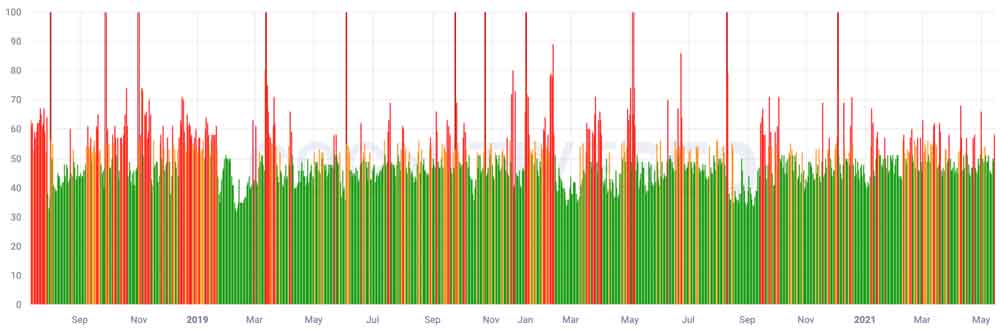
Cognitive tracks more than 170.000 keywords for desktop, mobile, and local rankings. They randomly select keywords and also provide a brief explanation of the official Google algorithm changes.
Frequently Asked Questions







Protect Your Online Reputation
Every day you wait, negative content gets stronger. Talk to our experts about a custom strategy for your situation.
Get Your Free Analysis