
How Brands Are Perceived Online. Stakeholders, Bias, and Management
Your brand's reputation isn't one story — it's dozens of different stories told by investors, customers, employees, and journalists, each with their own bias.

- Map your stakeholder groups — each one looks for different signals when evaluating your brand.
- Negative content consistently outperforms positive content in clicks and lasting impression.
- Social proof makes shared negative sentiment self-reinforcing, even when it lacks factual basis.
- Confirmation bias means audiences actively filter information to match what they already believe.
- Google and social algorithms narrow what users see over time, locking in early brand perceptions.
Online reputation is shaped by a wide range of stakeholders — from investors and employees to journalists and day traders — each filtering information through their own interests and cognitive biases. Negativity bias, social proof, and algorithm-driven search results all amplify reputational damage and reinforce existing perceptions. Effective reputation management requires understanding how different audiences seek and process information, not just what appears in search results.
A person or company’s reputation is based on information (of some kind or another). And every reputation is perceived by people (of some kind or another). Put information and perception together, and you have a reputation. Understanding what reputation really is — and how it forms — is the first step toward managing it effectively.
Who’s Involved in Reputation
Who are the people perceiving your reputation? Here are a few of them, and most form brand sentiment based on what they read on the internet:
- Existing customers
- Former customers
- Future customers
- Former employees and current pension holders
- Employees about to retire
- Employees who just entered the company
- Prospective employees
- Senior management or executives of the company
- Suppliers and providers of the company
- Major investors
- Small investors
- Day traders
- Journalists
- Bloggers
- Reviewers
Everyone forms their opinion of a person or company based on their particular viewpoint. Those people also select information they believe best informs their situation. Beyond that, each person’s mix of cognitive biases shapes how they process that information. For a deeper look at how these dynamics play out at the corporate level, see our guide to corporate reputation online.
How People Seek and Filter Reputational Information
Generally speaking, people find the information source best suited to what they are trying to figure out.
An investor, for example, is interested in stock information. They comb records on Morningstar.com and Bloomberg.com and digest the Financial Times to get expert analysis. Even so, they will encounter others’ opinions along the way. Because people are drawn to negativity, they will most likely remember negative content — flavoring their opinion and influencing their investment decisions.
Social Proof Reinforces Reputation Problems
People trust other people’s opinions, even when those opinions are unreliable. When enough people share a similar view — whether backed by personal experience or not — that sentiment becomes self-reinforcing. If a group believes something, it feels more convenient to accept it as true.
Get a Free Reputation Assessment
Find out what people see when they search for you online. No obligation — results in 24 hours.
People Seek Out Information They Already Agree With
Cognitive biases play a significant role in how reputation forms. People often are not even aware they are selectively accepting or rejecting information, but it happens constantly.
A prospective customer may see two news articles side by side. One reads “Widget Inc. Saves 10,000 Kittens and Donates $1 Billion to UNICEF.” The other reads “Widget’s CEO Caught With Pants Down.” Which one gets the click? The sensational one almost always wins — and it leaves a stronger impression.
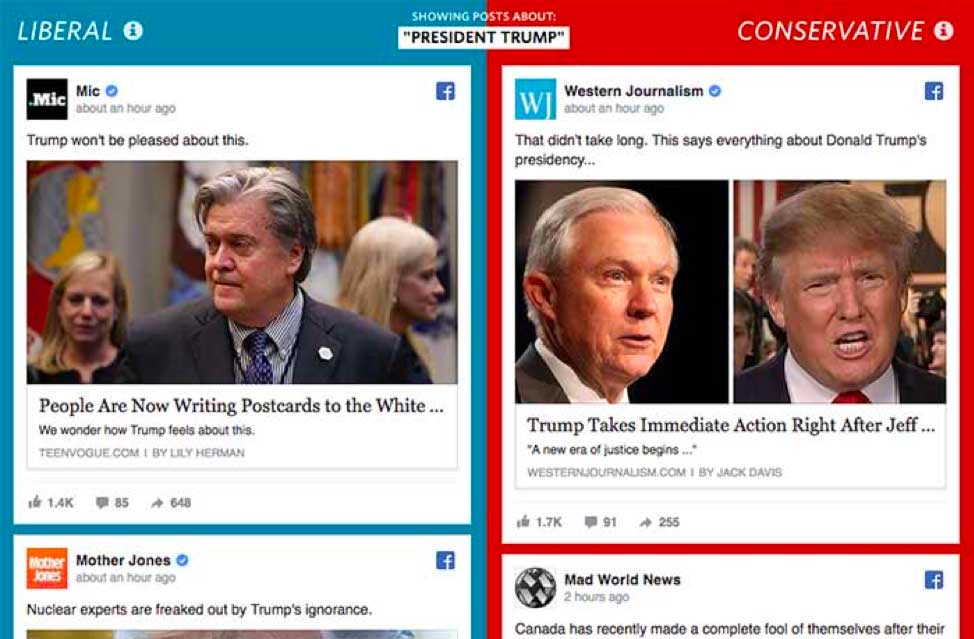
This pattern is most visible in online search. Google learns from search habits and preferences, serving up content it predicts users will engage with. Facebook similarly adjusts newsfeeds based on what users click and share. Initial preferences trigger a cascade of machine-learning responses that continuously narrow the information a person sees.
People Rely on the Opinions of Others
There is too much content in the world for any single person to process even a fraction of it. People are wired to trust others and to rely on the mental work those around them have already done. Evolutionary biology reinforced this instinct — without it, humans would have struggled to survive.
When a trusted contact says “Widget Inc. is terrible,” that brief opinion carries real weight. Today, the most influential source of opinion is one that knows users better than almost anyone else: Google.
Google is not a person, but a machine-learning, algorithmically driven search engine. It decides what users see and surfaces the most relevant information as quickly as possible. Because of the way it reacts, iterates, and serves up results, it functions as a powerful shaper of reputation — arguably the most powerful one in existence.
Take Control of How Your Brand Is Perceived
Your reputation is being shaped right now — by algorithms, biases, and stakeholders you may not even be aware of. RepX can help you understand and manage it.
How Google Search Shapes Reputation
Google search results are the primary method by which reputation is formulated for most brands and individuals. Understanding how that happens is essential to managing it.
Universal Search Results
Universal search refers to the fact that Google displays multiple types of information within a single results page. Since 2007, the search engine has served up more than just a list of websites. That scope has expanded dramatically, now including AI Overviews that synthesize information directly on the results page, alongside news results, knowledge panels, image carousels, and much more — all of which shift based on who is searching, where they are, and what is happening in the world.
A search for “Barack Obama,” for example, reveals more than just Wikipedia and BarackObama.com. It surfaces news articles, images, facts, an X (formerly Twitter) account, and questions people commonly ask.
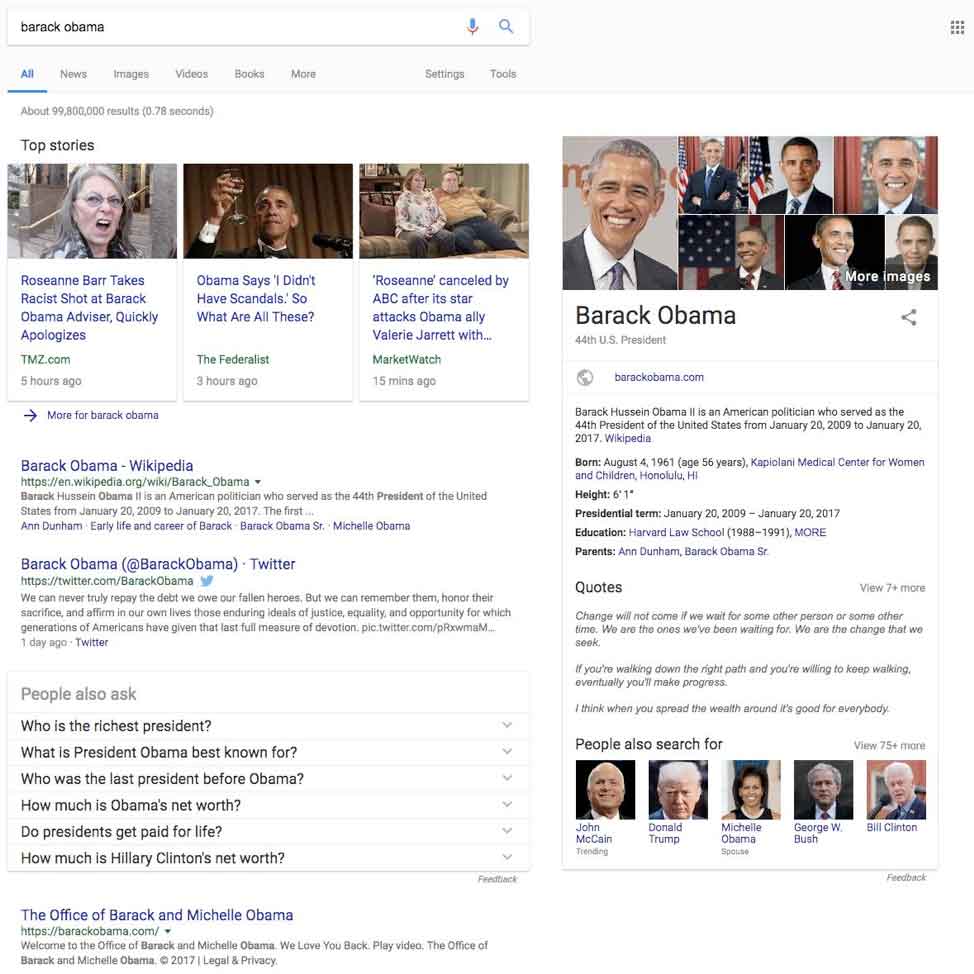
This is part of how Barack Obama’s reputation is formulated — at least from one person’s perspective, on one device, at one moment in time. Your results may vary.
For reputation management, this means monitoring far more than a brand’s website. Video results, X mentions, news listings, image carousels, local packs, knowledge panels, Google Ads, and site links all contribute to how a brand is perceived. Content from microblogs to major news outlets shapes reputation simultaneously, making it more authentic but also harder to manage.
Personalized Search Results
Google also shapes reputation through personalized search results — those influenced not by traditional ranking factors alone, but by personal signals. Personalization occurs in response to the following factors:
- Location — Google uses your IP address to deliver geographically relevant results. A search for “best tacos” in Santa Fe, New Mexico returns very different results than the same search in St. Louis, Missouri.
- Search and browsing history — Past searches, clicks, and preferences influence what Google displays in the present.
- Signed-in account activity — When logged into a Google account, activity across Google services — including YouTube watch history and Google Maps usage — can inform results and recommendations.
- Device type — Whether you are using an Android phone, Google TV, or a smart home device, Google adjusts results accordingly.
- Gmail data — Google surfaces Gmail information within personal assistant features, such as upcoming flights or hotel reservations, though this influences assistant-style cards rather than organic search rankings directly.
Personalization is not limited to signed-in users. Location and device signals remain visible to Google even in incognito mode, though history-based personalization is reduced. To understand why two people searching the same name can see very different results, see our post on why search results appear different to different people.
How Cognitive Biases Affect Reputation
The human mind is not a purely rational machine that processes all incoming information with flawless precision. When it comes to reputational information, that reality matters enormously. No matter how carefully a reputation is managed, some people will misinterpret it — because of how their minds work, not because of the facts.
What Is Cognitive Bias?
A cognitive bias is a mistake in reasoning, evaluating, or remembering, often occurring because a person holds onto existing preferences and beliefs regardless of contrary information. Not all cognitive biases are harmful — many serve as useful mental shortcuts that allow for rapid responses in complex situations. But they can significantly distort how reputational information is received and retained.
Which Cognitive Biases Affect Reputation?
All cognitive biases affect reputation to some degree, because they shape how people think and what they notice. Common examples include the bandwagon effect — acting a certain way because many others are — and hindsight bias, in which people believe after an event that they predicted it all along. Stereotyping is another widespread bias that distorts or overgeneralizes views of people and organizations.
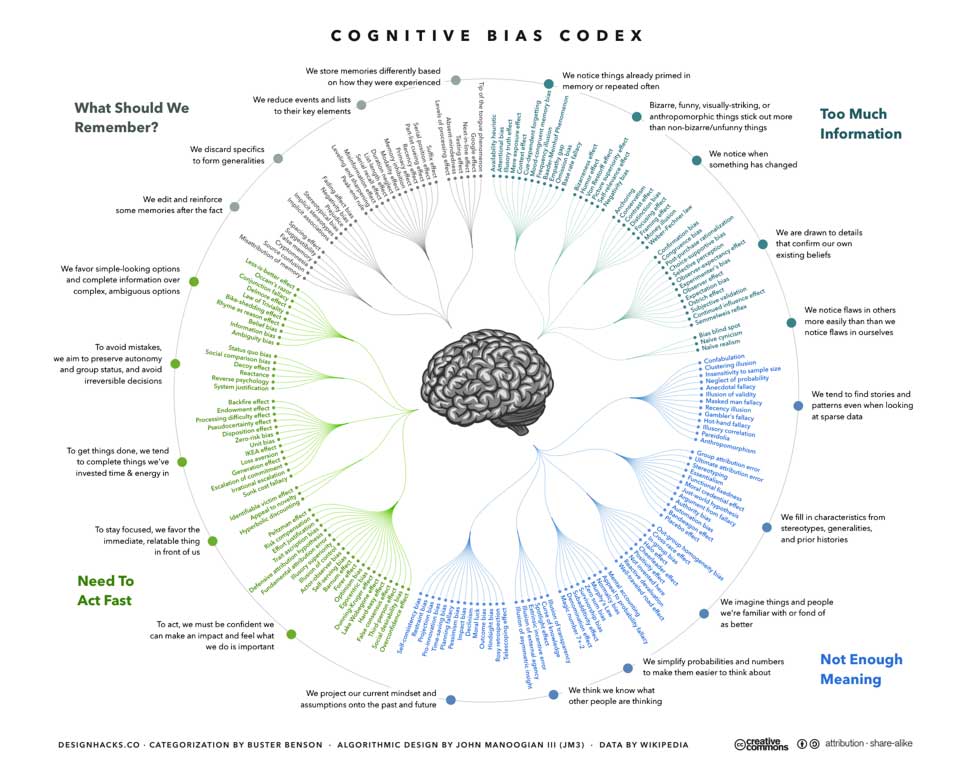
Confirmation Bias: The Most Important Bias for Reputation
Among the many documented cognitive biases, confirmation bias has the greatest impact on how reputation information is perceived. As we’ve written, confirmation bias is the tendency to find, favor, and remember information that already confirms existing beliefs — while paying considerably less attention to information that contradicts them.
According to psychologist Shahram Heshmat, writing in Psychology Today, confirmation bias occurs when the desire for a belief to be true causes a person to stop gathering information once they have found evidence that supports it. Wishful thinking drives the process, and contradictory evidence is filtered out.
Consider a person who believes a particular corporation is harmful. When they encounter a headline reinforcing that belief, it confirms everything they already think.
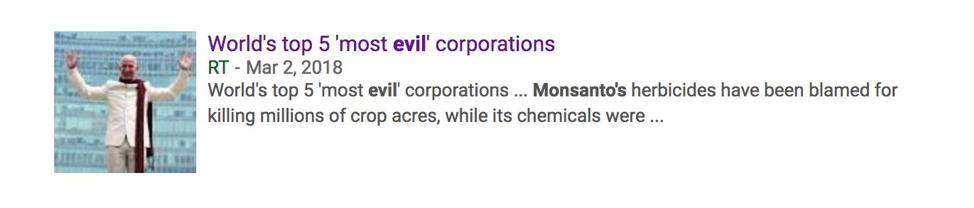
A contradictory headline directly below it does nothing to change their view.
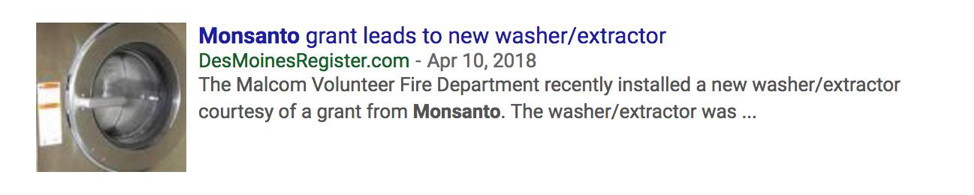
Even a series of positive headlines — reporting environmental restoration, disease prevention, or humanitarian awards — would not shift a deeply held negative belief. The mind has already decided.
Confirmation bias is especially significant for reputation management because it is amplified by the same algorithms that shape what people see. Social platforms surface content that matches existing beliefs. Google’s personalization reinforces search patterns. Meta announced in 2024 that it would reduce political content recommendations across Facebook and Instagram — a meaningful shift — but the underlying echo chamber dynamic has not disappeared. The same pattern applies to Google, TikTok, YouTube, and AI-driven tools such as ChatGPT and Google’s AI Overviews.
The sources people trust for information are, in many cases, digital echo chambers that reflect their own biases back at them. That ecosystem has grown more complex as AI shapes more of what people read and see.
People are partial to their own beliefs. Contradictory information creates discomfort. Closed-mindedness is a reflex, and change is difficult — especially when the issues involved feel morally charged, such as religion, the environment, money, or politics.
Complete freedom from bias may not be achievable, but awareness of it is. Questioning assumptions more and asserting them less is a meaningful first step.
Conclusion
Reputation is not simple. People intake information that is fed to them by powerful algorithms designed to maximize engagement, not to challenge assumptions. Cognitive biases then shape how that information is interpreted, often in ways the individual is not aware of. If you are ready to take a more structured approach, our complete guide to online reputation management is a good place to start.
Frequently Asked Questions







Protect Your Online Reputation
Every day you wait, negative content gets stronger. Talk to our experts about a custom strategy for your situation.
Get Your Free Analysis