
What Non-Technical People Can Do to Improve Search Results
When business slows down, your idle team can tackle these eight SEO projects to strengthen your search presence and drive leads for months to come.

- Add long-tail keywords to existing site pages to compete where short-tail phrases are too competitive.
- Publish at least one in-depth, high-value content piece monthly to attract authoritative inbound links.
- Set up or update your Google Business Profile to strengthen local search presence.
- Structure content with clear headings and concise answers to qualify for featured snippets and AI Overviews.
- Build a long-term content calendar to sustain SEO momentum beyond the initial slow period.
During slow periods, non-technical employees can take on meaningful SEO tasks that improve search visibility without outside help. This article outlines eight specific projects — from long-tail keyword integration to content calendars — that build lasting lead generation value. While not a replacement for SEO professionals, a redirected internal team can make measurable progress on Google rankings.
How to Improve Search Results Without Technical Expertise
-
1
Brainstorm and deploy long-tail keywords
Add long-tail keywords and relevant supporting content to your existing pages to improve search engine rankings. Long-tail phrases are less competitive than short generic terms, making it easier to rank for them even without deep SEO expertise. Structure your content with clear headings and concise answers to improve eligibility for featured snippets and AI Overviews.
-
2
Publish in-depth, high-value content
Create at least one substantial piece of content per month, such as case studies, white papers, or original market research reports. This type of content is far more likely to attract inbound links from authoritative sites than short blog posts. Writing from direct, first-hand experience also aligns with Google's E-E-A-T framework, which rewards genuine expertise and trustworthiness.
-
3
Launch an email newsletter
A newsletter is a proven tactic for driving consistent traffic back to your website, which can indirectly generate inbound links over time. It is especially valuable in competitive industries where organic and paid search are dominated by larger players. Tools like Beehiiv, Substack, Mailchimp, and HubSpot make it straightforward to get started.
-
4
Create or update your Google Business Profile
Claim and fully update your Google Business Profile, particularly if your business depends on local search traffic or walk-in customers. Google pulls information from this profile to populate your Knowledge Panel and local search results. Keeping it accurate and complete ensures potential customers see correct information and improves your visibility in local queries.
-
5
Optimize onsite photos
Review and optimize the photos on your website by ensuring they are properly sized, compressed, and labeled with descriptive file names and alt text. Well-optimized images can drive additional traffic through image search results. This is a task that non-technical team members can take on with minimal training and immediate impact.
-
6
Publish inbound link bait
Create content specifically designed to attract links from other websites, such as original data, useful tools, or highly shareable resources. This approach strengthens your long-tail keyword strategy while building domain authority through external links. Content that earns natural backlinks signals credibility to search engines and improves your overall rankings.
-
7
Add internal links targeting key terms
Audit your existing site content and add internal links between pages using the keywords you want to rank for as anchor text. Internal linking helps search engines understand the structure of your site and distributes ranking authority across pages. This is a straightforward task that non-technical staff can complete without any coding knowledge.
-
8
Build a long-term content calendar
Plan out a schedule of long-form content topics that align with your target keywords and audience needs over the coming months. A content calendar keeps your team accountable and ensures a consistent publishing cadence, which search engines reward over time. Prioritize topics that demonstrate expertise and address questions your potential customers are actively searching for.
Summary
- Idled non-technical employees can help improve your SEO
- Here are eight things non-technical people can do to improve Google results
- Resources for further learning are included
Businesses of all sizes face periods of disruption — economic downturns, seasonal slowdowns, industry shifts, or simply the natural ebb and flow of demand. When those moments arrive, the smartest move is to redirect available energy toward initiatives that will pay dividends long after things pick back up.
If you’ve managed to keep your team intact during a slow stretch, that’s a real advantage. But you’re also probably not operating at peak capacity. When bandwidth opens up, the challenge becomes finding meaningful work — projects that build real value rather than just fill time.
Start with a project that’s likely to have a meaningful impact on your company’s lead generation efforts: those long-delayed plans to improve your SEO without outside help.
To be clear, your non-technical workforce isn’t a perfect stand-in for a team of SEO professionals. But they can do more than you might think. Assign these eight SEO-related tasks as you see fit, keeping in mind that some are ongoing projects that will continue to consume resources well into the future:
- Brainstorm and deploy long-tail keywords in onsite content
- Publish at least one piece of in-depth, high-value content
- Get an email newsletter going
- Create or update your Google Business Profile listing
- Optimize onsite photos
- Publish “inbound link bait”
- Add more internal links for the keywords you want to target
- Create a long-term, long-form content calendar
1. Brainstorm and deploy long-tail keywords in onsite content
You already have a lot of content on your site. Add long-tail keywords and relevant supporting content to your existing pages to improve search engine ranking.
Why this works
The relationship between keyword length and search volume is usually inverse. More people search for shorter, less specific keywords than longer, more specific alternatives. But “more” may not equate to “better” for you, because these short-tail phrases are extremely competitive.
Consider a practical example. Just about every American shopping for a Toyota minivan will type “Toyota Sienna” into their search bar early in their buyer journey. The subset who go on to type “Toyota Sienna dealership Seattle” is much smaller — and “Toyota Sienna dealership Boise” is smaller still.
What this means for you is that it’s far easier to rank for relevant long-tail keywords than their generic short-tail equivalents. That said, the landscape has shifted. Following Google’s Helpful Content Updates and the rollout of AI Overviews, long-tail queries are increasingly answered directly on the search results page, which can reduce click-through rates even for well-ranked content. Structure your content to be eligible for featured snippets — use clear headings, concise answers, and well-organized formatting that makes it easy for both readers and search engines to extract value.
Resources:
- All about long-tail keywords
- How to brainstorm
2. Publish at least one piece of in-depth, high-value content
Aim for at least one per month if possible, but it’s fine to start with one.
Why this works
It increases website traffic. Think real-world case studies, topic-driven white papers, and reports based on original market research. The SEO connection comes down to two words: inbound links. A high-value long-form report is far more likely to attract links from authoritative sites than a throwaway blog post — provided it’s publicly visible to search bots and not gated behind a purchase screen.
This kind of content showcases your expertise, which insiders call “thought leadership.” Under Google’s E-E-A-T framework (Experience, Expertise, Authoritativeness, and Trustworthiness), it carries even more weight when authors speak from direct involvement rather than research alone. That first-hand experience is what Google’s quality guidelines increasingly reward.
Understanding how this connects to your broader online presence is important — see our guide to SEO reputation management for a fuller picture of how search rankings and brand perception reinforce each other.
Resources:
- How to write the perfect blog post
- 50 ideas for business blog posts
- Ideas for ego-bait, clickbait, and blog formats
Need Help Improving Your Search Results?
Our team can run a free keyword and search audit for your brand — no obligation, just actionable insights.
3. Get an email newsletter going
A newsletter is a well-proven tactic to indirectly drive inbound links by directly driving traffic to your site. It’s especially valuable in crowded industries where organic search is highly competitive and paid search is dominated by deep-pocketed rivals.
A newsletter lets you spark conversation on your own terms — not on media or search gatekeepers’ terms — and build a steady stream of inbound search traffic in the process.
Resources:
- Examples of successful newsletter campaigns
- Tools for newsletter creation and management — popular options include Beehiiv, Substack, Kit (formerly ConvertKit), Mailchimp, and HubSpot
4. Create or update your Google Business Profile listing
Claim and update your Google Business Profile — it is especially important for businesses that depend on local search and walk-in traffic. Google pulls information from your profile to populate your Knowledge Panel, along with other data it collects. To understand exactly what feeds into that panel, see our guide to the sources Google’s Knowledge Panel relies on.
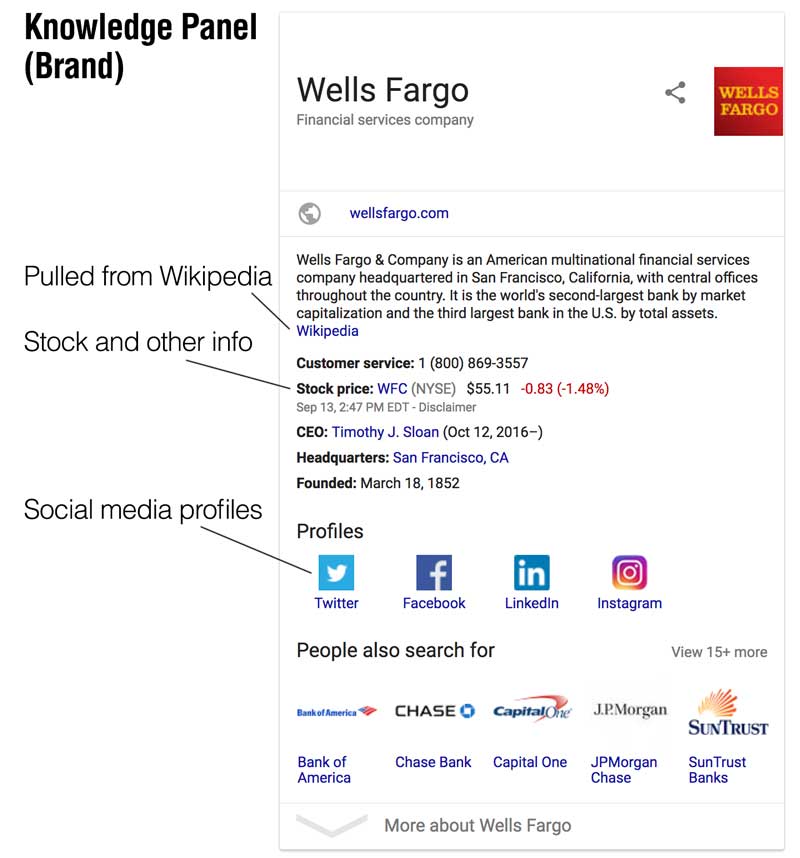
Your Google Business Profile is also vital for web-based, location-independent businesses. It’s a guaranteed first-page showcase for your company — content you create, on your terms, with strong visibility that complements what your website can achieve. With the rollout of Google’s AI Overviews, first-page dynamics continue to evolve, making it even more important to keep your profile accurate, complete, and regularly updated.
Resources:
- How to use Google Business Profile
- Unlock your branded search features in Google
5. Optimize onsite photos
Faster sites rank better, and oversized photos are one of the most common causes of slow load times. Google’s Core Web Vitals — which measure real-world page experience through metrics like Largest Contentful Paint (LCP), Interaction to Next Paint (INP), and Cumulative Layout Shift (CLS) — are directly affected by image size and format. Poorly optimized images drag down your LCP and CLS scores, both of which are ranking factors.
Well-optimized photos can also drive additional traffic to your site, particularly when they are properly marked up for search engines. Task a non-technical but visually adept employee with optimizing photos already on your website. That means:
- Compelling title tags with at least one relevant keyword
- Alt tags with keyword variations
- Longer captions with at least one relevant keyword (no stuffing)
- Resizing and converting images to next-generation formats like WebP or AVIF to reduce load time — Google PageSpeed Insights actively recommends these formats, and they are now widely supported across browsers. Adding the
loading="lazy"attribute to non-critical images is also a widely recommended best practice.
Then have your team add images to any page or post that looks too text-heavy at a glance, and repeat the optimization process for each new image.
Resources:
- How to optimize images for Google
- Free tools like Squoosh (by Google), TinyPNG, and ShortPixel make it easy to compress and convert images to modern formats without any design software required.
6. Publish “inbound link bait”
Inbound links increase your website’s search engine ranking. One effective way to earn them is through “link bait” — content specifically designed to attract links from high-authority sites. In-depth long-form content isn’t the only type. Brainstorm and publish other formats likely to draw inbound links:
- Testimonials or recommendations for non-competitive businesses (such as fellow retailers in your city or neighborhood)
- Product or service reviews that your audience might find relevant
- Detailed “best of” lists that your audience might find relevant
- Detailed tutorials about topics or processes relevant to your audience, even highly specific ones
Pepper these resources with appropriate long-tail keywords and, where it makes sense, links to topical pages on your own site. Remember, absolute search volume matters far less than rank and relevance.
Tip: Ego-bait is content that mentions someone and builds up their reputation. The person mentioned is likely to share, promote, or link to that content — whether on LinkedIn, Threads, Bluesky, or wherever their audience lives.
Link-building is also a core component of SEO reputation campaigns — the same principles that attract editorial links also strengthen your brand’s authority in search.
Resources:
- What is link bait
- Clickbait examples
7. Add more internal links for the keywords you want to target
Internal linking is another way to strengthen your long-tail keyword strategy. Internal links help Google discover your content, understand your site’s structure, and recognize your topical authority across related pages. While they don’t carry the same weight as external inbound links, research from Ahrefs and Semrush consistently shows that a strong internal linking strategy contributes meaningfully to better rankings.
Long-tail keywords are specific, lower-volume search queries — often longer phrases, full questions, or conversational searches — that tend to face less competition and attract more targeted traffic than broad, generic terms. With the rise of voice search and AI-driven queries, long-tail searches can range from a few words to complete sentences.
Resources:
- Need a list of search terms for your site? Just ask us and we will run a free report for you.
- What are long-tail keywords?
- Keyword research tools worth exploring: Ahrefs, Semrush, Google Search Console (free), and Google Keyword Planner (free) — the last two are particularly accessible starting points for non-technical users.
8. Create a long-term, long-form content calendar
Planning is essential to follow-through. If you’re serious about building on your newly reinforced SEO foundation, you need a clear view of what comes next.
Task relevant staff with laying out your content plans at least through the next quarter. After approving or rejecting topics, have your team research and outline each piece. While you’re at it, publish a style guide to keep their work inside reasonable guardrails. AI-assisted planning tools — such as HubSpot’s content assistant or platforms like Jasper — can also help non-technical staff generate topic ideas, draft outlines, and fill out a calendar faster than starting from scratch.
A well-executed content calendar also supports your broader online reputation strategy — consistent, high-quality publishing builds the kind of authoritative presence that search engines and customers both reward.
Resources:
- How to create and promote blog posts
- Content calendar examples
Frequently Asked Questions







Protect Your Online Reputation
Every day you wait, negative content gets stronger. Talk to our experts about a custom strategy for your situation.
Get Your Free Analysis