
How to Lower the Risk of a Reputational Crisis
Protecting your brand reputation starts long before a crisis strikes — here is how to build the right defenses now.


This is scary but it has become even worse with the growing popularity of social media platforms that give everyone an ability to voice their dissatisfaction with a brand. How to lower your company’s risk of a reputation crisis ? Here are three steps to lower the risk of a reputation crisis at your company:
How to Lower the Risk of a Reputational Crisis
-
1
Accept the reputational risk
No company is immune to a reputation crisis, regardless of how well it manages customer relationships. Threats can come from data breaches, legal actions, regulatory failures, or public statements made by representatives. Accepting this reality is what motivates you to build documented crisis response processes before a crisis occurs, rather than improvising under pressure when it is too late.
-
2
Eliminate organizational silos
When reputation management is treated as a separate function, silos form between marketing, development, sales, and other teams, slowing response times and creating dangerous misalignment. Build a collaborative culture by establishing a clear internal communication strategy and encouraging employees to share feedback and concerns openly. Cross-team collaboration helps identify unhappy employees, resolve internal conflicts early, and address poor working conditions before they trigger a public crisis.
-
3
Secure your website
An insecure website exposes your company to hacking, malware, data breaches, hosting suspensions, and loss of search rankings, all of which damage customer trust. Improving site security is manageable using built-in tools available on major content management platforms such as WordPress, Shopify, and Wix. Addressing these vulnerabilities proactively is far less costly than recovering from a publicized security incident.
-
4
Improve page speed and usability
Customer expectations for fast, frictionless digital experiences continue to rise, and a poor user experience can push customers to complain publicly. Use your website platform's built-in tools to make pages load faster, reduce checkout friction by removing unnecessary steps, and set up feedback forms so customers can easily report problems. UX optimization is an ongoing process, but even small improvements can reduce the frustration that leads to reputational damage.
-
5
Strengthen customer privacy practices
Privacy regulations are evolving rapidly, and failing to keep pace can expose your company to legal consequences and public backlash. Always obtain explicit consent before sending ongoing marketing messages, and segment your email list based on past engagement to avoid contacting uninterested subscribers. Monitor competitors' privacy policy pages and maintain awareness of legislative changes using actively updated resources to catch updates before they catch you off guard.
-
6
Monitor your online reputation continuously
Continuous reputation monitoring allows you to identify and address customer problems before they escalate into a full crisis. Set up automated alerts for your brand name, key executives, and top products, and establish a social media listening strategy so your team is never caught off guard. Train employees to handle both negative and positive feedback appropriately, and use sentiment analysis to detect alarming trends early.
Building a reputation takes time and effort.
Ruining it usually takes one single misstep.
Social media has made this worse by giving everyone a platform to voice dissatisfaction with a brand publicly and instantly.
This article covers three proven steps to lower your company’s risk of a reputation crisis: accepting the risk, eliminating organizational silos, and fixing known vulnerabilities before they escalate.
Step 1: Accept the Reputational Risk
No company is safe from a reputation crisis, no matter how well it manages customer relationships.
Your company’s reputation is threatened by many factors, several of which are beyond your control:
- Data breach and malware
- Legal actions that become public
- New regulations your company failed to comply with in a timely manner
- Former employees who share their side of a story
- Politically incorrect statements made by representatives that your brand didn’t endorse
Accepting the risk is the only way to build processes and procedures for dealing with a crisis promptly.
Here’s a detailed guide on how to measure and mitigate reputational risk.
Step 2: Eliminate Organizational Silos
When companies treat reputation management as a separate function, silos form between marketing, development, sales, and other teams.
Silos create confusion, slow response times, and make it harder to keep everyone aligned.
That misalignment often causes reputation crises and makes them harder to manage — no one knows what the other team is doing to solve the problem.
Eliminating silos lowers your company’s risk of ever running into a crisis through effective collaboration.
Collaboration makes employees more engaged and motivated, which means they actively monitor and protect your brand’s reputation.
Employees are often aware of what’s wrong inside a company but feel too afraid or uncertain to speak up. A collaborative culture changes that.
- More feedback flowing within your company
- More teams willing to improve based on that feedback
Cross-team collaboration also helps resolve organizational issues that frequently trigger crises, by enabling your teams to:
- Quickly identify and reach out to unhappy employees
- Address looming internal conflicts and scandals
- Improve poor working conditions
Building a collaborative environment depends on your company’s size and structure, but a practical starting point includes:
- Creating an effective internal communication strategy
- Making it widely known that feedback and information sharing are encouraged
- Adopting tools that enable free information exchange without causing distraction — tools like Slack fit most organizational structures easily
Is Your Brand Ready for a Reputation Crisis?
Reputation X helps companies build proactive strategies to prevent and respond to reputational threats before they escalate.

Step 3: Fix What Can Be Fixed Now
Companies tend to neglect problems until they escalate — and that’s a common cause of reputation crises.
Some risk factors require high-level organizational changes. Others are much easier to address. Start with those.
Website Security
Cybersecurity poses a significant risk to your company’s reputation. An insecure website can lead to:
- Getting hacked or infected with malware or other cyberattacks
- Losing website data due to a data breach or theft
- Being suspended by your web hosting company
- Suffering a loss of organic search rankings
- Being blacklisted by Google
- Losing customer trust and loyalty, which directly impacts your bottom line
Improving site security is more manageable than it sounds. Most major content management platforms offer built-in tools, including WordPress, Shopify, and Wix.
Page Speed and Usability
A positive user experience keeps customers happy, and expectations for page speed and usability continue to rise.
UX optimization is an ongoing process, but several quick fixes can make an immediate difference:
- Make your pages faster — most website builders offer easy solutions, including WordPress, Shopify, and Wix
- Reduce checkout friction by removing unnecessary steps and data collection
- Set up feedback forms so customers can easily report when something isn’t working
Customer Privacy
Privacy regulations are evolving rapidly, and many businesses struggle to keep pace.
Today, explicit permission and full transparency are required to comply with changing privacy laws. Practical steps include:
- When in doubt, don’t use people’s emails — the consequences of misusing private data are serious and difficult to recover from
- When collecting emails through lead magnets, ask for explicit consent to send ongoing messages
- Segment your list based on past engagement to focus outreach on subscribers who want to hear from you
Monitor competitors’ privacy policy pages to catch regulatory changes you may have missed. This Wikipedia page on privacy law is actively maintained and worth bookmarking.
Visualping can monitor those pages and alert you to every change:
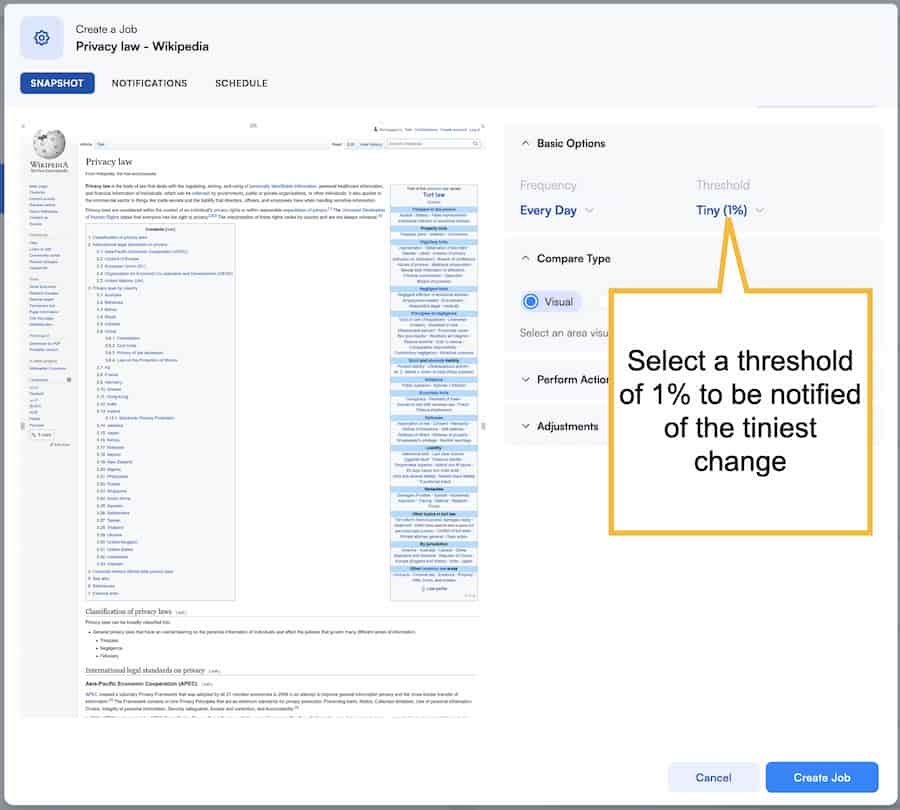
Set a threshold of 1% to be notified of even the smallest update.
Reputation Monitoring
Monitoring your online reputation continuously allows you to predict and prevent crises by addressing customer problems before they escalate:
- Set up an effective social media listening strategy
- Train employees on how to handle both negative and positive feedback
- Use sentiment analysis to catch alarming trends before they become obvious
Takeaways
- Accept the risk and build a crisis response strategy before a crisis occurs
- Stop treating reputation management as a standalone function — it is an ever-present part of your broader marketing and operations efforts
- Eliminate silos and encourage cross-team collaboration so your teams can identify and prevent reputation threats together
- Address known vulnerabilities proactively: site security, user experience, and privacy compliance are all manageable before they become crises
- Monitor your reputation continuously so you can respond to issues quickly — and if a crisis does occur, having a crisis management plan already in place will dramatically reduce the damage
Frequently Asked Questions







Protect Your Online Reputation
Every day you wait, negative content gets stronger. Talk to our experts about a custom strategy for your situation.
Get Your Free Analysis