
How to Structure a Press Release for Reputation Management Purposes
A strategically structured press release can push negative results off page one and put your brand's best story in front of journalists, bloggers, and search engines.

Press releases are a powerful but underused tool for online reputation management. A well-structured release can rank in search results, earn backlinks, and give brands more control over what appears when someone searches for them. The key is proper structure: keyword-rich headlines, focused content, and strategic placement of your branded search phrase throughout.
How to Structure a Press Release for Reputation Management
-
1
Include your branded search phrase strategically
Your branded search phrase — such as your company name, product name, or service — must appear in the headline, subheadings, and body content. It should also appear in the lede, which is the very first sentence of your release. Consistent placement of your brand name throughout the press release helps it rank higher in search results and gives you more control over what appears when someone searches for your company.
-
2
Write a compelling, keyword-rich title
Headlines are the single most important factor in whether someone clicks on your content — 8 out of 10 people read a headline, but only 2 out of 10 read the rest. Avoid clichés and include interesting facts or figures that tease your content enough to earn the click. Don't neglect the subheadline, which should provide additional context and is a natural place to address key issues in a crisis-management press release.
-
3
Apply the inverted pyramid style
Place the most important information at the beginning of your press release so readers grasp the main idea even if they don't read the whole thing. Your release should be short and focused while providing enough information to inspire a story from a journalist or blogger. It needs to read as news, not as an advertisement or product announcement.
-
4
Open with a compelling hook
While your first paragraph must contain the most important information, it must also engage readers and encourage them to keep reading. Start with a hook that draws the reader in and makes them want to learn more about your brand. A strong opening increases the likelihood that journalists and bloggers will pick up your story.
-
5
Include multimedia elements
Incorporate visuals such as photos and videos to support your story and encourage readers to spend more time with your press release. Engaging imagery or video can lead readers to conduct further research on your brand. Journalists may also embed your visuals when republishing your story, extending your reach.
-
6
Add quotes from key executives
Including a quote from a company executive adds credibility and a human element to your press release. If you want an executive's name to rank in search results, include it in the headline or subheading alongside your brand name. For example, a headline like 'CEO John Smith Said, Acme's Blue Widgets Will Improve Productivity by 20%' can help surface that individual in branded search results.
-
7
Hyperlink to your key pages
Add links to the specific landing pages you are trying to promote rather than linking to your website's homepage. In reputation management, these backlinks help improve your Google rankings and give you greater control over the first page of search results for your brand. Linking to existing content also allows readers to learn more about your company directly from your own properties.
A well-structured press release can:
- Generate buzz among bloggers and journalists
- Rank your press release high in search results
- Start trends for other websites to republish your story
- Effectively saturate your brand’s search results
Want to clean up your online presence? Press releases are an effective, if underrated, tool for reputation management.
You may already be writing press releases to announce product launches, events, and collaborations, but are you also using them as a reputation management tool?
In the case of reputation management, a press release can help you earn backlinks and improve your Google rankings, giving you more control over what appears on the first page of results when someone searches for your company. However, SEO is just one use for a press release.
Press releases are effective tools to:
- Put your brand on the radar if bloggers and journalists pick up your story.
- Highlight your brand’s achievements.
- Control what is said about you online.
The secret to making your press release stand out lies in its structure. A well-structured press release gives bloggers, journalists, and other readers a clear picture of your brand and what you offer.
According to Meltwater’s PR statistics, a significant majority of PR professionals report challenges with content creation — making a clear, repeatable press release structure all the more valuable.
This article covers how to clean up your online presence using press releases. It discusses proper structure, necessary components, and what to do after you publish. For a broader look at how earned media fits into your overall strategy, see our guide to online reputation management.
What is a press release for reputation management?
Press releases can have a positive impact on your corporate reputation. A reputation management press release must appeal to bloggers and journalists to stand out from the crowd. Keep in mind that press releases often have a short shelf life — they tend to rise in search results and then fall back over time.
Get a Free Reputation Assessment
Find out what people see when they search for you online. No obligation — results in 24 hours.
Your press release should have all of these features:
- Engaging: Tell your brand story in a way that instantly captures readers’ attention.
- Keyword in the headline: When creating a press release for your branded search phrase, such as a company name, include it in the headline. It will rank better in search results.
- To the point: Keep your release brief and hyper-focused. Don’t try to tell your entire brand story in one release — include only information relevant to your headline.
- Unique: Focus on what your company does that nobody else does. Highlight the parts of your brand story that differentiate you and will appeal to your target audience.
- Informative: Include key information that helps your press release perform in search results while appealing to readers. Link to existing content so readers can learn more about your company.
How to structure a press release to perform in search results
Not all press releases are created equally. Focusing on specific press release features helps yours outperform the competition.
Your press release must include your branded search phrase in several key places. A branded search phrase might be your company name, product name, or service. It must appear in the:
- Headline
- Subheadings
- Body content
For example, if your company Acme is announcing the launch of new blue widgets, an SEO headline might read:
Acme Company Has New Blue Widgets.
If you also want an executive’s name to rank, include it in the headline or subheading. For example:
CEO John Smith Said, “Acme’s Blue Widgets Will Improve Productivity by 20%.”
The image below shows Google’s News page for the search term “Apple.” Notice how the company name appears in every page title. Keep in mind that Google’s search results continue to evolve — including the introduction of AI Overviews in 2024 — which can affect how and where press releases appear on the first page.

Don’t stop with the headline and subheading. Your brand name should also appear in the lede — the first sentence — and throughout the body of the press release.
Here are the key structural elements of a well-crafted press release:
Write a compelling title
Headlines are the single most important factor in whether someone clicks on your content. According to Copyblogger, 8 out of 10 people read a headline, but only 2 out of 10 read the rest — making it worth spending extra time on your title. Avoid clichés and include interesting facts or figures that tease your content enough to earn the click.
Don’t neglect the subheadline. It should provide additional context to the main headline and is a natural place to address key issues if you are writing a crisis-management press release.
Use the inverted pyramid style
Place the most important information at the beginning of your press release. This ensures readers grasp the main idea even if they don’t read the whole thing.
Think of your press release as a jumping-off point. It should be short and focused while providing enough information to inspire a story from a journalist or blogger. It needs to read as news, not as an advertisement or product announcement.
While your first paragraph must contain the most important information, it must also engage readers. Start with a compelling hook that encourages them to keep reading.
Include multimedia
Incorporate visuals such as photos and videos to support your story. An interesting image or video encourages readers to spend more time with your press release, leading to further research on your brand. Journalists may also embed your visual in their coverage, increasing your exposure further.
Hyperlink to your pages
Add links to the landing pages you want to promote. Avoid linking to your homepage — a common mistake. Instead, choose a page that is topically relevant to the press release and the audience you want to reach.
Note that Google generally treats links in press releases and syndicated content as low-value for PageRank purposes, since they are not considered editorially placed. That said, strategic linking still serves an important purpose: it gives journalists and bloggers direct access to relevant information without requiring them to search elsewhere. Think of these links as a navigation tool for readers, not a primary link-building tactic.
Include quotes
Quotes from company leaders or outside experts add a human touch to your press release. They offer insights, emotions, and perspectives beyond the cut-and-dry facts. Well-chosen quotes help your press release resonate on an emotional level while adding context and credibility.
Add a call to action
Always conclude with a clear call to action that guides readers on what to do next. Whether your goal is more page views, greater audience engagement, or increased event participation, state it clearly at the end of your press release.
Need Help With Your Reputation?
Our team specializes in crafting press releases and content strategies that push your brand to the top of search results. Let's talk about your goals.
What to do after publishing a press release
Now that you’ve invested time and resources into writing your press release, keep that momentum going after you hit publish. Promoting your release increases the reach of your story.
Send the press release to bloggers, websites, and third-party sites
Compile a list of journalists and bloggers who cover topics related to your press release and start building relationships with them. Even if they don’t publish your first story, they may pick up something later — so maintain those connections.
You don’t have to send the same version to everyone. Much like tailoring a cover letter for different job applications, tweak your press release for different recipients. This gives you a chance to rank multiple times for differentiated content and lets you connect with what matters most to each writer.
Create a press release page on your website
Your website should have a Newsroom page where you post all of your company’s press releases. Here’s an example of Apple’s Newsroom page:
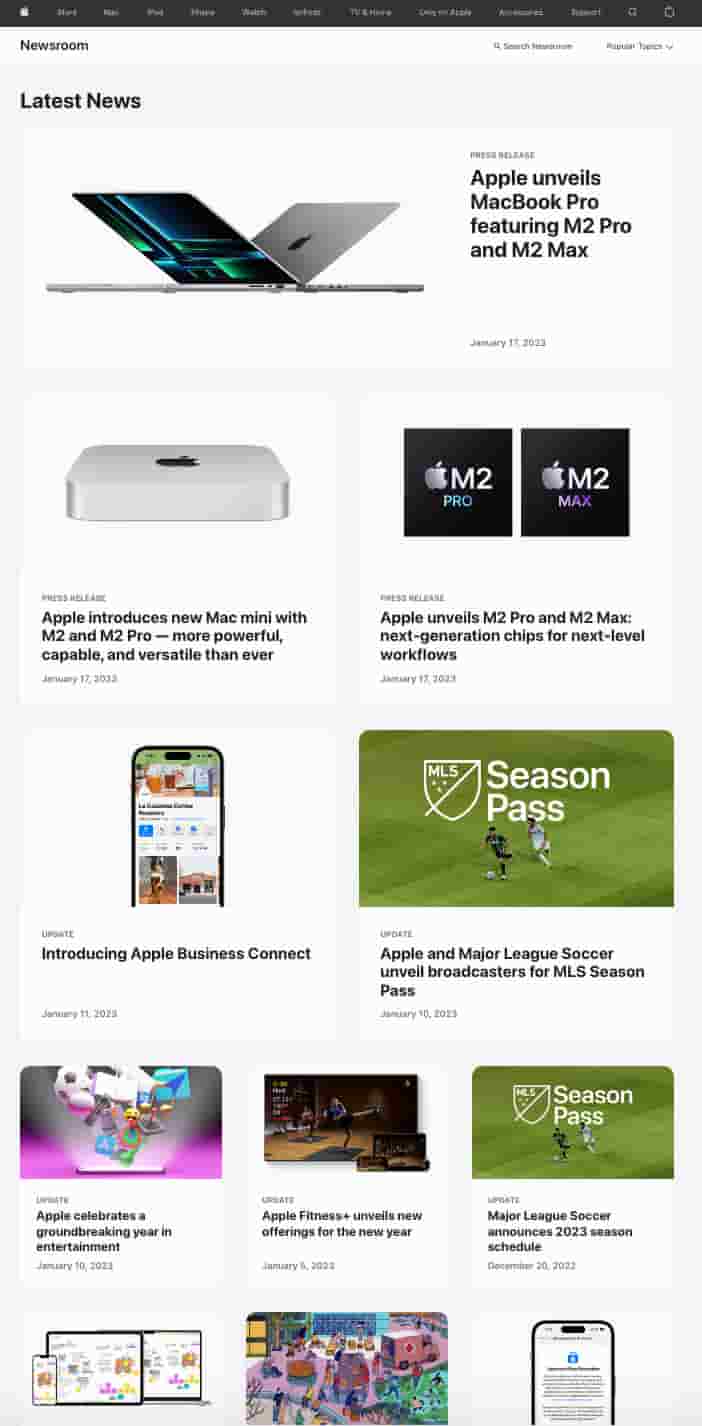
A Newsroom page is another opportunity to earn a spot on Google’s first page for your branded search phrase. To increase your chances of ranking, rewrite the press release for your site — do not copy and paste what has already been distributed. Search engines generally will not list both the syndicated version and your on-site version if the content is identical.
Your on-site press release is also a link-building opportunity. Link it to either the highest-ranking article that picked up the original release — for example, a Bloomberg posting — or to the original release itself. Linking to the highest-ranking version signals to search engines that the content is most relevant to the query. For a deeper dive into how link-building supports your broader reputation goals, see our guide on link building for SEO reputation campaigns.
Final thoughts
Press releases are too often written and released into the ether with the hope of gaining coverage. Rather than leaving it to chance, follow the structure outlined in this article to write a press release that is more likely to rank at the top of Google search results.
It’s worth acknowledging that the competitive landscape has shifted. Google’s Helpful Content updates and the introduction of AI Overviews have made it harder for press releases to claim prominent organic positions on their own. That makes structure, quality, and strategic promotion more important than ever.
A well-structured and well-promoted press release can occupy multiple spots in search results and live on your website’s Newsroom page. If you’re dealing with negative content that press releases alone can’t address, our guide to suppressing negative news articles and our overview of SEO reputation management offer additional strategies worth exploring. Need help getting started? Contact us today.
Frequently Asked Questions








Protect Your Online Reputation
Every day you wait, negative content gets stronger. Talk to our experts about a custom strategy for your situation.
Get Your Free Analysis