
Planning Content for a Reputation Campaign
A strategic content plan is your most powerful tool for shaping public perception and controlling what people find when they search your name.

Reputation management relies on strategic content creation and promotion to shape how individuals and brands appear online. Google's preference for diverse content formats means publishing articles, videos, infographics, and more can help you occupy more search real estate. A well-planned content strategy allows you to proactively fill the first page of results with assets you control, ideally before a media crisis occurs.
Reputation management is the ongoing process of influencing and shaping the public perception of an individual, company, or brand. It involves monitoring how people perceive you or your organization and taking steps to improve and maintain a positive reputation. Online reputation management is primarily accomplished with strategic content development, publishing, and promotion. This article explains how to create and execute a content plan for a reputation-building campaign. The ideal time to create a content plan for reputation building is in advance of a media crisis.
Importance of Diverse Content for Google
Google’s preference for diverse content stems from its commitment to providing users with the most relevant and comprehensive search results. The introduction of Google’s universal search in 2007 marked a major shift in how search results were presented.
In the past, Google separated content into different tabs. In 2007, it integrated these various types into the unified results you see today — organic listings, news, images, videos, local listings, maps, and more on a single page. Today, results also prominently feature AI Overviews, People Also Ask boxes, featured snippets, and Shopping results, all of which carry meaningful implications for how reputation-related content is discovered and displayed.
Reputation management campaigns leverage Google’s preference for different kinds of content.
Types of Content for a Reputation Campaign
Building a strong brand reputation online requires many different content formats that are useful to your target audience and perform well in today’s AI-driven search environment. Various types of content can enhance a brand’s online reputation and push down negative results.
Here are the most commonly used content types in reputation management campaigns.
1. Articles and Blog Posts
- Description: Well-written articles and blog posts showcase a brand’s expertise and industry knowledge.
- Example: A company publishing articles about the latest trends in its industry.
- Why a company blog matters: A blog hosted on your own domain, ideally in a subdirectory of your main site such as /blog, is an asset you own and control. Every post is another page that can rank for your brand name, answer the questions people search for, and give searchers something accurate to read about you. Over time, a steady stream of brand-controlled posts can help outrank negative results.
2. Photographs and Infographics
- Description: Visual content like photographs and infographics present information in a visually appealing and easily digestible format.
- Example: A fashion brand using high-quality photographs to showcase its latest collection.
3. Videos
- Description: Videos offer an immersive way to tell stories, demonstrate products, and engage with a target audience.
- Example: A cooking equipment brand creating how-to videos for using their products.
4. Case Studies
- Description: Detailed case studies demonstrate a brand’s success stories and the value it has provided to customers.
- Example: A marketing agency showcasing the results of a successful campaign.
5. Interviews
- Description: Interviews with industry experts or satisfied customers add credibility and provide valuable insights. Today, executives are often as important to brand perception as the brand itself.
- Example: A business consulting firm interviewing industry leaders about market trends.
6. Press Releases
- Description: Press releases announce important company news, events, or product launches, helping shape the brand’s narrative. Note: press releases typically have a short shelf life in search results.
- Example: A tech company issuing a press release about a new product launch.
7. E-books and Research
- Description: E-books offer in-depth information on a topic and establish the brand as an authority. Sharing original research findings and industry-specific data further positions the brand as a knowledgeable resource.
- Example: A financial advisory firm creating an e-book on investment strategies, or a healthcare organization releasing a report on the latest health trends.
8. Lists and Listicles
- Description: Listicles present information in a concise, easily scannable format that works well for audiences with limited time.
- Example: A travel agency publishing a listicle of top destinations for the upcoming holiday season.
9. Product Reviews
- Description: Authentic product reviews appear frequently in business search results. Google folded its dedicated product reviews update into the core update process in late 2023, and the FTC updated its endorsement guidelines in 2023 to require clearer disclosure — both carry direct compliance implications for brands publishing this content.
- Example: An electronics company sharing real, honest reviews of its products.
10. Podcasts and Short-Form Video
- Description: Podcasts offer a convenient format for sharing insights and industry discussions. Short-form video — YouTube Shorts, TikTok, and Instagram Reels — is one of the fastest-growing content formats. Google increasingly surfaces YouTube Shorts directly in search results, making both formats especially valuable for reputation campaigns.
- Example: A fitness brand hosting a podcast featuring expert health tips, or a consumer brand publishing behind-the-scenes clips as YouTube Shorts to capture visibility in branded search results.
Using a mix of these content types helps a brand dominate search results when prospects or stakeholders search for it. Understanding how SEO and reputation management work together is key to making this content mix perform effectively.
Get a Free Reputation Assessment
Find out what people see when they search for you online. No obligation — results in 24 hours.
Need Help Planning Your Reputation Content?
Our team builds and executes content strategies designed to shape what people find when they search for your brand.
Content Planning for Reputation Campaigns
Content planning plays an enormous role in reputation management. By creating and distributing relevant, valuable content, you can control many search results and shape public perception. You can also outrank negative content that may already exist.
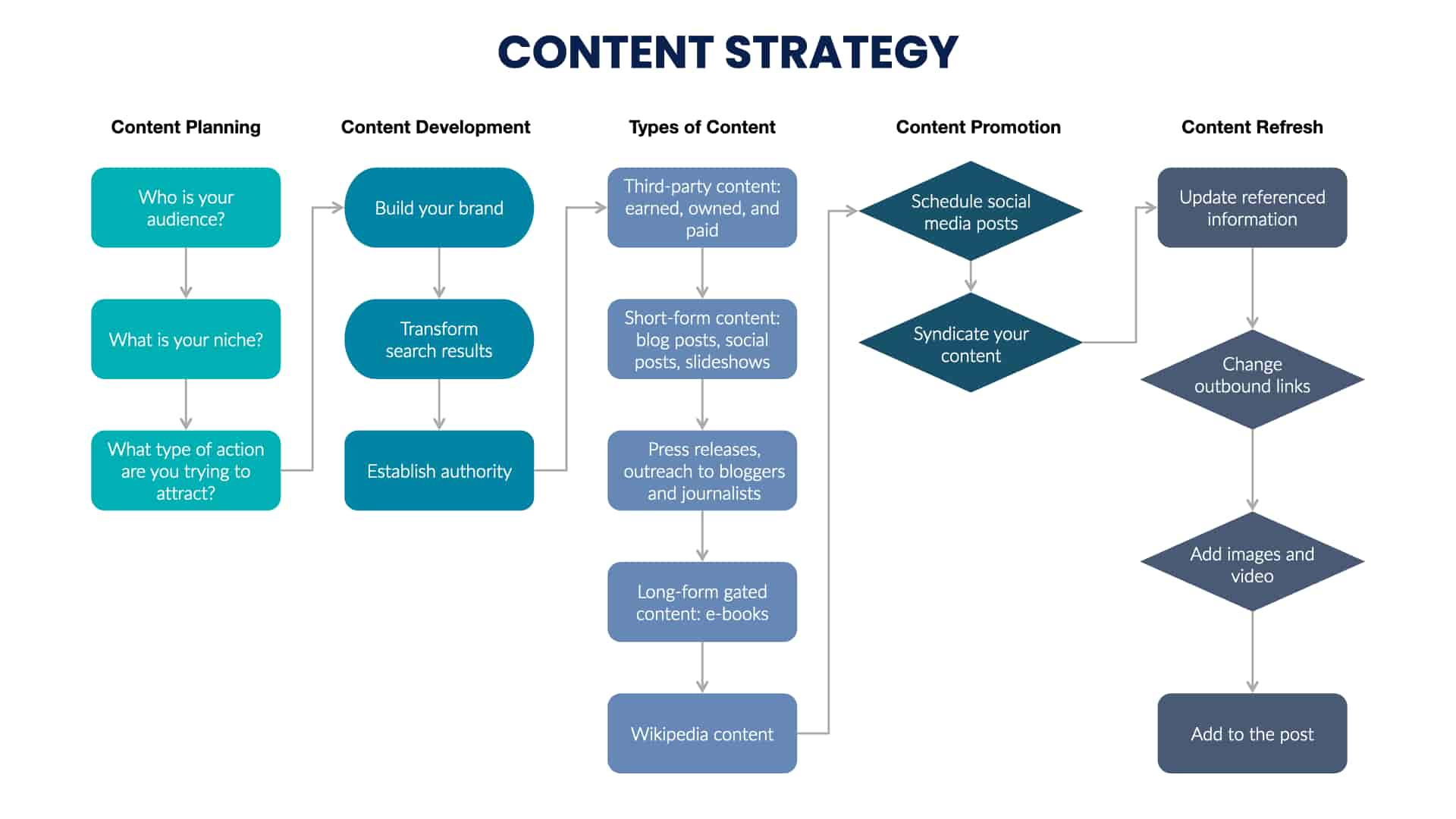
The steps below outline how to build and execute a brand reputation content plan.
Step 1: Research and Analysis
Start by researching similar companies or individuals to see what their search results look like. We call these “similar entities.” Analyze their content strategy — the topics they cover, the formats they use, and the platforms they publish on.
Step 2: Define Objectives and Target Audience
Determine your objectives for the content plan. Are you looking to build authority, showcase expertise, or address specific reputation issues in search results?
Identify your target audience and understand their needs, interests, and pain points. This helps you tailor content that resonates and performs.
Step 3: Content Development
Based on your research, develop a content strategy that serves your objectives and target audience. Consider the full range of content types — blog posts, social media posts, videos, interviews, and more — each of which can target different platforms and occupy space in branded search results.
For your own blog, start with your brand, your products, and your current customers. Ask your customer support team for the questions customers ask most often, and search for your brand name to find branded queries that your site doesn’t yet answer. Each of those gaps is a page someone else may fill if you don’t. Posts that put your products in context, answer customer questions, and feature real customer experiences explain your value more clearly than any third-party page can.
Attach real names to your digital content. Give every blog post a visible byline along with a brief author biography, and encourage executive leaders and internal subject-matter experts to publish insights under their own names. Audiences connect far more naturally with human professionals than with corporate logos. Clear, transparent authorship helps searchers and search engines understand the expertise backing your claims. Keep the overall tone educational rather than promotional. Modern search discovery algorithms are built to prioritize deeply helpful, reliable, people-first resources over pages engineered primarily to sell.
AI-driven tools like ChatGPT, Google Gemini, Anthropic Claude, Microsoft Copilot, and Jasper can speed up production. However, Google’s 2024 core updates have specifically targeted AI-generated content that lacks originality or genuine value. Human editing and oversight are essential, not optional.
Step 4: Content Publishing Calendar
Create a publishing calendar to organize and schedule your content. Tools like Outlook, Apple Calendar, or Google Calendar work well, as do platforms like HubSpot, Notion, and Asana, which offer dedicated templates.
Your calendar should outline topics, formats, platforms, and publishing dates for each piece. Here are some content calendar templates to get started. A consistent schedule ensures a steady flow of content aligned with your reputation goals.
If you’re starting a blog as part of the campaign, launch with at least five published articles and at least ten more on the calendar. That buffer prevents the “publish and disappear” pattern that stalls new blogs. There is no ideal publishing frequency, but regular updates give both Google and readers a reason to return.
Step 5: Linking Web Properties
Link your web properties together to create a network of interconnected sites that drive traffic between them. This includes linking blog posts to social media profiles, connecting your website to guest posts or interviews, and earning links from relevant sites by contributing guest articles chosen for their audience, not for the link.
Learn more about link building for SEO reputation campaigns and how internal linking structures support long-term visibility.
Step 6: SEO Promotion
Implement SEO strategies to promote your branded content and improve its search rankings. This includes optimizing for relevant keywords, building high-quality backlinks, and improving the overall user experience of your web properties.
Tailor individual pieces around the exact search terms you want to impact. If your campaign objective is to outrank an unfavorable result appearing for a corporate executive’s name, that precise name serves as your core focus keyword. Integrate it naturally within the article’s URL string, meta title tag, meta description, and introductory paragraph. Organize the content using clear, descriptive subheadings to optimize readability for mobile users. Structure your approach to provide unique value or coverage that differs from what currently ranks on page one. When targeting competitive spaces, lean into highly specific niche topics.
It also means aligning content with Google’s E-E-A-T framework, which Google updated in December 2022 and which is especially relevant for reputation-related content. Keep content fresh with a content housekeeping plan that schedules regular updates.
Step 7: Monitoring and Maintenance
Regularly monitor the visibility and performance of your web properties. Track search rankings, engagement metrics, and shifts in public perception. Use this data to make informed adjustments to your content plan.
This can be done manually or with paid tools — we use Ahrefs and SEMrush, among others. For a broader look at how monitoring fits into the overall process, see our guide to online reputation monitoring basics.
For content on your own site, Google Search Console is free and shows how often your pages appear in Google Search, which queries surface them, and how often searchers click through. Use it to see which posts are ranking for your brand name, then feed those findings back into your publishing calendar.
Step 8: Ongoing Promotion
Continuously promote your branded content to maintain its visibility in search results. Share content across social media platforms — noting that X (formerly Twitter) has undergone significant changes in reach, and newer platforms like Threads offer additional distribution channels.
Position content distribution as a core part of your creative schedule, not an afterthought. Expect to commit as much time to promoting a piece as you did to writing it. Beyond standard social sharing channels, maximize these avenues:
- Email Integration: Feature your latest articles within regular newsletter distributions. Additionally, insert links to your core educational content within day-to-day corporate emails, such as automated customer welcome sequences or technical support signatures. Maintain an active RSS feed so syndication platforms can discover new content automatically.
- Share Previews: Set accurate Open Graph meta tags across your website architecture. This ensures that when external users share your links on other platforms, the post automatically renders the exact title, description, and feature graphic you intended rather than a random site asset.
- Repurposing Assets: Adapt your high-performing written articles into concise informational videos or podcast segments, ensuring you place a link back to the original text within the media description. Every video index or audio file acts as a separate digital asset capable of claiming valuable real estate when users search your target name.
Engage with your audience, participate in industry discussions, and collaborate with influencers or media outlets to extend your content’s reach.
Sources
- Weber Shandwick. The Social CEO: Executives Tell All
- Measuring Corporate Reputation: Definition and Data
- 50 Types of Popular Web Content
Frequently Asked Questions







Protect Your Online Reputation
Every day you wait, negative content gets stronger. Talk to our experts about a custom strategy for your situation.
Get Your Free Analysis