
How Fake News and Influencers Are Created and Promoted Online
Fake news is profitable, politically weaponized, and harder to detect than most people think — here's how the machine actually works.

Fake news has a long history and is increasingly profitable, with creators earning thousands of dollars from fabricated stories that spread millions of times. Social media algorithms and confirmation bias create echo chambers that amplify misinformation and make it nearly impossible to correct. Understanding how fake news is created, monetized, and psychologically weaponized is the first step toward recognizing and resisting it.
Remember when former President Donald Trump said, “America should never have given Canada its independence”? Well, that was fake.
Fake news has a long and storied history that continues right up to this day with the Russian war on Ukraine. Hundreds of years ago in the United States, Benjamin Franklin spread propaganda stories by creating a fake issue of the Boston Independent Chronicle.
Today celebrities, politicians, and everyday people are affected by false information online. Tomi Lahren of Fox News was once quoted as saying something inflammatory about mass shootings and religion. She didn’t say that either.
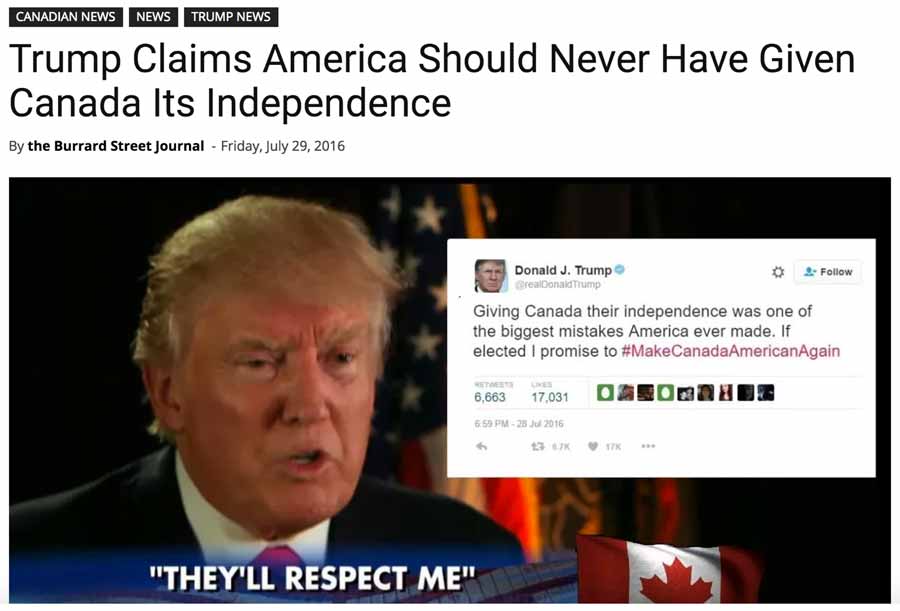
As the NY Times has reported, there are even awards for fake news — a phenomenon that has only grown more elaborate as disinformation has become increasingly institutionalized.
Governments love fake news because it is very difficult to get caught. It takes resources like those of the US Government to track down perpetrators like the Internet Research Agency in Russia. Today, with the war in Ukraine, fake news outlets claim the war is a hoax and that hospital bombings were fabricated.
Get a Free Reputation Assessment
Find out what people see when they search for you online. No obligation — results in 24 hours.
Fake news is also profitable. One story from the 2016 election cycle — “BREAKING: Tens of thousands of fraudulent Clinton votes found in Ohio warehouse” — earned its creator about $5,000. It took only minutes to create but was shared six million times.
In another example, a teen in Macedonia made $60,000 in a month creating fake content during the 2016 US Presidential Election — one of the most striking examples of fake news monetization on record.
of people believe they can reliably tell truth from misinformation — but research says otherwise
PNAS / MIT Studies
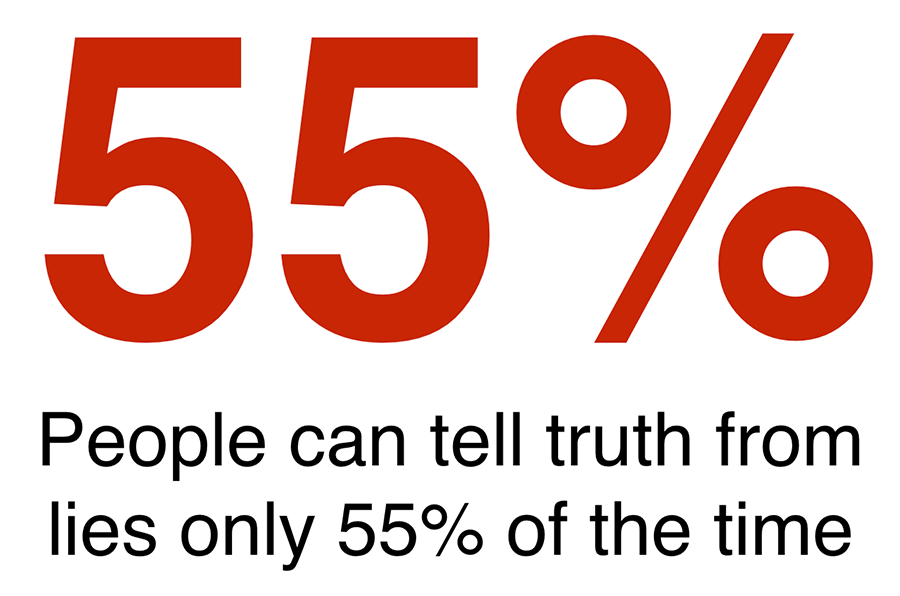
Research consistently shows that people are far worse at detecting misinformation than they think. A landmark MIT study found that false news spreads faster and more broadly than true news on social media. More recent research published in PNAS found that human ability to identify AI-generated misinformation is alarmingly low.
How social media and search amplify fake news
Social and search technology is specifically designed to feed us the information we want to see. Some call it an echo chamber or a bubble — a self-reinforcing loop of information we already agree with. Social platforms rely on the fact that we tend to trust like-minded people, or our “tribe.”
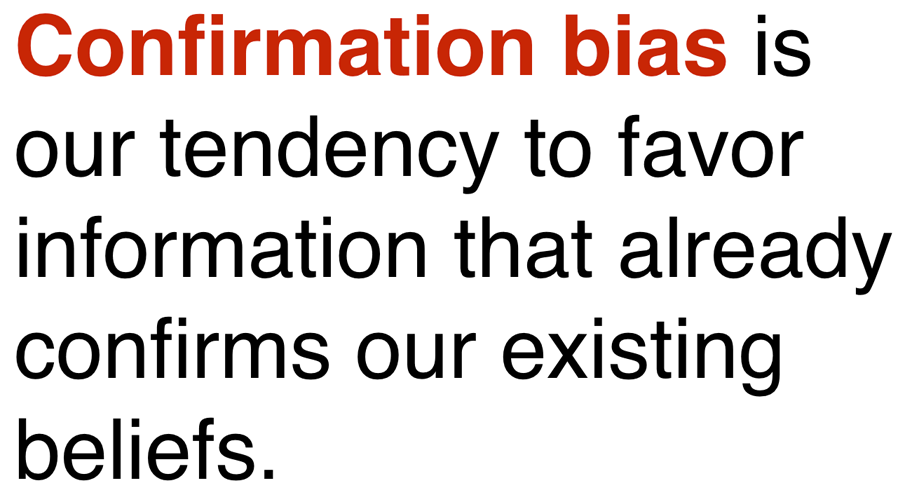
We also believe what we already believe. This is called confirmation bias — our tendency to accept information that confirms our existing views. The echo chamber in our heads interacts with the larger echo chamber of social media and search results. Understanding how search results can appear differently to different people helps explain why these echo chambers are so hard to escape.
Fake news works because people want to believe it. It is incredibly difficult to change someone’s mind. As Dale Carnegie observed, “A man convinced against his will is of the same opinion still.”
Why people share fake news
Sharing something interesting makes our friends think we are informed and engaged. We receive a form of social currency for doing so. Social media companies like Facebook and X (formerly Twitter) leverage this aspect of human nature to encourage sharing.
Unfortunately, fake influence publishers understand human psychology too and use it to great effect.
Emotion is another key driver. The angrier content makes us, the better it performs in social and search results. By combining confirmation bias with negative emotion, fake news creators can make content go viral.
Negative information triggers what researchers call Negativity Bias. You can read more about negativity bias here. This same dynamic explains why negative publicity spreads so rapidly and why brands and individuals often struggle to contain reputational damage once it begins.
Is Fake News Damaging Your Reputation?
Disinformation and false narratives can devastate personal and business reputations. Our team specializes in identifying and countering harmful online content.
How fake news creators are compensated
The people and groups that create fake content do so either for money or for political influence. But creators are only part of the ecosystem.
It is in the commercial interest of companies like Facebook, X (formerly Twitter), and Google to help bad actors — inadvertently — because shared content is inherently more profitable. Divisive content drives clicks, and clicks generate advertising revenue for social media and search platforms. That said, the regulatory landscape has shifted: the EU’s Digital Services Act, which took effect in 2024, now places legal obligations on large platforms to actively combat disinformation, adding a layer of accountability that did not exist just a few years ago.
How fake news is created and spread
Understanding the mechanics behind fake news is the best defense against it. Here is how a typical disinformation campaign is built.
- Create a clickbait headline. According to Engadget, “Preposterous stories are inherently more clickable than believable ones.” Fabricated headlines like “WikiLeaks confirms Hillary sold weapons to ISIS” circulated widely during the 2016 election. Today, AI-generated stories falsely attributing statements to world leaders follow the same formula. Understanding how clickbait headlines are engineered makes them easier to spot.
- Use a compelling image. Even an unrelated image adds believability and improves search performance. AI-generated images and deepfake video have escalated this further, making it possible to fabricate synthetic visuals that are nearly indistinguishable from real ones.
- Apply the “Rule of Two.” For fake news to be believable, corroborating online evidence helps. It does not have to be accurate — most people will believe what they want to believe, whether it is true or not.
- Recruit fake people to share the content. Influencers and followers drive reach. Fake accounts — known as “sock puppets” — can be purchased cheaply online. Once fake content is posted, a bot network amplifies it. Since 2018, these networks have grown far more sophisticated, with generative AI powering fake accounts capable of producing convincing original content at scale.
Where fake followers and bots come from
Fake followers and bot networks are available on the Darknet and through various gray-market forums. While platforms like X (formerly Twitter), Instagram, and TikTok have ramped up bot-removal efforts in recent years, the fake follower marketplace has adapted. AI-generated accounts now make detection significantly harder.
Should you create fake news? No. But understanding how it works is essential. Knowing how dark PR and reputation manipulation operate is the first step toward protecting yourself or your organization. As Ryan Holiday wrote in Trust Me, I’m Lying, “You cannot have your news for free; you can only obscure the costs.” He was right.
Frequently Asked Questions








Protect Your Online Reputation
Every day you wait, negative content gets stronger. Talk to our experts about a custom strategy for your situation.
Get Your Free Analysis