
Social Media: Pros and Cons for Small Business
Before you post, boost, or go viral, every small business owner needs an honest look at what social media can and cannot do for their brand.

- Social media can generate leads and grow brand awareness at little to no cost
- A single public mistake can damage your reputation quickly and permanently
- Social listening gives you real market data to sharpen your strategy
- Privacy risks exist for both your business and your customers on public platforms
- Weigh the time and resource commitment before committing to social media marketing
Social media offers small businesses a low-cost way to generate leads, build brand awareness, and engage directly with customers. However, it also carries real risks including reputation damage, privacy concerns, and the ongoing demand for consistent content and attention. Understanding both sides helps small business owners make smarter decisions about whether and how to use these platforms.
How to Use Social Media Effectively as a Small Business
-
1
Generate leads through social media promotion
Use social media platforms to advertise your products and services to a growing online audience. As more individuals join these communities, potential customers can discover your company and what you offer. Encourage followers by consistently showcasing your value, turning interested viewers into business leads.
-
2
Leverage affordable marketing tools
Start by creating free accounts on relevant social media platforms, which require no extensive marketing knowledge to set up. Grow your audience by uploading exciting content, creating offers, and sharing informative posts. When ready, expand with low-cost paid advertising to reach a broader audience without a large budget.
-
3
Build and increase brand awareness
Post consistently about your products and services so that more people become familiar with your business over time. Use a variety of promotional strategies to improve your company's visibility across platforms. Increased exposure helps potential clients feel confident enough to consider purchasing from you.
-
4
Use social listening to gather market data
Pay close attention to how your audience responds to the content you post, including comments, shares, and engagement patterns. Social listening helps you understand what resonates with your target customers and what your competitors are doing. Use these insights to adjust your promotional strategies and make your campaigns more effective.
-
5
Engage and interact with customers directly
Use social media as a direct communication channel to connect with your clients by posting relevant updates and product information. Respond promptly to complaints and share customer reviews to demonstrate that you value feedback. Active engagement builds customer loyalty and improves your overall service reputation.
-
6
Protect your brand reputation online
Recognize that a single mistake on social media can quickly go viral and damage the trust you have built with your audience. Monitor your pages carefully and think critically before publishing any content that could be misinterpreted. Having a clear approval process for posts reduces the risk of errors that could harm your brand image.
-
7
Assign dedicated resources for ongoing management
Social media requires constant attention, so designate specific team members to monitor and update your pages regularly. Customers expect timely responses to their queries at all hours, and failing to engage can result in poor customer service. Establishing clear roles and responsibilities ensures your social media presence remains active and consistent.
-
8
Stay current with changing social media trends
Social media trends shift rapidly, and businesses that fail to adapt risk losing the effectiveness of their campaigns. Regularly research emerging trends and be prepared to adjust your content strategy to align with what is currently resonating with audiences. Acting quickly when trends change helps your business stay competitive and relevant in your promotional efforts.
The use of social media can provide several benefits to businesses, such as generating leads, increasing brand awareness, and providing market data. But it also has several disadvantages, including the risk of ruining a company’s reputation, the demand for constant attention, the potential for privacy breaches, difficulty in keeping up with trends, and the challenge of tracking social media ROI.
Whether you are just starting your business or aiming to grow, social media is one of the most powerful platforms for reaching potential clients. Almost all companies today use various social media platforms for marketing their products and services. These platforms come with many benefits for small businesses, but it does not mean there are no limitations. Be sure to consider all the pros and cons before plunging into them for better business success.
Here are some of the advantages and disadvantages of social media to small businesses:
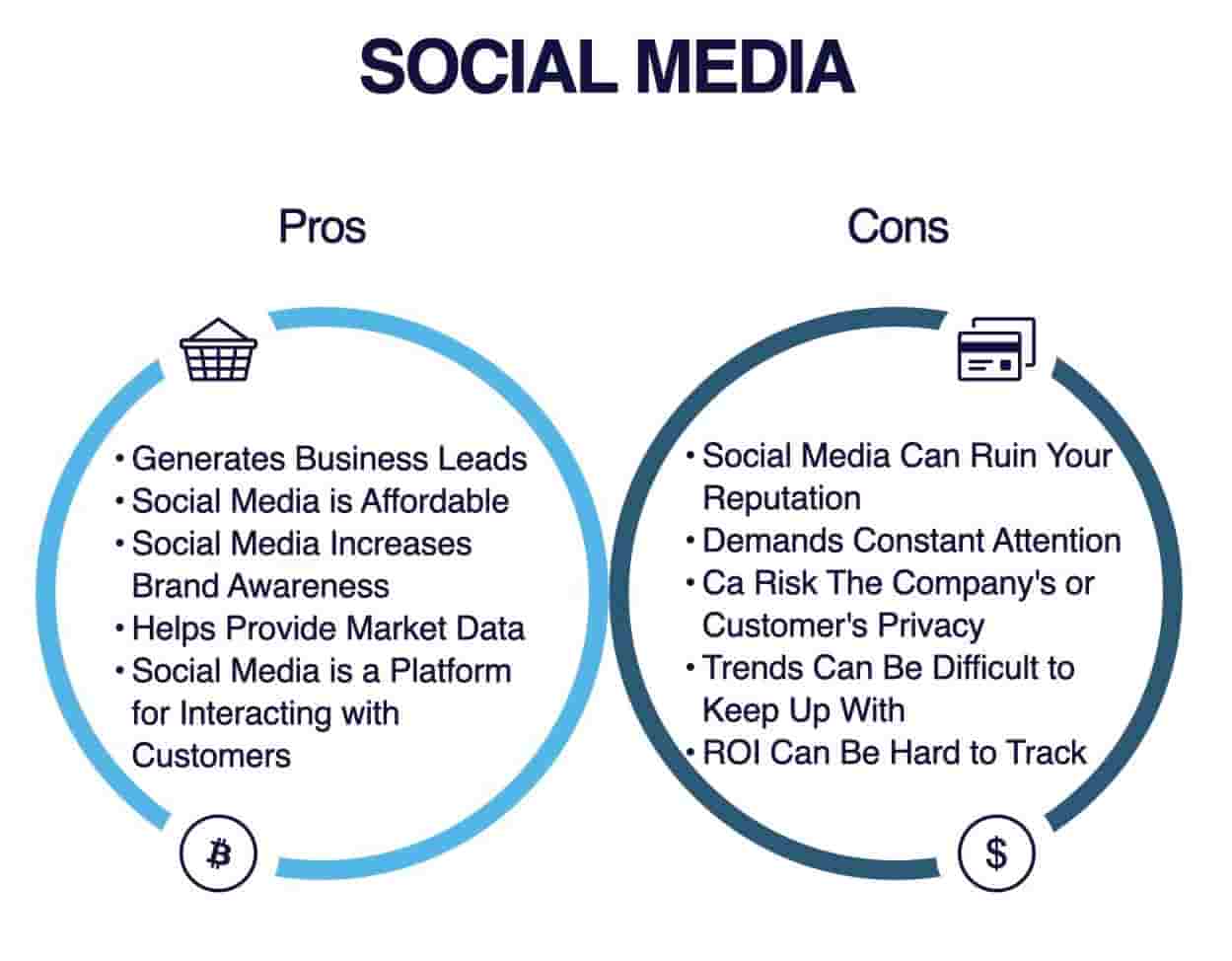
Advantages of Social Media
1: Generates Business Leads
The main advantage of social media is that it can generate leads for your business. Most businesses use social media as a promotional platform to advertise their products and services. As more individuals join the community, potential customers can now learn about your company and what you offer. If people like your product or service, they will follow you and hopefully become a lead.
2: Social Media is Affordable
Social media platforms can be low-cost marketing tools as you can perform cheap marketing initiatives through them. Small businesses can easily create their own brand using social media. Creating an account is free of charge, and you don’t need extensive knowledge in marketing to promote your products or services on it. You only need to know how to use the features provided by each platform in order to promote your business online.
Get a Free Reputation Assessment
Find out what people see when they search for you online. No obligation — results in 24 hours.
You can start growing your followers by:
- Uploading exciting content
- Creating offers
- Sharing informative posts
You can also start premium marketing strategies on social media, like running paid advertisements that do not cost that much.
3: Social Media Increases Brand Awareness
Social media can help increase your brand awareness. The more individuals see your products and services on social media, the more they will know about your business. As a result, many business owners are using social media platforms to improve their brand exposure.
Through the use of various promotional strategies, your company’s visibility on social media increases. This is beneficial because potential clients get to know more about it, and they might be inclined to buy from you.
4: Helps Provide Market Data
Another benefit of using social media is that it provides market data. As you post on your pages, you get to understand and listen to your target customers more.
Social listening is one of the best ways to know what type of content engages your target market. Through the information you obtain about your market and your competitors, you can then adjust your strategies accordingly to be more effective with your promotional activities.
5: Social Media is a Platform for Interacting with Customers
If you have a business that regularly deals with customers, social media can be an effective platform to interact and communicate with them. Most companies today use social media to directly connect to their clients by posting about the latest products being offered or any other information relevant to your company. You can also respond immediately to complaints or share customer reviews through social media.
Disadvantages of Social Media
1: Social Media Can Ruin Your Reputation
A disadvantage of using social media is that it can negatively affect business reputation even with a single error. With one foolish mistake, you can quickly lose the trust and respect of your followers.
Since social media is a public platform, it is difficult to hide anything from the online community. Therefore, if something happens that can cause an undesirable effect on your brand, this will instantly go viral and destroy the image you have built.
2: Demands Constant Attention
Another disadvantage of using social media is that it requires constant attention. This can be time-consuming for businesses, primarily when no one, in particular, is assigned to manage the several social media pages you have.
Since social media is 24/7 and is directly related to your business, you need individuals who can constantly monitor and keep the pages updated. Customers expect companies to be present on these sites at all times of the day to respond to their queries, so ignoring them will lead to poor customer service, resulting in unsatisfied clients who were previously loyal buyers of your products and services.
3: Social Media Can Risk The Company’s or Customer’s Privacy
A further disadvantage of using social media is that you may put your business and its customers at risk of having information stolen by hackers. Hackers use the information found online to steal personal data, which can lead to identity theft if not handled correctly. They also gain access to your company’s social media pages and change the profile information and photos to something that reflects their interests instead of your company’s. This can make people believe your company is fake or not trustworthy, which will lead to a loss in sales and revenue.
4: Trends Can Be Difficult to Keep Up With
Although social media trends are important to understand if you are using this marketing strategy, they rapidly change over time. Suppose your company doesn’t keep up with these changes or fails to adjust its promotional approach according to the latest trends. In that case, it’s possible for business owners not to get the most out of their social media pages.
Social media trends constantly change, and companies need to be aware, be keen and move fast to remain effective with their campaigns. As trends change too often, what you initially prepared to post and share may already be pointless as customers have already outgrown the trend.
5: Difficulty in Tracking Social Media ROI
It may be difficult to track social media ROI, and it is tough to determine when your company started seeing an increase in sales after posting something on social media. There is no perfect analytics that can be used to determine how your advertisements, posts, and promotional materials fare in terms of clicks or impressions. This is one of the reasons why it’s difficult to measure success rates when using social media for marketing strategies.
Final Thoughts
Social media can be a great way to create relevant and targeted content for your specific followers. However, it also comes with various disadvantages. It comes down to whether or not it is worth the risk.
It is also essential to choose the right social media platform for your business. Before doing so, you need to determine your target audience, which will help you choose the right platform for engagement. As each social media platform is unique in its own way, choosing the wrong one can cause problems with engagement. Learn more about how various social media platforms work and develop the best marketing strategy for your business.
Frequently Asked Questions








Protect Your Online Reputation
Every day you wait, negative content gets stronger. Talk to our experts about a custom strategy for your situation.
Get Your Free Analysis