
Why Reputation is Important for Business and for People
Your reputation shapes every opportunity that comes your way — here is what you need to know to protect and strengthen it.
A good reputation is one of the most valuable assets for both individuals and businesses, directly influencing revenue, opportunities, and trust. Reputation is shaped by both reality and perception, including online reviews and social media presence. Actively managing your reputation — by promoting positive information and reducing negative sentiment — is essential to long-term success.
Summary
- Having a good reputation is important for individuals and businesses because it can open doors to new opportunities and lead to increased revenue. A bad reputation can close doors.
- It’s important to manage reputation effectively because a bad reputation diminishes opportunities for both people and businesses.
- A good reputation is built on both reality and perception, with the latter being shaped by factors such as online reviews and social media.
- Building a business reputation involves actively promoting positive information and minimizing content with negative sentiment.
- A good reputation can lead to more business opportunities, better employee selection, higher company value, and lower marketing costs.
Effectively managing your reputation has become a crucial element of success in both your professional and personal life.
Why is a Good Reputation Important?
You probably know exactly why reputation is such a big deal today. You want your personal or your company’s reputation to have access to the best opportunities, and a bad reputation can prevent that. A great reputation will open doors to fantastic opportunities and (if you’re a business) unhindered access to your ideal client base.
Your reputation is the single most important aspect of your business. It affects everything from the number of followers on social media to your overall business revenue.
A positive reputation is important for individuals, businesses, and organizations alike. Since reputations are easily made and broken, actively managing your reputation is more important than ever.
There are several key reasons why a good reputation should be a top priority:
Get a Free Reputation Assessment
Find out what people see when they search for you online. No obligation — results in 24 hours.
Trust and Credibility
A good reputation is the bedrock upon which trust and credibility are built. In the world of business and interpersonal relations, trust is a currency that holds immense value. When a person or an entity is deemed trustworthy, stakeholders — whether they are customers, partners, investors, or employees — are more inclined to invest time, money, and effort. Credibility, on the other hand, is the perceived authenticity and reliability of a person or institution. A credible business is one that consistently delivers on its promises, demonstrating competence and expertise in its field.
People inherently want to align themselves with those they can count on, and a positive reputation serves as a beacon, signaling that an individual or company is deserving of such trust. In an era where misinformation can spread rapidly and where businesses are scrutinized more than ever before, having a reputation that speaks to honesty signifies transparency and a commitment to ethical behavior. Integrity, a cornerstone of a good reputation, implies a steadfast adherence to a moral or ethical code. Businesses that operate with integrity not only do what is legally right but also what is morally just, even when no one is watching.
Reputation Enhances Competitive Advantage
A good reputation is an asset, providing a competitive edge for both businesses and individuals in the saturated market. For businesses, a solid reputation often translates to increased customer loyalty, higher stakeholder trust, and a stronger brand image. These elements collectively lead to preferential treatment in the marketplace, where consumers are more inclined to choose, endorse, and even pay a premium for products or services from a company they deem reputable.
Similarly, for individuals, a good reputation paves the way for better opportunities, be it in career advancement, partnerships, or social networks. In essence, a good reputation serves as a kind of validation, telegraphing reliability, consistency, and integrity. In a world overflowing with choices and information, this reputation-driven differentiation can be the deciding factor in attracting opportunities and achieving success.
Businesses with a Good Reputation Earn Higher Valuations
A good reputation can significantly influence a company’s valuation, acting as an intangible asset that bolsters its financial and market standing. When a company is perceived favorably in the eyes of stakeholders—ranging from customers and employees to investors and partners—it often enjoys enhanced customer loyalty, reduced operational risks, and a more favorable negotiating position with suppliers and collaborators.
This positive perception can lead to increased sales, reduced churn rates, and a greater willingness among investors to pay a premium for shares, anticipating stable or growing future returns. Furthermore, in the event of a financial market downturn or company-specific challenges, a robust reputation can provide a buffer, shielding the firm from extreme valuation drops as stakeholders remain more patient and confident in the company’s long-term prospects.
In essence, a strong reputation amplifies the inherent value of a business, making it more resilient and attractive.
Reputation Improves Customer Acquisition
Negative reputational content tends to reduce the efficiency of marketing campaigns. A good reputation is important for successful marketing and friction-free customer acquisition. When a company has a solid standing in the market, its marketing and public relations campaigns resonate more authentically, thereby ensuring higher engagement and conversion rates.
Companies with good reputations tend to receive more free organic promotion as satisfied customers become brand ambassadors, sharing their positive experiences through word-of-mouth, reviews, and testimonials. This grassroots advocacy is valuable, as prospective customers often place more trust in peer recommendations than in conventional advertising.
Media outlets are more inclined to spotlight a reputable company in a positive way, providing free publicity, which increases brand awareness. Investors see it as a sound investment, believing in its sustainability and future growth potential.
A good reputation amplifies every facet of marketing and outreach, paving the way for broader influence and easier customer onboarding.
Crisis Management is Easier to Deal With
A positive reputation acts as insurance during PR crises or scandals. Customers will give you the benefit of the doubt if you have built up goodwill and trust. However, a poor reputation amplifies any negativity or mistakes.
A positive reputation generates positive online content. That content rises in search results and, over time, creates a kind of reputational firewall when a crisis happens. This firewall in search results often reduces the visibility of negative content, especially that of certain types of search content such as press releases, and social media. Both of which tend to have less staying power in branded search results compared to other types of content.
Reputation management is a long-term investment that builds value, competitiveness and loyalty.
While a good reputation is hard to earn, it’s easily lost – so consistency and vigilance are key. In today’s transparent digital landscape, actively maintaining and protecting reputation is a business imperative because a crisis will almost certainly arise given time.
Character and Reputation: Reality vs. Perception
One of the many aspects of reputation deals with how others perceive you. This can be summarized as your overall character or how you are combined with your reputation, which is how others think you are.
One is objective, the other subjective. A person’s character is different than his or her reputation, and this holds true for brands as well.
That gap between what is true and what is believed is where reputation management theory starts.
When people trust you or your brand, they are more likely to recommend you to friends, repeat business with you, and even forgive mishaps or scandals.
91% of consumers trust online reviews as much as personal recommendations
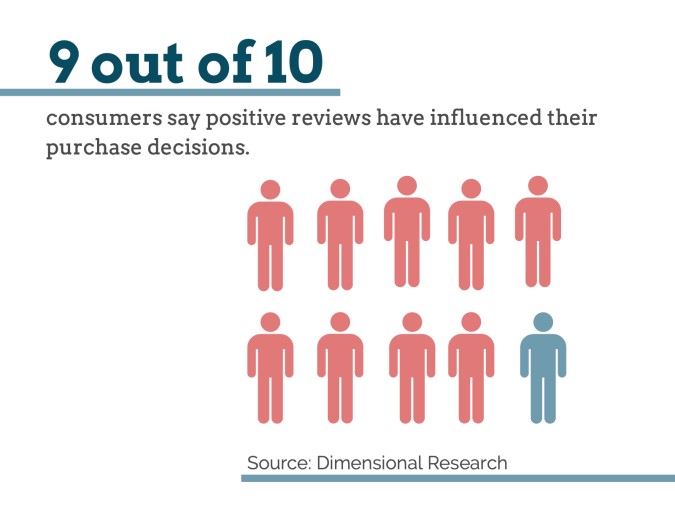
The rewards of having a good online reputation are greater revenues, better relationships, and more opportunities. Consumers care about a company’s reputation and purchasers’ reviews.
Reviews are so important that businesses can’t survive today without them. We all do it. We read reviews.
We use reviews to choose which stores to shop at, where to eat breakfast, which apps to download, or even which doctor to visit.
Reviews are quickly outpacing word-of-mouth recommendations. A recent survey found that 91% of consumers trust online reviews as much as personal recommendations.
Here are a few more eye-opening statistics that show exactly why it is worth dedicating time and effort to maintain a positive online reputation.
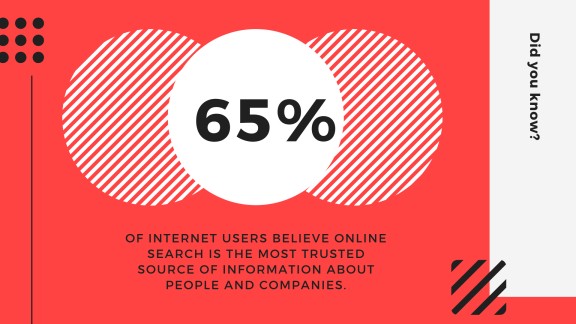
Online search is the most trusted source of information about people and companies for 65% of internet users.
Frequently Asked Questions






Protect Your Online Reputation
Every day you wait, negative content gets stronger. Talk to our experts about a custom strategy for your situation.
Get Your Free Analysis