
The Reverse Wikipedia Strategy of Reputation Management Strategy
Discover how imagining your ideal Wikipedia page today creates a powerful 4-part blueprint for controlling your brand's search narrative tomorrow.

- Model your content plan on the four parts of a Wikipedia page: summary, sections, content, and references.
- Use the imaginary Wikipedia page's citations as a target list for earned media and PR outreach.
- Borrow citation targets from Wikipedia pages of competitors or industry peers to find pre-vetted publications.
- Sections in the RWOS define the sub-themes of your brand story and drive what content gets created.
- The strategy produces a shared brand vision and a spam-free content roadmap for all stakeholders.
The Reverse Wikipedia Strategy (RWOS) is an ORM framework where strategists imagine an ideal Wikipedia page for a brand to guide content creation. It structures a brand's online presence around four elements: a summary, supporting sections, content within each section, and credible references. The result is a focused, spam-free content and outreach plan that shapes how a brand appears in search results.
What is a Reverse Wikipedia Strategy?
The Reverse Wikipedia Strategy is a framework to improve a brand’s online content by imagining what an ideal Wikipedia page may look like in a year or more. Within a family of strategies used by Reputation X, it’s an exercise for strategists and content creators to think about the best possible branded content.
Imagine the elements of a Wikipedia page. Your Reverse Wikipedia Strategy must be tailor-made to create premier content that will adequately portray your vision. For example, a good Wikipedia page will have:
- Headings and sections: Headings introduce sections and clarify what the content is about.
- References: References are critical to establishing notability on Wikipedia. Avoid adding anything to Wikipedia without strong references. If no existing references exist, consider what types would support the page if it were real.
- Infoboxes: The infobox contains factual information found at the top right of a Wikipedia article. It’s often the first place people look when researching a brand online.
- Article content: Add sections that are notable and relevant to Wikipedia articles.
This forms the basis for content that withstands scrutiny. The end result is a highly relevant content plan free of web spam.
Benefits of the Reverse Wikipedia Strategy
The benefits of a Reverse Wikipedia Strategy include:
- A clear blueprint for the story search results will tell
- A shared vision of the online brand for all stakeholders
- A list of publications to target in order to fulfill the brand vision
- A spam-free content plan that is highly relevant and impactful
The Four Parts of the Reverse Wikipedia Strategy
The Reverse Wikipedia Strategy has four parts. Each part corresponds to an aspect of a real Wikipedia page:
- Summary of the brand story
- Sections in the page supporting the story
- An outline of the content within each section
- References that support the story
1. Summary
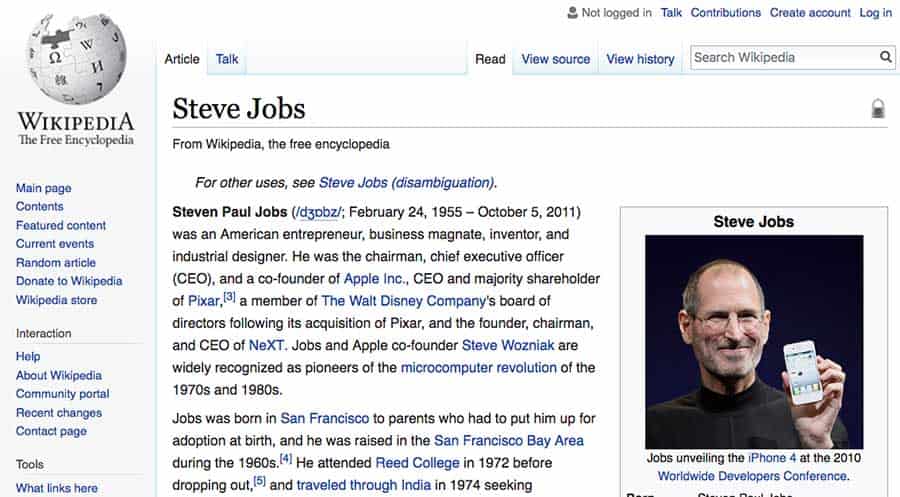
Most Wikipedia pages start with a summary or background. Look at Steve Jobs’ page as an example. The summary provides an overview of the article. The brand story, told in encyclopedic fashion, belongs here. Later sections support the most relevant themes from the summary.
2. Sections
Sections discuss important aspects of the brand. In the Steve Jobs example, sections include:
- Childhood
- High school
- College
- Pre-Apple
- Next Computer
- And others
These are all important aspects of the overall story. When executing a Reverse Wikipedia ORM Strategy, sections matter because they inform the content to be created. They represent the sub-themes within the brand story.
Does Your Company Qualify for a Wikipedia Page?
Run a free notability check. Our analysis engine reviews real press coverage against Wikipedia's actual notability standards and emails you a detailed report — no sales call required.
Your notability check is running
We're analyzing coverage of right now — it usually takes 10–15 minutes. Your report link will arrive from noreply@reputationx.com; check spam if you don't see it. Keep reading — nothing else to do here.
3. Content Within Sections
Each section dives deeper into the topic covered. Details and references with links to other Wikipedia pages or third-party sites support the claims within.
4. References and Citations
Every Wikipedia page is supported by references that establish notability. References must be trustworthy and non-promotional. References are often called “citations.”
References become the milestones a brand’s reputation campaign executes against. The references in the imaginary Wikipedia page serve as a guide for outreach that PR specialists use to build a positive online presence for the brand.
Similar people, companies, products, or services often already have a Wikipedia page. At the bottom of those pages are citations. A practical way to find future publication targets for the RWOS is to borrow them from existing Wikipedia pages of similar brands.
How Does This Help With ORM Strategy?
At Reputation X, we use the RWOS for online reputation management (ORM). Online reputation management can improve or re-engineer how a brand is seen online. By imagining a future Wikipedia page, strategists are forced to think about the content that would best support the brand long-term.
The content must meet reliability guidelines and withstand the scrutiny of Wikipedia editors. This ensures a high-quality online brand presence that fits the overall theme of a reputation management campaign.
The Whole Team Envisions the Future Brand
The RWOS gives the entire team a shared vision of the brand. It uses an imaginary future Wikipedia page as a vehicle for understanding what the brand could be and how that vision can be reflected online.
When completed, the RWOS provides:
- The future story of the brand
- A list of media targets that will support the story
- An outline for a future Wikipedia page (optional)
Everyone Focused on the Best Story
When improving or changing a brand’s online reputation, one of the first questions to ask is: “What will the future story be?”
During a reputation repair campaign, brand managers often want negative content removed. But replacing unflattering content with something better is equally important. That’s where envisioning an idealized — yet reasonable — Wikipedia page becomes valuable.
Ready to Build a Stronger Brand Story?
Our reputation strategists use proven frameworks like the Reverse Wikipedia Strategy to craft content that shapes how your brand appears online.
Reputation Content Support
Wikipedia contains encyclopedic pages that cover topics comprehensively and reference reliable source material. It’s designed to be helpful, clear, and non-promotional.
The story a Wikipedia page tells must adhere to Wikipedia’s policies. Claims made must reference citations.
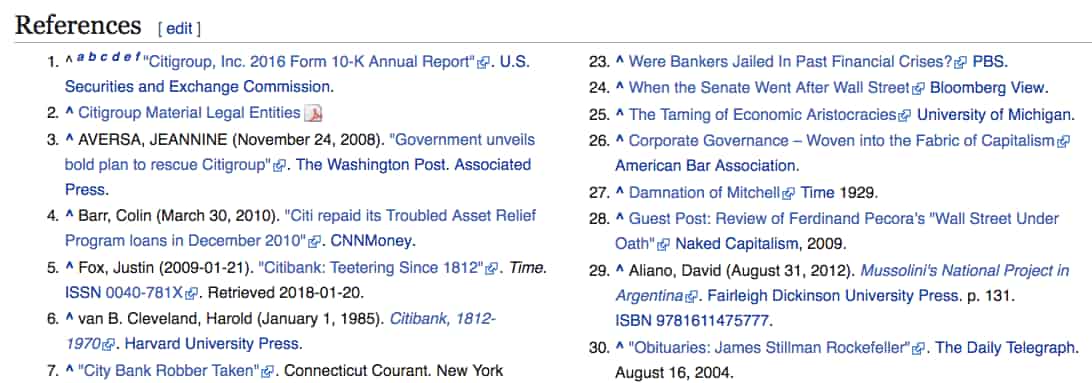
For a brand reputation strategist, this means reference articles must verify claims from reliable third parties. The references must be true, verifiable, and credible. The most credible third-party content comes from trusted publications.
For example, a Forbes article is a more credible reference for a financial services firm than a personal blog. A media plan fulfilling the vision of a Reverse Wikipedia ORM Strategy for such a firm might target publications like:
- Forbes.com
- MotleyFool.com
- Bloomberg.com
- Crunchbase.com
- Factiva.com
- ABCNews.com
- WallStreetJournal.com
- CNN.com/business
Tip: Use Your Brand Name in the Headline
Want your content to perform better in search results? Try to get your brand name into the headline of articles written about it. It’s difficult to achieve, but worth the effort.
One Does Not Simply Write a Wikipedia Page

To paraphrase Boromir from The Lord of the Rings: “One does not simply write a Wikipedia page.” The RWOS doesn’t always end as a published Wikipedia page — that’s not the point. The goal is to visualize and structure future content that supports a positive brand image.
Here is how the RWOS is created:
- Develop a Wikipedia page and its story, but don’t publish it
- Note the ideal references the future page would have
- Develop stories and supporting information for each target publication
- Build relationships to pitch stories and get them onto editorial calendars
At this point, no Wikipedia page exists. But the stories supporting the future brand vision have begun to appear online in more visible places. A Wikipedia page becomes a realistic option.
Measuring Success
You’ll know the content seeding process has worked well when the content you created begins to appear on an existing Wikipedia page, is shared naturally, or linked to organically.
Using the financial services firm example: a Forbes article pursued through earned media that is relevant to the brand might be added naturally to an existing Wikipedia page. If this happens without your involvement, the strategy is working. Even if it doesn’t, the content is likely to appear in search results.
Next Steps
At this point, you may influence the creation of a Wikipedia page — or edit an existing one — using that information. Whether a real page ever comes to exist is less important than the fact that the RWOS has helped generate a coherent, credible, and reputationally positive online content environment.
From here, boosting positive brand reputation through search engine optimization and other online marketing tactics will truly bear fruit — transforming the way a brand is perceived online.
Frequently Asked Questions







Protect Your Online Reputation
Every day you wait, negative content gets stronger. Talk to our experts about a custom strategy for your situation.
Get Your Free Analysis